
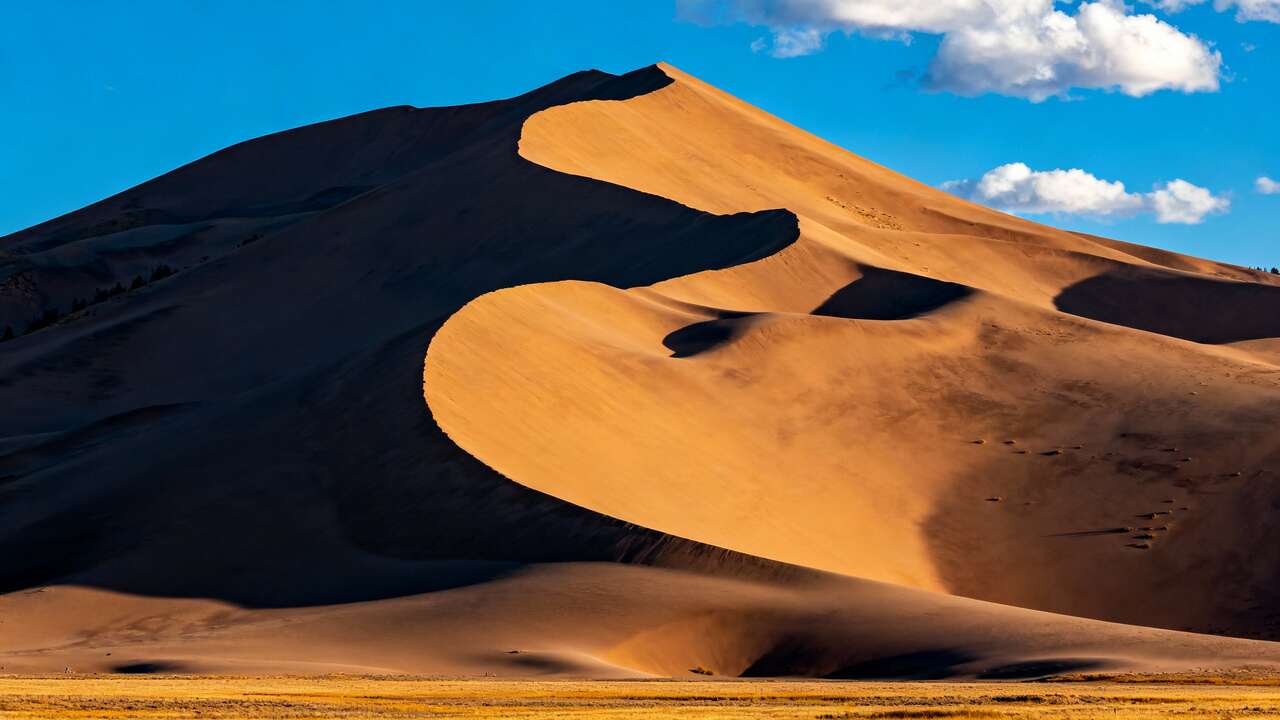

A vast expanse of sand, sculpted by the wind into towering peaks and sinuous ridges, rises unexpectedly from the high-altitude desert floor. Behind it, the jagged, snow-dusted peaks of a formidable mountain range pierce the deep blue sky. This is not a scene from a distant desert continent but a surreal landscape found in southern Colorado. Great Sand Dunes National Park and Preserve protects the tallest sand dunes in North America, a geological marvel that offers a unique intersection of desert, forest, and alpine tundra, creating an environment as challenging as it is beautiful.
Discovering Colorado’s Sand Dunes
A Sea of Sand in the Rockies
The centerpiece of the park is the main dunefield, an immense 30-square-mile area of sand that feels utterly otherworldly. Visitors stepping onto the sand for the first time are often struck by the sheer scale of the landscape. Dunes rise in every direction, some gradually sloped and others with knife-edge crests. The tallest, Star Dune, reaches a staggering 750 feet from its base, a testament to the powerful and persistent forces of nature. Walking among them, with the immense Sangre de Cristo Mountains as a backdrop, creates a profound sense of scale and wonder. It is this dramatic juxtaposition of golden sand and rugged peaks that makes the park a photographer’s dream and an explorer’s paradise.
An Unexpected Oasis
Each spring, a remarkable transformation occurs at the base of the dunes. As the snow melts in the high mountains, water flows down to form Medano Creek, a wide, shallow stream that runs along the edge of the dunefield. This seasonal creek creates what locals affectionately call Colorado’s beach, a popular spot for families to cool off and play. The creek is famous for its “surge flow,” a phenomenon where the water flows in rhythmic, wave-like pulses across the sand. This unique hydrological feature, combined with the stunning scenery, provides a refreshing and memorable experience unlike any other in the national park system. The park’s primary features include:
- The tallest sand dunes in North America.
- A diverse ecosystem ranging from wetlands and grasslands to alpine peaks.
- The seasonal flow of Medano Creek, creating a popular recreational area.
- Designation as an International Dark Sky Park, offering pristine night skies.
Understanding the visual splendor of this place naturally leads to questions about its origins, a story rooted in millennia of geological activity.
History and Formation of the Dunes
A Geological Puzzle
The existence of this massive dunefield is the result of a perfect combination of geological ingredients and processes. The story begins with the vast ancient lakes that once covered the San Luis Valley. As these lakes receded, they left behind immense deposits of sand and sediment. Prevailing winds from the southwest then carried these particles toward the Sangre de Cristo Mountains. Upon reaching the mountains, the winds are forced upward, losing their energy and dropping their sandy cargo. Low passes in the mountain range, such as Medano Pass and Music Pass, act as funnels, concentrating the wind and sand in this specific corner of the valley. This process has been ongoing for thousands of years, with opposing storm winds from the northeast helping to push the dunes back on themselves, causing them to grow vertically rather than simply migrating. This constant shaping and reshaping means the dunes are a living, breathing landscape.
Key Geological Facts
| Feature | Detail |
|---|---|
| Primary Sand Source | Ancient lakebeds in the San Luis Valley |
| Primary Wind Direction | Southwest |
| Mountain Barrier | Sangre de Cristo Mountains |
| Tallest Dune | Star Dune (approx. 750 ft) |
From Monument to National Park
Recognizing the unique value of this landscape, the federal government first acted to protect the area in 1932, when it was designated as Great Sand Dunes National Monument. This initial protection focused primarily on the main dunefield itself. However, scientists and conservationists came to understand that the dunes were part of a much larger, interconnected system. The health of the dunes depends on the entire watershed, including the creeks that carry sediment and the mountain snowpack that feeds them. This broader understanding culminated in 2004, when the area was redesignated and expanded to become Great Sand Dunes National Park and Preserve. This change provided a higher level of protection for the complete ecosystem, safeguarding the water sources, surrounding grasslands, and alpine terrain that are all integral to the dunes’ existence.
This expanded protection ensures the preservation of not just the dunes, but a surprisingly varied collection of natural environments contained within the park’s borders.
Exploring Natural Landscapes
More Than Just Sand
While the dunes are the main attraction, they represent only a fraction of the park’s ecological diversity. The park and preserve encompass a wide range of elevations and habitats, creating a rich tapestry of life. Visitors who venture beyond the sand will discover a surprisingly varied world. The complete park ecosystem includes several distinct zones:
- Dunefield: The 30-square-mile expanse of sand, home to specially adapted insects and plants.
- Sabkha and Wetlands: Areas on the edge of the dunefield where sand is cemented together by evaporated minerals, creating a home for specialized grasses and wildlife.
- Grasslands and Shrublands: The high desert floor of the San Luis Valley, supporting prairie life.
- Montane Forests: Slopes of the Sangre de Cristo Mountains covered in piñon, juniper, ponderosa pine, and aspen trees.
- Alpine Tundra: The high-elevation environment above the treeline, with fragile plants and stunning panoramic views.
The Medano Creek Phenomenon
The flow of Medano Creek is a highlight for many visitors, but its presence is fleeting. Entirely dependent on the snowmelt from the Sangre de Cristo Mountains, the creek typically begins to flow in late April, reaches its peak in late May or early June, and often dries up completely by July or August. During its peak, the creek’s unique surge flow is a captivating sight. As water flows over the sandy creek bed, it builds up into small, temporary dams that then break, sending a wave of water downstream. This creates a gentle, pulsing rhythm that is both fun for wading and fascinating to observe. The creek’s annual appearance transforms the base of the dunes into a vibrant hub of activity.
The diversity of these landscapes offers an equally diverse range of opportunities for recreation and adventure.
Activities and Adventures Not to Be Missed
Conquering the Dunes
Hiking on the dunes is the most fundamental way to experience the park, but it is no simple walk. There are no designated trails on the sand; visitors are free to roam wherever they please. The most popular destinations are the first high ridge and High Dune, which offers a spectacular panoramic view of the entire dunefield. Reaching the top is a strenuous effort, as each step up a steep, sandy slope often involves sliding halfway back down. The best times for hiking are early morning or late evening, when the sun is less intense and the sand temperatures are cool. Midday summer sand can reach 150°F, making footwear essential.
Sandboarding and Sand Sledding
For a more thrilling descent, sandboarding and sand sledding are the park’s signature sports. Visitors can rent specially designed boards and sleds from outfitters outside the park entrance. Unlike snow sleds or cardboard, which create too much friction, these custom boards are built to glide smoothly over the sand. Finding a good slope, hiking to the top, and then cruising down is an exhilarating experience for all ages. The main dunefield offers countless slopes of varying steepness, allowing both beginners and experienced boarders to find the perfect run.
Stargazing in a Dark Sky Park
When the sun sets, a different kind of spectacle begins. In 2019, the park was certified as an International Dark Sky Park, recognizing its pristine night skies. The combination of high elevation, dry air, and lack of light pollution creates an incredible canopy of stars. On a moonless night, the Milky Way stretches across the sky in breathtaking detail, and constellations are exceptionally clear. The park service often hosts ranger-led stargazing programs, but simply laying on a blanket on the dunes and looking up is an unforgettable experience.
Night Sky Viewing Conditions
| Factor | Condition at Great Sand Dunes | Impact on Stargazing |
|---|---|---|
| Light Pollution | Extremely Low (Bortle Class 2) | Allows for viewing of faint celestial objects like nebulae. |
| Altitude | Approx. 8,200 ft base elevation | Less atmospheric distortion, resulting in clearer views. |
| Air Dryness | Low humidity | Reduces haze and improves clarity. |
Engaging in these activities requires an appreciation for the delicate nature of the park and the efforts taken to protect its unique biodiversity.
Preservation and Biodiversity of the Park
A Fragile Ecosystem
Protecting Great Sand Dunes is a complex challenge that involves managing both natural resources and human impact. The park’s 2004 expansion was a critical step in preserving the entire hydrological system that forms and sustains the dunes. Conservation efforts focus on maintaining the natural flow of creeks, protecting the fragile alpine tundra from overuse, and educating visitors on Leave No Trace principles. By understanding that the dunes are not an isolated feature but the result of a complete and interconnected ecosystem, the park service can make more effective management decisions for its long-term health.
Unique Flora and Fauna
Life in and around the dunes has adapted in remarkable ways to survive in such a challenging environment. The dunefield itself is home to several endemic species, meaning they are found nowhere else on Earth. These include the Great Sand Dunes tiger beetle and the Ord’s kangaroo rat, which has evolved to be lighter in color to blend in with the sand. Beyond the dunes, the park’s varied habitats support a wide array of wildlife. Visitors may spot mule deer in the grasslands, black bears in the montane forests, and bighorn sheep in the high country. The park’s biodiversity is a key component of its value and a major focus of its preservation mission.
A successful and responsible visit to this protected area begins with careful planning and preparation.
Practical Tips for Visiting the Dunes
When to Go and What to Expect
The experience at Great Sand Dunes varies dramatically with the seasons. Spring is often considered ideal, with mild daytime temperatures and the flow of Medano Creek. Summer brings hot days, with dangerously hot sand surfaces and the risk of afternoon thunderstorms accompanied by lightning. Fall is another excellent time to visit, with comfortable temperatures, fewer crowds, and golden aspen colors in the nearby mountains. Winter offers a unique sense of solitude, as a blanket of snow often covers the dunes, creating a starkly beautiful black-and-white landscape. Visitors should always check weather forecasts, as conditions can change rapidly.
Seasonal Overview
| Season | Average High Temp (°F) | Conditions & Highlights |
|---|---|---|
| Spring (Apr-May) | 60°F | Medano Creek flows, mild weather, windy. |
| Summer (Jun-Aug) | 80°F | Hot sand, afternoon thunderstorms, creek dries up. |
| Fall (Sep-Oct) | 65°F | Pleasant temperatures, fewer crowds, fall colors. |
| Winter (Nov-Mar) | 35°F | Cold, snow on dunes, quiet and serene. |
Essential Gear and Safety
Packing correctly is crucial for a safe and enjoyable trip. The high-altitude desert environment is one of extremes, and preparation is key. Regardless of the season, every visitor should bring:
- Abundant Water: Dehydration is a serious risk due to the altitude and dry air.
- Sun Protection: Sunscreen, wide-brimmed hats, and sunglasses are essential, as there is no shade on the dunes.
- Appropriate Footwear: Closed-toe shoes are needed when the sand is hot. Sandals are great for the creek.
- Layered Clothing: Temperatures can swing dramatically from day to night.
- Eye Protection: Wind can whip sand around, so sunglasses or goggles are recommended.
Visitors should also be aware of lightning safety during summer storms and the physical exertion required for hiking at over 8,000 feet of elevation.
Great Sand Dunes National Park and Preserve is a place of surprising contrasts and profound beauty. It offers a landscape found nowhere else, where visitors can hike towering mountains of sand, splash in a mountain-fed creek, and gaze at a sky filled with brilliant stars. This protected area is more than just a geological curiosity; it is a complete and dynamic ecosystem that provides a powerful reminder of the intricate and awe-inspiring forces of the natural world.

- The 5 most affordable ski resorts in North America for the 2025 season - 13 November 2025
- Far Less Crowded Than the Grand Canyon, This Utah Park Offers Views Just as Spectacular This Fall - 13 November 2025
- This California Town Has a Unique Danish Village Vibe You Won’t Find Anywhere Else - 12 November 2025
Pubblicazioni simili :
 This Utah Town Was Founded by Outlaws and Its Wild West History Is Still Alive
 Forget Aspen: This Colorado town is more authentic and half the price
 This Georgia Island Is Called the “Galapagos of North America” for Its Untouched Wildlife
 This North Carolina Resort Is a Gilded Age Castle Turned Into a Luxury Hotel