
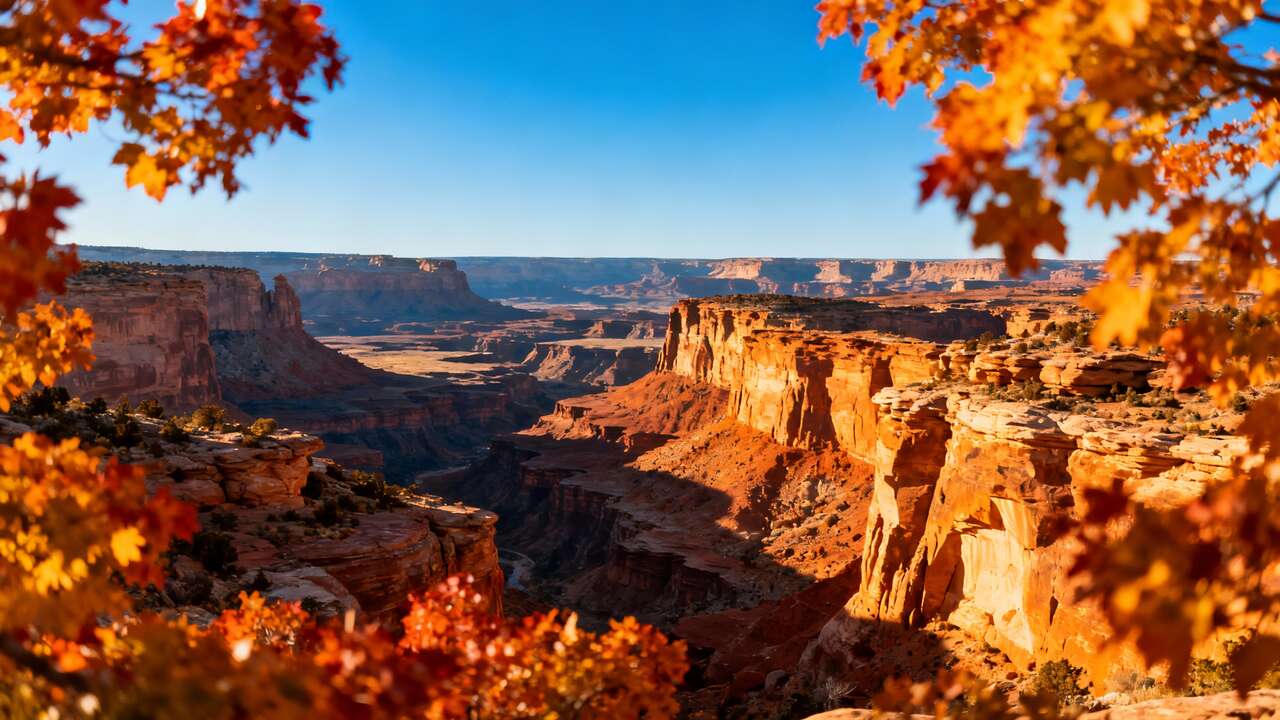

Forget the shoulder-to-shoulder crowds and long lines that often define a visit to America’s most famous canyon. Deep in the heart of Utah’s red rock country lies a sprawling wilderness of immense canyons, towering mesas, and dramatic desert landscapes carved by the Colorado and Green Rivers. Canyonlands National Park, often living in the shadow of its more famous neighbors, offers a raw, powerful, and profoundly solitary experience. This fall, as the desert heat subsides and a golden light bathes the rock, this park provides views just as spectacular as the Grand Canyon, but with a fraction of the visitors, allowing for a more intimate connection with the vastness of the American West.
Discovering Canyonlands National Park
The Four Districts of a Vast Wilderness
Canyonlands is not a single, easily digestible landscape but rather a massive park divided by its rivers into four distinct and remote districts. Each district offers a unique character and a different type of adventure, and it is crucial to understand that they are not interconnected by roads. Planning a visit requires choosing which area to explore.
- Island in the Sky: This is the most accessible and visited district. Perched atop a sheer-walled mesa over 1,000 feet above the surrounding terrain, it offers commanding panoramic overlooks that are easily reached by car. Short, rewarding trails lead to some of the most iconic views in Utah.
- The Needles: Located in the southeast corner of the park, this district is named for the colorful spires of Cedar Mesa Sandstone that dominate the area. It is a paradise for hikers and backpackers, with an extensive network of trails winding through canyons and grassy parks. It requires more driving to reach and more hiking to fully appreciate.
- The Maze: As its name suggests, this is the most remote and rugged district in the entire national park system. It is a wild and confusing labyrinth of canyons that is extremely difficult to access, requiring high-clearance four-wheel-drive vehicles and complete self-sufficiency. This area is for seasoned and prepared backcountry adventurers only.
- The Rivers: The Colorado and Green Rivers themselves form the fourth district. They wind through the heart of the park, offering a different perspective from the water level. Calm stretches and challenging rapids make it a world-class destination for multi-day rafting and kayaking trips.
A Quieter Alternative
The sheer scale of Canyonlands combined with its more remote location contributes to significantly lower visitor numbers compared to other major parks in the region. This relative solitude is one of its greatest assets. While nearby Arches National Park often deals with timed entry reservations to manage its crowds, Canyonlands remains a place where one can often find a viewpoint or a stretch of trail all to oneself. The numbers clearly illustrate this difference, providing a compelling reason to choose Canyonlands for a more peaceful experience.
| Park | Average Annual Visitors (approx.) |
|---|---|
| Grand Canyon National Park | 4,700,000 |
| Arches National Park | 1,500,000 |
| Canyonlands National Park | 700,000 |
With a visitor count less than half that of Arches and a small fraction of the Grand Canyon’s, Canyonlands offers an escape into a landscape that feels largely untouched by human influence. This allows for a deeper immersion in the natural world, a key reason why many seek out national parks in the first place.
Understanding the park’s layout and its tranquil nature sets the stage for choosing the perfect time to immerse oneself in its dramatic scenery.
When to Visit Canyonlands This Fall
Ideal Autumn Weather
The fall season, from September through early November, is arguably the best time to visit Canyonlands. The oppressive heat of the summer, which can often exceed 100°F (37°C), gives way to pleasantly warm days and cool, crisp nights. This moderate weather is perfect for exploring the park’s extensive network of trails without the risk of heat exhaustion. The comfortable temperatures allow for longer hikes and more time spent simply soaking in the views from the overlooks. The air is often clearer, providing sharp, long-distance views across the canyon systems.
The Colors of the Canyon
While Canyonlands is not known for the widespread fall foliage of eastern forests, it has its own subtle and beautiful autumn display. Along the river corridors and in the washes, Fremont cottonwood trees turn a brilliant gold and yellow. This vibrant color provides a stunning contrast against the deep red of the sandstone cliffs and the clear blue of the desert sky. Photographers and nature lovers will find this seasonal display particularly rewarding, as it adds a layer of soft beauty to the rugged landscape. The low angle of the autumn sun also creates dramatic shadows that accentuate the depth and texture of the canyons, making sunrise and sunset especially magical.
Stargazing in the Crisp Night Air
Canyonlands National Park is certified as an International Dark Sky Park, meaning it has some of the darkest night skies remaining in the contiguous United States. The clear, dry air of autumn provides exceptional conditions for stargazing. After sunset, the sky reveals a breathtaking tapestry of stars, constellations, and the shimmering arc of the Milky Way. With fewer visitors, you can find a quiet spot at an overlook and witness a celestial show that is simply not visible from most parts of the world. The cool evening temperatures make for comfortable viewing, a perfect end to a day of exploration.
With the ideal season identified, deciding how to explore the park’s terrain on foot becomes the next step in planning an unforgettable trip.
The Best Hikes in Canyonlands
Island in the Sky: Hikes for Everyone
The Island in the Sky district offers a variety of trails that pack incredible scenic punches without requiring grueling effort. The most famous is the Mesa Arch Trail, a simple 0.5-mile loop that leads to a spectacular arch perched on a cliff edge. It is world-renowned as a sunrise location, where the first light of day ignites the underside of the arch in a fiery glow, perfectly framing the distant La Sal Mountains. Another essential hike is the Grand View Point Trail, a mostly flat 2-mile roundtrip walk along the very edge of the mesa. It provides continuous, jaw-dropping panoramic views of the intricate canyon network below, including the distant Needles and Maze districts.
The Needles: A Backpacker’s Paradise
For those seeking a more immersive and challenging hiking experience, The Needles district is the destination. The trails here are longer and more strenuous, descending into the canyons and winding through the park’s namesake rock formations. A classic day hike is the Slickrock Trail, a 2.4-mile loop that offers fantastic views of the surrounding fins, spires, and hidden grabens. For the more adventurous, the Chesler Park Loop Trail is a legendary 11-mile trek. This strenuous hike takes you through narrow slot canyons and into a stunning hidden grassland surrounded by towering red and white sandstone spires, offering a true sense of wilderness and discovery.
Beyond the trails, some of the park’s most profound beauty can be appreciated from easily accessible overlooks that require little to no hiking.
Must-See Viewpoints
Grand View Point
Located at the southernmost tip of the Island in the Sky scenic drive, Grand View Point lives up to its name in every respect. The overlook provides a stunning 180-degree vista over the confluence of the Green and Colorado Rivers, Monument Basin, and the distant La Sal Mountains. From this vantage point, you can truly grasp the immense scale of the erosion that has shaped this landscape over millennia. The view is particularly breathtaking in the late afternoon, when the setting sun casts long shadows that reveal the intricate details of the canyons below, painting the rock in warm hues of orange and red.
Green River Overlook
Many consider the Green River Overlook to be one of the most sublime viewpoints in the entire national park system. It offers a dramatic, birds-eye perspective of the Green River making a great U-shaped bend nearly 2,000 feet below. The sheer vertical drop from the mesa top is dizzying, and the view stretches for miles across a vast, empty wilderness. It is an ideal spot for sunset, as the western-facing view allows you to watch the sun dip below the horizon, setting the sky ablaze and reflecting its colors onto the placid surface of the river far below. It is a place of profound silence and scale.
Knowing where to find these incredible vistas is essential, and understanding how to get to the park’s different districts is the foundation of any visit.
How to Access Canyonlands
Reaching Island in the Sky
The Island in the Sky district is the most straightforward to access. It is located about 32 miles from Moab, Utah. The drive takes approximately 40 minutes via US-191 North and then west onto UT-313. The road is paved all the way to the visitor center and the various overlooks and trailheads within the district. Any standard passenger vehicle can easily navigate this section of the park. It is important to remember that there is no food, gas, or lodging available within the park, so visitors should arrive with a full tank of gas and plenty of water and snacks.
Getting to The Needles
The Needles district has a separate entrance and is significantly further from Moab. Access requires driving 40 miles south of Moab on US-191 and then turning west onto UT-211. The scenic drive along UT-211 is an additional 35 miles to the park boundary. The entire trip from Moab takes about 1.5 hours. While the main roads are paved, many of the more interesting features and trailheads in The Needles are accessed via unpaved roads that may require a high-clearance or four-wheel-drive vehicle, especially after rain.
With the routes to the park understood, the final piece of the puzzle is determining the best place to stay for your adventure.
Where to Stay Near Canyonlands
Lodging in Moab
The town of Moab serves as the primary gateway and basecamp for visiting both Canyonlands and Arches National Parks. It offers a full range of accommodations, from budget-friendly motels to upscale hotels, resorts, and vacation rentals. Moab also has a wide variety of restaurants, grocery stores, gas stations, and outfitter shops where you can rent gear or book guided tours. Its convenient location and robust tourist infrastructure make it the most popular and practical choice for most visitors, especially those planning to explore the easily accessible Island in the Sky district.
Camping Inside the Park
For a more rustic experience, camping within Canyonlands is an excellent option. Each of the two main districts has a small, primitive campground. The Willow Flat Campground in Island in the Sky has only 12 sites and is available on a first-come, first-served basis. It often fills up quickly, especially in the fall. The Needles Campground is larger, with 26 individual sites, and some can be reserved in advance during the busy seasons. Both campgrounds offer toilets and fire grates but have no running water. Backcountry camping is also available throughout the park for experienced hikers, but it requires obtaining a permit in advance.
Canyonlands National Park delivers a powerful dose of solitude and grandeur, offering a compelling alternative to more crowded destinations. Its distinct districts provide a range of experiences, from accessible, breathtaking viewpoints at Island in the Sky to challenging backcountry adventures in The Needles. Visiting in the fall rewards travelers with ideal weather, subtle seasonal color, and brilliant night skies, making it the perfect time to explore this vast and quiet corner of Utah’s magnificent wilderness.

- The 5 most affordable ski resorts in North America for the 2025 season - 13 November 2025
- Far Less Crowded Than the Grand Canyon, This Utah Park Offers Views Just as Spectacular This Fall - 13 November 2025
- This California Town Has a Unique Danish Village Vibe You Won’t Find Anywhere Else - 12 November 2025
Pubblicazioni simili :
 A 5-star tropical paradise for less than $100 a night? It exists here
 This Upstate New York Road Trip Offers Autumn Views That Rival Anywhere in New England
 Visit This Florida Beach Area Now Before It Becomes as Crowded as Miami
 Far From the Crowds of Zion, This Utah State Park Is a Secret Hiker’s Paradise This Autumn