
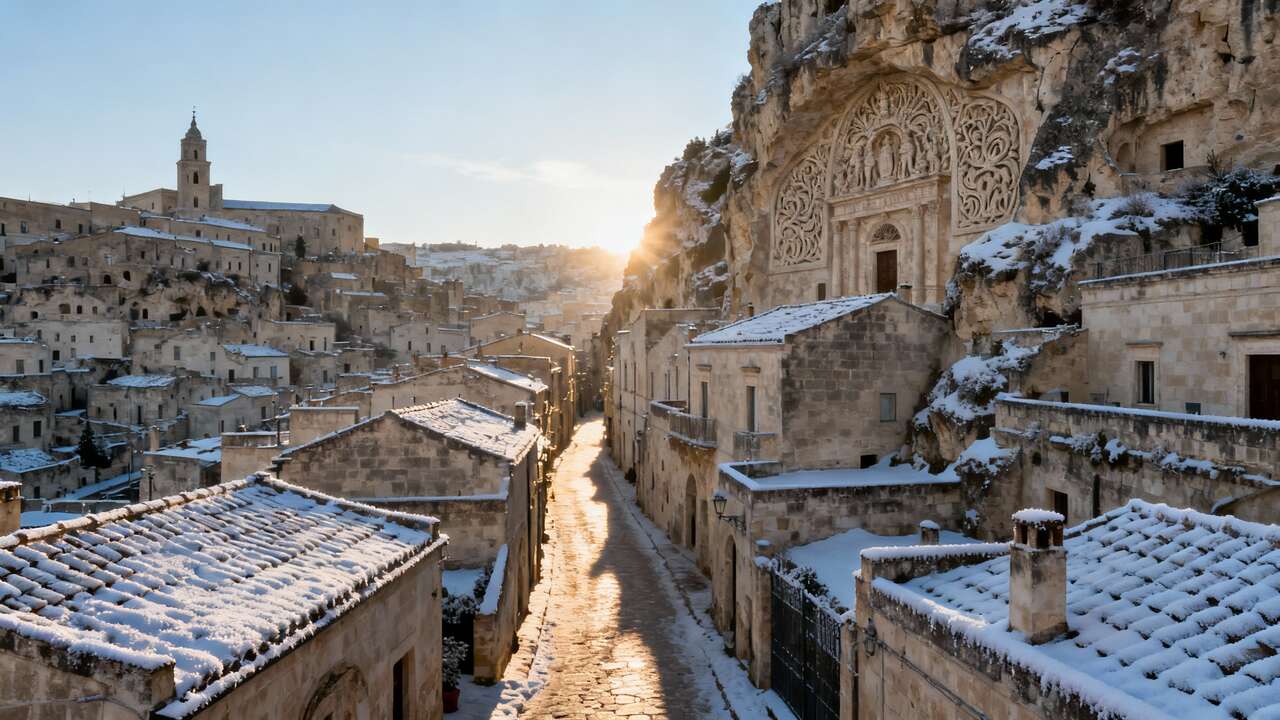

Step into a city seemingly frozen in time, a place where dwellings are carved directly into the rock of a vast ravine. Matera, nestled in the southern Italian region of Basilicata, offers an experience unlike any other. In winter, when the crowds thin and a quiet melancholy settles over the ancient stones, its haunting beauty is magnified. The pale sun casts long shadows through a labyrinth of alleys and stairways, illuminating a history that stretches back millennia. Forget typical Italian destinations; prepare to explore a landscape that feels both prehistoric and profoundly alive, a testament to human endurance etched into the very fabric of the earth.
A city older than history
Matera’s claim as one of the oldest continuously inhabited settlements in the world is no exaggeration. Its story begins not with written records but with the simple act of seeking shelter in the natural caves of the Gravina canyon. This unbroken chain of human presence provides a direct link to our most distant ancestors, making a visit to Matera a journey through the annals of civilization itself.
From Paleolithic Caves to Roman Foundations
Archaeological evidence confirms that the first inhabitants of this region settled in the area’s natural caves during the Paleolithic era, more than 12,000 years ago. These early humans found a defensible and resource-rich environment. Millennia later, the settlement was formally established by the Roman consul Lucius Caecilius Metellus in 251 BC, who named it Matheola. This marked the beginning of a more structured urban development, though the city’s unique troglodyte character would remain its defining feature for centuries to come.
A Tapestry of Civilizations
Following the fall of the Roman Empire, Matera became a crossroads of cultures and powers, each leaving an indelible mark. Its strategic position attracted a succession of rulers who shaped its architecture, culture, and religious life. The primary influences included:
- The Lombards: Who established duchies in southern Italy and fortified the settlement.
- The Byzantines: Whose monks fled persecution and established a vibrant community of rock-hewn churches, decorating them with stunning frescoes.
- The Normans: Who integrated the city into their Kingdom of Sicily, constructing the foundational elements of the city’s cathedral.
This rich layering of history is visible everywhere, from the architectural styles of its churches to the layout of its oldest districts.
The Period of Decline and Resilience
Despite its rich past, Matera faced a severe decline beginning in the 15th century. As power shifted elsewhere, the city became isolated and impoverished. Its residents were forced to retreat deeper into the Sassi, the cave-dwelling districts, living in conditions of extreme hardship. For centuries, these troglodyte homes, often shared with livestock, were a symbol of southern Italy’s profound poverty. Yet, they also stand as a remarkable testament to human resilience and adaptation, showcasing an ability to create a functional community in the most challenging of environments.
The city’s ancient stone districts, born from this complex history, are the primary draw for any visitor today.
Explore the Sassi districts
The soul of Matera resides in its two Sassi districts: Sasso Caveoso and Sasso Barisano. These neighborhoods are not merely collections of old buildings but a complex urban ecosystem carved from the soft tufa limestone. Wandering through their maze-like network of alleys, staircases, and courtyards reveals a world where the line between natural and man-made blurs, creating a landscape that is both organic and architecturally brilliant.
Sasso Caveoso and Sasso Barisano
While often grouped together, the two Sassi have distinct characters. Sasso Caveoso, facing south, is the more ancient and dramatic of the two. Its cave dwellings appear almost fossilized into the cliffside, retaining a raw, primitive feel. It is here that you can best appreciate the original troglodyte settlement. In contrast, Sasso Barisano, facing northwest, is the more renovated district. Many of its rock-hewn facades have been built up, and it now houses numerous artisan shops, restaurants, and boutique hotels, showcasing a more refined side of Sassi life.
The Rupestrian Churches
Scattered throughout the Sassi and the surrounding Murgia plateau are over 150 rupestrian, or rock-hewn, churches. These sacred spaces, often hidden behind unassuming entrances, were carved out by monastic communities, particularly during the Byzantine era. Inside, visitors can find remarkably preserved frescoes that have survived for centuries. Some of the most notable examples include:
- Santa Maria de Idris: Perched atop a large rock, it offers stunning views and connects to another crypt decorated with 12th-century frescoes.
- San Pietro Barisano: The largest of the rock churches, featuring intricate underground chambers and carved altars.
- The Convicinio di Sant’Antonio: A complex of four distinct rock churches that open onto a single, evocative courtyard.
Life Inside a Cave Dwelling
To truly understand Matera’s past, visiting a casa grotta, or typical cave house, is essential. Several have been preserved as small museums, recreating the living conditions of a family in the 18th and 19th centuries. These exhibits show how a single, cavernous space was ingeniously organized to house a large family and their animals, with areas for sleeping, cooking, and working all carved from the same rock. It is a humbling insight into the resourcefulness and hardship that defined life here for generations.
This unique, almost biblical landscape has understandably captured the imagination of storytellers and artists from around the world.
The cinematic magic of Matera
The timeless, primitive beauty of Matera has made it a natural stand-in for ancient lands, particularly the Holy Land. Its sun-bleached stone buildings, narrow, winding alleys, and dramatic ravine create a backdrop that feels untouched by modernity. This has turned the city into a sought-after location for filmmakers aiming to recreate historical or fantastical worlds with authenticity.
A Natural Film Set
For decades, directors have been drawn to Matera’s Sassi districts, recognizing them as the perfect setting for biblical epics. The city’s landscape requires little set dressing to evoke ancient Jerusalem or other historical cities of the Middle East. The raw texture of the rock, the layered homes, and the absence of overt modern infrastructure allow filmmakers to transport audiences back in time effortlessly. This cinematic quality has cemented Matera’s reputation as a living film set.
Notable Film Productions
Matera’s filmography is impressive, spanning different genres and decades. Its versatility has allowed it to portray everything from ancient religious sites to the backdrop for a high-octane spy thriller. The city’s role in cinema has significantly boosted its international profile.
| Film Title | Year | Director | Relevance to Matera |
|---|---|---|---|
| The Gospel According to St. Matthew | 1964 | Pier Paolo Pasolini | One of the first major films to use Matera as a substitute for Jerusalem. |
| The Passion of the Christ | 2004 | Mel Gibson | Famously used the Sassi for its visceral depiction of ancient Jerusalem. |
| Ben-Hur | 2016 | Timur Bekmambetov | The city’s streets were used for several key scenes in this remake. |
| No Time to Die | 2021 | Cary Joji Fukunaga | Featured in the spectacular opening car chase sequence, showcasing a modern, action-packed side of the city. |
Walking Through a Movie Scene
For visitors, exploring Matera can feel like stepping into one of their favorite films. It is possible to walk the same stone steps where famous actors performed dramatic scenes or to stand on a vista and recognize a panoramic shot from a blockbuster movie. This connection to cinema adds another fascinating layer to the experience of the city, blending its ancient history with more recent cultural significance.
While the city’s allure is undeniable at any time of year, the winter season offers a particularly atmospheric and rewarding visit.
When to visit Matera in winter
Visiting Matera between November and February provides a starkly different experience from the bustling summer months. The winter light, softer and more golden, bathes the tufa stone in a warm glow, while the crisp air makes exploring the city’s steep inclines more comfortable. It is a time for quiet contemplation, allowing the ancient spirit of the city to reveal itself without distraction.
The Winter Atmosphere
The primary advantage of a winter visit is the tranquility. With fewer tourists, the narrow alleyways of the Sassi feel more personal and mysterious. The chill in the air adds to the haunting beauty of the landscape, and the occasional morning mist rising from the Gravina canyon creates an unforgettable, ethereal scene. During the Christmas season, the city comes alive with a famous live nativity scene, the Presepe Vivente, which unfolds through the Sassi, adding a magical and festive dimension to the historic setting.
Seasonal Considerations
While winter is a beautiful time to visit, it requires some practical planning. The weather can be unpredictable, with a mix of sunny days and cold, rainy spells. Snow is rare but not impossible, and when it happens, it blankets the city in a stunning layer of white.
| Month | Average High (°C / °F) | Average Low (°C / °F) | Considerations |
|---|---|---|---|
| November | 13°C / 55°F | 6°C / 43°F | Fewer crowds; higher chance of rain. |
| December | 10°C / 50°F | 4°C / 39°F | Festive atmosphere; Christmas markets and nativity scenes. |
| January | 9°C / 48°F | 2°C / 36°F | The coldest month; ideal for photographers seeking dramatic light. |
| February | 10°C / 50°F | 3°C / 37°F | Still quiet before the spring season begins. |
What to Pack and Expect
Proper preparation is key to enjoying a winter trip to Matera. Be sure to pack accordingly to stay comfortable while exploring.
- Layered clothing: Thermal shirts, sweaters, and a warm, waterproof jacket are essential.
- Comfortable, waterproof footwear: The city’s stone streets can be slippery when wet, and you will be doing a lot of walking.
- An umbrella: Rain is common during the winter months.
- A camera: The winter light provides incredible opportunities for photography.
It is also wise to check the opening hours of museums and attractions in advance, as some may operate on a reduced winter schedule.
Beyond the well-trodden paths of the Sassi, Matera holds other fascinating sights that enrich any visit.
The hidden treasures of Matera
While the Sassi are rightfully the main attraction, exploring beyond their confines reveals a city with even more depth and history. The “Piano,” or the level part of the city, offers a different architectural style, while the natural park across the canyon provides a different perspective on the ancient settlement. And no visit is complete without indulging in the region’s unique and delicious cuisine.
Beyond the Sassi: The Piano
The city’s upper district, known as the Piano, was developed primarily from the 17th century onwards. It stands in stark contrast to the Sassi below, with elegant Baroque and Renaissance buildings, grand churches, and wide-open piazzas. Strolling through Piazza Vittorio Veneto, you can see the entrances to the Palombaro Lungo, a massive underground cistern that supplied the city with water. This part of Matera showcases its more recent history and its life as a provincial capital.
The Park of the Murgia Materana
For the most breathtaking panoramic view of the Sassi, cross the Gravina canyon to the Park of the Murgia Materana. This protected archaeological and natural park is home to dozens of ancient rupestrian churches and Neolithic settlements. A walk along the Belvedere di Murgia Timone, especially at sunset, offers an iconic vista of Matera, with the setting sun illuminating the ancient city in a spectacular display of light and shadow. It is a view that truly captures the scale and grandeur of the landscape.
Culinary Delights of Basilicata
Matera’s cuisine is rooted in the peasant traditions of the Basilicata region, emphasizing simple, high-quality local ingredients. A winter visit is the perfect time to enjoy its hearty and warming dishes. Be sure to try:
- Pane di Matera: A famous sourdough bread with a protected designation of origin (PGI), known for its hard crust and flavorful crumb.
- Cialledda: A traditional dish made with stale bread, onions, tomatoes, and herbs, often served warm in winter.
- Peperoni Cruschi: Sun-dried sweet peppers that are fried until crisp, a crunchy and savory local specialty.
- Aglianico del Vulture: A robust red wine from the region, perfect for pairing with local cheeses and cured meats.
The city’s unique cultural landscape and its remarkable journey from hardship to honor have been formally recognized on the world stage.
UNESCO World Heritage
In 1993, Matera’s Sassi districts and the Park of the Rupestrian Churches were inscribed on the UNESCO World Heritage list. This designation was a pivotal moment, transforming the city’s image from a symbol of national shame into a source of immense pride and a treasure of human history. It acknowledged the universal value of this extraordinary settlement and spurred the efforts to preserve and revitalize it.
The Significance of the Designation
UNESCO recognized Matera for being the most outstanding, intact example of a troglodyte settlement in the Mediterranean region. The official citation highlights how the settlement is perfectly adapted to its terrain and ecosystem and illustrates a number of significant stages in human history. The designation validated the Sassi not as a place of poverty, but as an ingenious model of urban planning and sustainable living that has endured for millennia.
Preservation and Transformation
The UNESCO recognition catalyzed a profound transformation. It brought international attention and resources, enabling extensive restoration projects. The Italian government, which had forcibly relocated the Sassi’s inhabitants in the 1950s, began to support their return and the repurposing of the cave dwellings. This led to the careful conversion of abandoned caves into homes, hotels, restaurants, and museums, breathing new life into the ancient districts while respecting their historical integrity.
A Living Heritage
Crucially, Matera is not an open-air museum. It is a living city, where a vibrant community continues to thrive within a historical landscape. The blend of ancient structures with modern life is seamless. You can sleep in a luxurious cave hotel, dine in a restaurant carved from rock, or visit an art gallery in a former cistern. This dynamic fusion of past and present is what makes Matera so compelling and ensures that its heritage continues to evolve.
Embrace the opportunity to witness a city that is a direct link to the dawn of human civilization. Explore the Sassi, where every stone tells a story of survival and ingenuity. Discover its cinematic landscapes, its hidden churches, and its hearty cuisine. A winter journey to Matera is an immersion into a hauntingly beautiful world, a profound reminder of the enduring power of history and the resilience of the human spirit. Plan your visit to this singular Italian treasure and walk through the corridors of time.

- The 5 most affordable ski resorts in North America for the 2025 season - 13 November 2025
- Far Less Crowded Than the Grand Canyon, This Utah Park Offers Views Just as Spectacular This Fall - 13 November 2025
- This California Town Has a Unique Danish Village Vibe You Won’t Find Anywhere Else - 12 November 2025
Pubblicazioni simili :
 This Slovenian lake is peak fairytale in winter
 This Pennsylvania Village Is at the Heart of American History and Is Beautiful in the Fall
 This Virginia Town Has Been Called the Most Beautiful Main Street in America by Experts
 This Ohio Museum Houses the World’s Greatest Collection of Rock and Roll Memorabilia