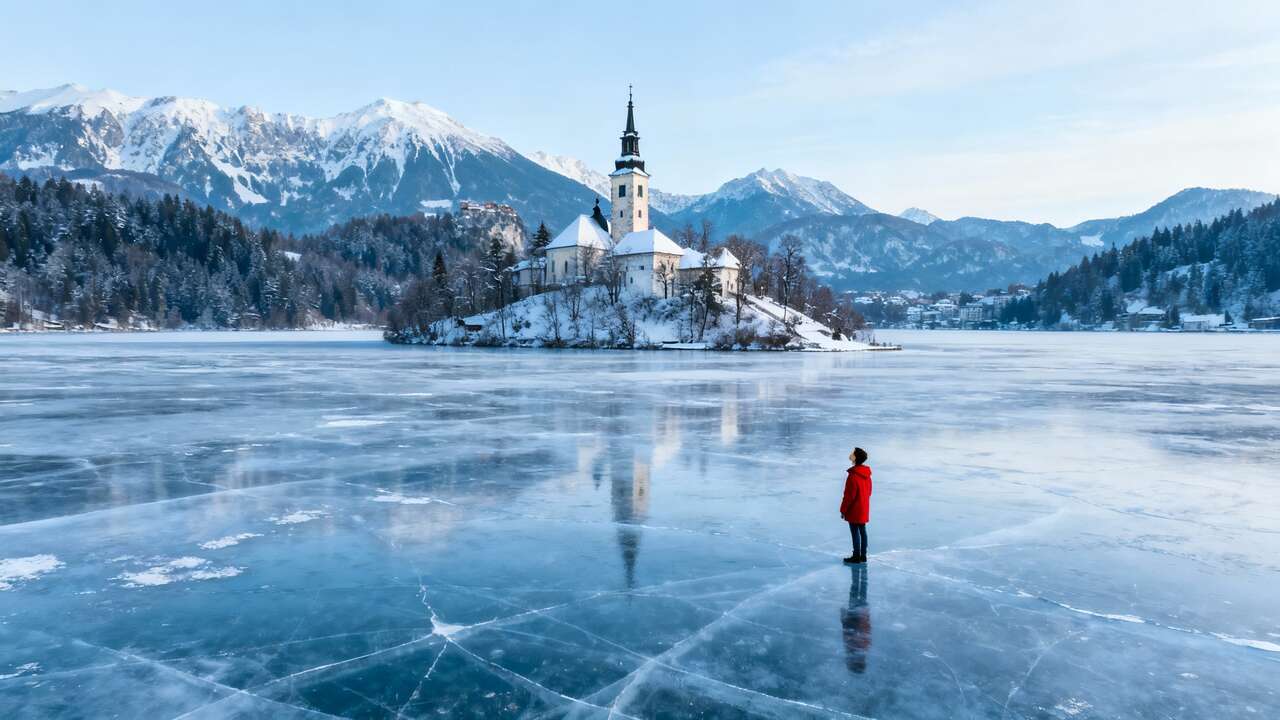

In the quiet heart of Slovenia, where the Julian Alps stand as silent, snow-dusted sentinels, lies a body of water that seems drawn from the pages of a storybook. Lake Bled, particularly under winter’s serene blanket, presents a scene of almost surreal beauty. A solitary island, crowned by a church spire, punctuates the lake’s glassy surface, which often freezes into a vast, crystalline mirror. This image, both romantic and profoundly peaceful, has transformed the small alpine town into a destination that captures the imagination, offering a tangible glimpse into a world of fairytales and timeless legends.
Lake Bled: a fairytale setting in winter
A canvas of ice and snow
When winter arrives, Lake Bled undergoes a breathtaking transformation. The vibrant greens and blues of summer give way to a palette of whites, silvers, and deep, icy blues. The 6-kilometer path encircling the lake becomes a tranquil promenade, offering ever-changing perspectives of Bled Island and the formidable castle clinging to its cliffside perch. On particularly cold years, the lake freezes over completely, creating a massive natural ice rink where locals and visitors glide across the surface. The air is crisp, the silence is broken only by the crunch of snow underfoot, and the entire landscape feels suspended in a state of peaceful slumber. It is this profound stillness that defines the winter experience, turning a popular tourist spot into an intimate and magical retreat.
The heart of the Julian Alps
Nestled within the Gorenjska region of northwestern Slovenia, Lake Bled is a product of its dramatic geological past. It occupies a basin carved out by the Bohinj glacier, which also left behind the single, tear-shaped island. The lake is fed by several small springs and has no major surface outflow, contributing to its clarity. Its unique combination of glacial and tectonic origins gives it a distinct character, surrounded by mountains that protect it from the cold northern winds. This specific geography not only creates a milder microclimate than the surrounding alpine region but also provides the spectacular visual frame that makes the lake so iconic.
| Lake Bled Geographic Data | Measurement |
|---|---|
| Maximum Length | 2,120 meters (1.32 miles) |
| Maximum Width | 1,380 meters (0.86 miles) |
| Maximum Depth | 29.5 meters (97 feet) |
| Surface Elevation | 475 meters (1,558 feet) |
This remarkable setting, where water, island, and mountains converge, forms the foundation of the lake’s enduring appeal. The scene’s inherent drama has inspired centuries of stories, making the island itself a focal point of history and myth.
The mystical history of Bled Island
From pagan temple to Christian pilgrimage
Long before its steeple pierced the sky, Bled Island was a place of worship for ancient Slavic tribes. Archaeological findings have confirmed the existence of a pre-Christian cult site on the island, dedicated to Živa, the Slavic goddess of love and fertility. This pagan past imbues the island with a deep, almost primal layer of spirituality. With the arrival of Christianity in the 8th century, the pagan temple was replaced by a small chapel. This transition from one faith to another was not just a religious shift but a symbolic act of superimposing a new belief system onto a place already considered sacred. Over the centuries, the church was rebuilt multiple times following earthquakes and conflicts, with each iteration adding to its historical tapestry.
A strategic and spiritual center
The island’s importance grew through the medieval period, becoming a significant pilgrimage site. Its ownership passed through various hands, including the Bishops of Brixen, who controlled the Bled estate for nearly 800 years. This long period of ecclesiastical rule solidified the island’s role as a spiritual beacon in the region. The journey to the island, traditionally made on distinctive flat-bottomed wooden boats known as pletna, became part of the pilgrimage ritual. This tradition, upheld by oarsmen whose trade is passed down through generations, continues to this day, connecting modern visitors to the island’s long and storied past. The island’s history is marked by several key phases:
- Ancient Era: Site of a pagan temple dedicated to a Slavic goddess.
- Early Middle Ages (c. 745): Christianization of the area and construction of the first chapel.
- High Middle Ages (1465): Construction of a single-nave gothic church.
- Baroque Period (17th Century): Major reconstruction into its current form after a significant earthquake.
This rich history is intertwined with local folklore, most notably the poignant tale that explains the origin of the church’s famous wishing bell.
The legend of the sunken bell
The tale of a grieving widow
One of the most enduring legends associated with Lake Bled is that of the sunken bell. The story begins in the 16th century with a young noblewoman named Poliksena who lived in Bled Castle. Her husband was murdered by bandits, and his body was thrown into the lake. Heartbroken, she gathered all her gold and silver and had a bell cast for the chapel on the island, in memory of her lost love. However, as the bell was being transported across the lake, a violent storm suddenly erupted, capsizing the boat and sending the precious bell plunging into the watery depths. The legend says that on quiet, clear nights, one can still hear its mournful toll echoing from the bottom of the lake.
The Pope’s blessing and the wishing bell
Devastated by this second loss, the widow sold her remaining possessions, donated the proceeds to have a new church built on the island, and left Bled to live out her days in a convent in Rome. After her death, the Pope, moved by her story of piety and sorrow, had a new bell cast and sent it to Bled Island. This bell, which hangs in the church tower today, is known as the “wishing bell”. It is said that whoever rings the bell three times and makes a wish with a sincere heart will have their wish granted. This tradition has become a central part of the visitor experience, a tangible link to a story of love, loss, and enduring faith that continues to resonate across the centuries.
A masterpiece on the water: the island church
Architectural evolution
The Church of the Assumption, as it stands today, is a testament to resilience and artistic adaptation. Its current baroque appearance dates from a major rebuilding effort in the 17th century, following an earthquake in 1511 that severely damaged the previous gothic structure. The church features a main altar with rich gold-plated carvings and a freestanding bell tower standing 52 meters tall. However, its most famous architectural feature is undoubtedly the magnificent southern staircase. Constructed in 1655, this monumental baroque staircase consists of 99 stone steps leading from the island’s dock up to the church entrance, creating a dramatic and ceremonial approach to the sacred building.
The tradition of the 99 steps
These 99 steps are central to a cherished local wedding tradition. Custom dictates that for a marriage to be happy and long-lasting, the groom must carry his bride up the entire flight of stairs. During this challenging ascent, the bride must remain silent. This ritual symbolizes the couple’s ability to overcome challenges together and has become a popular, if daunting, practice for couples choosing to marry at this iconic location. It adds another layer of romance and folklore to a place already steeped in it, blending architectural grandeur with deeply personal human experience.
The church and its traditions do not exist in isolation; they are part of a larger composition where human creation and the natural world are in constant dialogue.
Nature and architecture in perfect harmony
A landscape shaped by glaciers and man
The aesthetic power of Lake Bled lies in the seamless integration of its natural and man-made elements. The glacial origins of the lake provided a perfect, almost theatrical stage. Upon this stage, centuries of human history have placed two iconic structures: the Church of the Assumption on the island and Bled Castle on the cliff above. These are not impositions on the landscape but rather accents that enhance its inherent beauty. The church spire mirrors the mountain peaks, and the castle’s rugged walls seem to grow organically from the rock. This balance creates a scene that feels both timeless and intentional, a landscape where nature provided the canvas and humanity added the focal points.
Bled Castle: the silent guardian
Perched atop a 130-meter-high precipice, Bled Castle is the oldest castle in Slovenia, with its first written mention dating to 1011. It offers the most spectacular panoramic views of the lake, the island, and the surrounding Alps. While the church on the island represents the spiritual heart of Bled, the castle represents its historical authority and strategic importance. For centuries, it served as the administrative seat for the Bishops of Brixen. Today, it houses a museum detailing the region’s history, a reconstructed printing press, and a wine cellar. The castle and the church exist in a visual dialogue, one looking down from a position of power, the other rising up from a place of serenity.
| Bled’s Iconic Structures | Bled Castle | Church of the Assumption |
|---|---|---|
| First Mentioned | 1011 | 1465 (Gothic version) |
| Location | Atop a 130m cliff | Center of Bled Island |
| Primary Function | Fortress, administrative seat | Pilgrimage site, place of worship |
| Key Feature | Panoramic views | Wishing bell and 99 steps |
For those wishing to experience this unique harmony firsthand, a winter visit requires some practical planning to make the most of the season’s special offerings.
Visiting Lake Bled in winter: tips and tricks
Getting there and getting around
Lake Bled is conveniently located just a 30-minute drive from Ljubljana’s international airport and about 45 minutes from the capital city itself, making it easily accessible. Regular bus services connect Ljubljana and Bled. Once there, the town is small and best explored on foot. To reach the island, the traditional pletna boats operate year-round, weather permitting. In winter, the oarsmen provide blankets for the short, scenic journey. Alternatively, if the lake is not frozen, renting a rowboat offers a more private and adventurous way to cross the water. The walk around the lake is highly recommended and takes approximately 90 minutes at a leisurely pace.
What to do and see
Winter in Bled offers a unique set of activities that embrace the cold and the snow. Beyond the essential visits to the island and the castle, visitors can enjoy a range of seasonal experiences. A visit is not complete without trying the local culinary specialty, the Bled cream cake, known as kremšnita. This delectable dessert, with its layers of puff pastry, vanilla cream, and whipped cream, is the perfect reward after a cold walk.
- Ice Skating: When the lake freezes solid, it becomes a vast public ice rink. An indoor rink at the Bled Sports Hall is also available.
- Winter Hiking: Nearby trails, including the climb to the Mala Osojnica viewpoint, offer stunning, elevated perspectives of the winter landscape.
- Cross-Country Skiing: The nearby Pokljuka plateau is a world-class biathlon center with extensive trails for cross-country skiing.
- Relaxing at a Café: Many lakeside cafés offer cozy interiors with fireplaces and large windows, perfect for enjoying a hot drink while admiring the view.
To fully enjoy these activities, packing appropriately is key to staying comfortable in the chilly alpine climate.
Lake Bled in winter is more than just a destination; it is an experience that engages all the senses. The visual splendor of the snow-covered scenery, the deep-rooted history felt in the stones of the castle and church, and the poignant local legends all combine to create a place of profound enchantment. It is a location where the grandeur of nature and the enduring spirit of human culture have merged to create something truly magical, a real-life fairytale that continues to captivate all who wander into its story.

- The 5 most affordable ski resorts in North America for the 2025 season - 13 November 2025
- Far Less Crowded Than the Grand Canyon, This Utah Park Offers Views Just as Spectacular This Fall - 13 November 2025
- This California Town Has a Unique Danish Village Vibe You Won’t Find Anywhere Else - 12 November 2025