
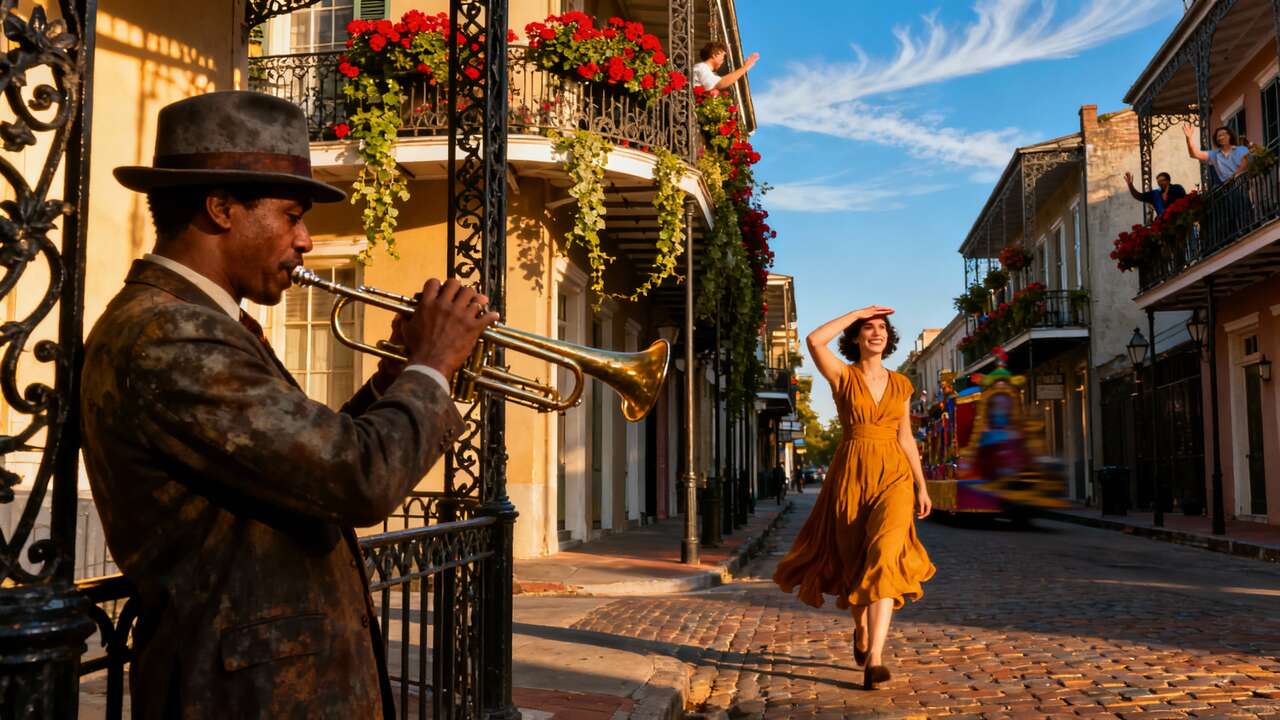

As winter’s grasp tightens across much of the country, a southern city beckons with a different kind of warmth. New Orleans, Louisiana, offers a singular escape, a place where the air is thick with history, spice, and the lingering notes of a saxophone. Visiting in the cooler months, specifically in the lull before the magnificent chaos of Mardi Gras descends, provides a unique opportunity. It is a chance to experience the city’s authentic rhythm, to walk its storied streets with a bit more room to breathe, and to connect with a culture that is as complex as it is captivating. This is the “Big Easy” at its most approachable, a perfect winter antidote for the travel-starved soul.
A rich cultural history
A true American melting pot
New Orleans’ identity is not a monolith but a vibrant mosaic, pieced together over three centuries. Its very foundation is a blend of European elegance and Caribbean spirit. The city’s cultural DNA is a complex code written by the French who founded it, the Spanish who rebuilt it after devastating fires, and the West African people whose traditions in music, food, and spirituality became the city’s enduring soul. This Creole culture, a term that describes the unique blend of these influences, is not just a historical footnote: it is the living, breathing essence of the city, evident in the lilt of the local accent, the architecture of the Vieux Carré, and the rich flavors of its world-renowned cuisine.
Layers of historical significance
To walk through New Orleans is to walk through layers of American history. Founded as a strategic port city, it played a pivotal role in the nation’s expansion and commerce. Its history is marked by significant events and influences that are still visible today. Understanding this context enriches any visit, transforming a simple stroll into a journey through time. Key historical influences include:
- French Colonial Rule: established the city’s initial layout and Franco-centric culture.
- Spanish Colonial Rule: introduced iconic architectural elements like wrought-iron balconies and courtyards.
- The Louisiana Purchase: made the city a vital American hub, attracting a wave of American, Irish, German, and Italian immigrants.
- The Antebellum Period: a time of immense wealth built on trade and slavery, the tragic legacy of which is an integral part of the city’s story.
This deep, often complicated, history is most palpable in the city’s oldest neighborhood, a district that serves as a magnet for visitors from around the globe.
Must-sees of the French Quarter
Iconic landmarks and architecture
The French Quarter, or Vieux Carré, is the historic heart of New Orleans and a veritable open-air museum. At its center lies Jackson Square, a timeless plaza dominated by the majestic, triple-steepled St. Louis Cathedral. This is the city’s most recognizable landmark, a place of gathering for artists, street performers, and fortune-tellers. The surrounding streets are a spectacle of architectural wonder. The buildings are a mix of Spanish and French design, famous for their lacy wrought-iron balconies, hidden courtyards, and vibrant pastel facades. Simply wandering these streets, from the bustling Decatur Street along the Mississippi River to the quieter residential blocks, is an essential New Orleans experience.
Bourbon Street and beyond
While Bourbon Street is undeniably famous for its raucous, neon-lit nightlife, the French Quarter’s appeal extends far beyond this single artery. It is a place of contrasts. Just one block over, Royal Street offers a completely different atmosphere, lined with sophisticated art galleries, antique shops, and fine-dining establishments. For a truly local experience, one might explore the lower French Quarter, heading toward the Esplanade, where the tourist crowds thin and the residential charm of the neighborhood shines through. Exploring these different facets allows for a more complete picture of this historic district.
| Feature | Bourbon Street | Royal Street |
|---|---|---|
| Vibe | Lively, loud, party-centric | Refined, artistic, historic |
| Main Activities | Bars, live music (cover bands), souvenir shops | Art galleries, antique shopping, street musicians |
| Best For | Nightlife and people-watching | Daytime strolling and cultural browsing |
The sensory experiences of the French Quarter, from its sights and sounds to its distinct smells, naturally lead one to explore its legendary culinary offerings.
Local culinary adventures
Classic Creole and Cajun flavors
The cuisine of New Orleans is a cornerstone of its identity, a flavorful narrative of its history. It is crucial to understand the distinction between its two primary culinary traditions. Creole cuisine, often considered more aristocratic or “city food,” was born in the kitchens of New Orleans and incorporates French, Spanish, and African influences, often using butter, cream, and tomatoes. Cajun cuisine, on the other hand, is the heartier “country food” developed by French-Acadian immigrants in the bayous of Louisiana, relying on local game, seafood, and a “holy trinity” of onion, celery, and bell pepper. Must-try dishes that showcase these traditions include a dark-roux gumbo, spicy jambalaya, and creamy shrimp and grits.
Unforgettable sweet treats and drinks
No culinary tour of the city is complete without indulging in its sweeter side. The beignet, a square piece of deep-fried dough generously dusted with powdered sugar, is the city’s signature pastry. Enjoying them fresh and hot with a café au lait is a rite of passage for any visitor. The city is also the birthplace of several classic American cocktails. The Sazerac, a potent mix of rye whiskey, bitters, and absinthe, is the official cocktail of New Orleans, while the French 75 offers a lighter, more effervescent option.
- Beignets: Best enjoyed at historic spots like Café du Monde or Café Beignet.
- Pralines: A creamy candy made with pecans, sugar, and butter.
- Bananas Foster: A dramatic dessert of bananas and ice cream with a sauce made from butter, brown sugar, cinnamon, and rum, often flambéed tableside.
After indulging in the city’s rich food and drink, a gentle stroll through its more tranquil areas can be a welcome change of pace.
Relaxation and nature at the heart of the city
The serene Garden District
A short streetcar ride from the bustling French Quarter lies a world of quiet elegance. The Garden District is famed for its magnificent antebellum mansions, impeccably manicured gardens, and streets shaded by ancient live oaks. Taking the historic St. Charles Avenue streetcar is not just a means of transport but an experience in itself, offering a scenic tour of the neighborhood’s grand architecture. This area provides a glimpse into a different era of New Orleans’ history and is perfect for a leisurely afternoon walk. It’s a place where the grandeur of the past feels perfectly preserved, offering a peaceful respite from the city’s more energetic quarters.
Green spaces for a quiet escape
Beyond its historic neighborhoods, New Orleans boasts expansive green spaces that serve as the city’s lungs. City Park and Audubon Park are two of the most prominent, each offering unique attractions. City Park is one of the nation’s oldest urban parks and is home to the New Orleans Museum of Art, a beautiful sculpture garden, and the world’s largest stand of mature live oaks. Audubon Park, located uptown, features a renowned zoo, a golf course, and picturesque lagoons perfect for bird-watching.
| Park Feature | City Park | Audubon Park |
|---|---|---|
| Size | 1,300 acres | 350 acres |
| Key Attractions | Museum of Art, Sculpture Garden, Botanical Garden | Audubon Zoo, “The Fly” riverfront area, jogging paths |
| Vibe | Expansive, multi-attraction destination | Classic, scenic, popular with locals for recreation |
The soulful tranquility found in these natural settings echoes the very soul of the city’s most famous cultural export: its music.
The dynamic music scene
The birthplace of jazz
New Orleans is universally recognized as the birthplace of jazz, an art form born from a confluence of African rhythms, blues, and ragtime in the late 19th and early 20th centuries. The music is not a relic; it is a living tradition that spills out of clubs, parades through the streets in second-line processions, and provides the city’s constant soundtrack. The historical significance of places like Congo Square, where enslaved people once gathered to play music and dance, cannot be overstated. It is from these roots that an entire genre of American music grew, and its improvisational and joyous spirit perfectly encapsulates the resilience of New Orleans itself.
Where to find the best live music
While music can be found throughout the French Quarter, the most authentic and vibrant scene today is centered on Frenchmen Street in the adjacent Marigny neighborhood. This stretch is packed with intimate clubs where talented local musicians play everything from traditional jazz and blues to funk and brass band music. It offers a more local, less commercialized experience than the cover bands of Bourbon Street.
- Preservation Hall: An iconic, no-frills venue dedicated to preserving traditional New Orleans jazz.
- The Spotted Cat Music Club: A small, popular club on Frenchmen Street known for its high-energy performances.
- Tipitina’s: A legendary uptown venue that hosts a wide range of local and touring acts.
With an understanding of what to see, eat, and hear, the final piece of the puzzle is knowing how to pull it all together for a seamless trip.
Practical tips for a successful stay
Navigating the city
Getting around New Orleans is relatively straightforward. The French Quarter is compact and highly walkable, and exploring its streets on foot is the best way to discover its hidden gems. For longer distances, the historic streetcar system is both a charming and practical option, with lines serving Canal Street, St. Charles Avenue, and the riverfront. Ride-sharing services are widely available for other destinations or for late-night travel. Renting a car is generally not recommended for visitors staying in the central tourist areas, as parking can be both difficult to find and expensive.
Accommodation and booking advice
Choosing where to stay depends largely on the desired experience. Booking in advance is highly recommended, even during the “slower” winter season, as the city hosts numerous conferences and smaller festivals. Consider the vibe of different neighborhoods when making your choice. A well-planned home base can significantly enhance your visit.
| Neighborhood | Average Price | Vibe | Proximity to Attractions |
|---|---|---|---|
| French Quarter | High | Historic, lively, tourist-focused | Excellent (walkable to most) |
| Marigny/Bywater | Moderate | Bohemian, artistic, local | Good (walkable to French Quarter) |
| Garden District/Uptown | Moderate-High | Elegant, quiet, residential | Fair (requires streetcar/taxi) |
A winter trip to New Orleans before the Mardi Gras crowds arrive offers a chance to engage with the city on a more intimate level. It is an opportunity to savor the complex flavors of Creole cooking, to feel the deep history in the architecture of the French Quarter, and to be moved by the soulful sounds of live jazz on a cool evening. From the stately calm of the Garden District to the vibrant energy of Frenchmen Street, the city reveals its many layers to those willing to explore. This unique window of time presents the “Big Easy” at its most authentic and welcoming, leaving visitors with a profound appreciation for one of America’s greatest cultural treasures.

- The 5 most affordable ski resorts in North America for the 2025 season - 13 November 2025
- Far Less Crowded Than the Grand Canyon, This Utah Park Offers Views Just as Spectacular This Fall - 13 November 2025
- This California Town Has a Unique Danish Village Vibe You Won’t Find Anywhere Else - 12 November 2025
Pubblicazioni simili :
 This “Red City” is the perfect warm and exotic escape just 3 hours from Paris
 It’s Known as “America’s Happiest City” and It’s the Perfect Place for an Autumn Weekend
 This remote Icelandic town is the perfect base for exploring winter magic
 This Small New York Town Is Arguably the Spookiest, Most Perfect Autumn Destination in America