
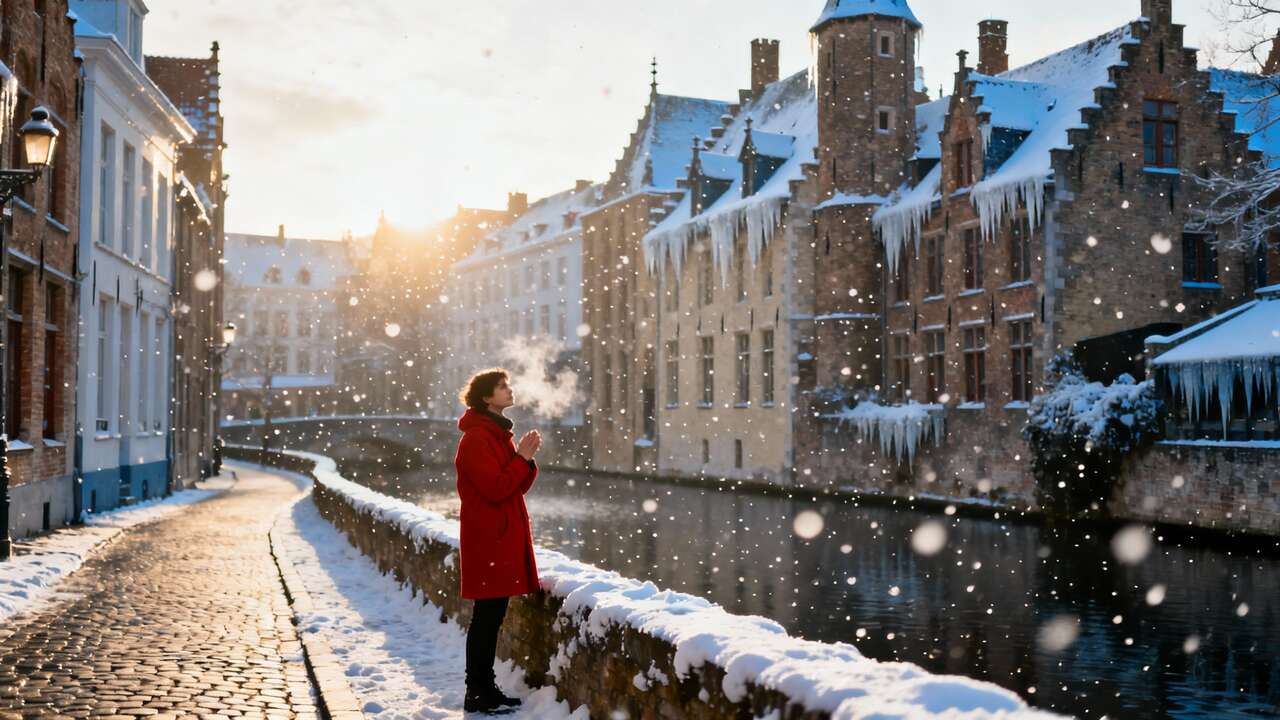

When winter casts its quiet spell, few places transform as completely as Bruges. This Belgian city, often called the “Venice of the North,” sheds its summer crowds and dons a cloak of frost and snow, becoming the very picture of a chocolate-box village. Its medieval core, a UNESCO World Heritage site, seems to hold its breath under the cold sky. The cobblestone streets, winding alongside tranquil canals, reflect the glow of fairy lights, creating a serene and deeply romantic atmosphere that beckons travelers seeking a genuine fairy-tale escape.
Medieval charm of Bruges under the snow
A city frozen in time
A dusting of snow accentuates the magic of Bruges, highlighting the intricate details of its historic architecture. The iconic stepped-gable rooftops, a signature of the region, collect delicate layers of white, creating a picturesque contrast against the dark brick. Strolling through the city feels like stepping into a Bruegel painting, where every corner reveals a scene of quiet beauty. The canals, the city’s lifeblood, take on a new character. On the coldest days, their surfaces may freeze over, offering a glassy reflection of the ancient bridges and buildings that line their banks. It is this preserved medieval character, enhanced by the stillness of winter, that makes Bruges an uncommonly captivating destination.
The sensory experience of winter
Winter in Bruges is an experience for all the senses. The air is crisp and clean, and the soundscape of the city softens as snow dampens the usual hustle and bustle. The clip-clop of horses drawing carriages through the narrow lanes becomes a distinct, rhythmic beat in the quiet air. The true pleasure, however, lies in the contrast between the cold outside and the warmth within. Ducking into a centuries-old café or pub, the feeling of “gezelligheid” — a Dutch term for a cozy, convivial atmosphere — is palpable. The scent of mulled wine, hot chocolate, and warm waffles hangs in the air, offering a welcome embrace from the winter chill.
Prime photography locations
For photographers, Bruges in the snow is a dream. The soft winter light and reflective surfaces create endless opportunities for stunning shots. While the entire city is photogenic, certain spots are particularly noteworthy when blanketed in white. Capturing these locations allows one to bring a piece of the city’s winter magic home.
- Rozenhoedkaai (Quay of the Rosary): This is arguably the most photographed spot in Bruges, where the Groenerei and Dijver canals meet. With the Belfry in the background, the scene is postcard-perfect, especially at dusk when the lights turn on.
- Bonifacius Bridge: Tucked away behind the Church of Our Lady, this small, romantic bridge offers an intimate view of the canal and surrounding medieval buildings. Snow clinging to the trees and railings adds a layer of enchantment.
- Minnewater Park (Lake of Love): The entrance to the city is marked by this serene park and lake. The “lovers’ bridge” and the resident swans gliding on the icy water create a scene of pure romance.
The city’s visual charm is not just a static backdrop; it comes alive with seasonal festivities, most notably the vibrant markets that transform its main squares into hubs of holiday cheer.
Christmas markets in Bruges: a magical journey
The heart of the festivities: Grote Markt
The epicentre of Bruges’ Christmas celebration is the Grote Markt, or Market Square. Dominated by the imposing Belfry tower, this grand square hosts the city’s largest Christmas market. Wooden chalets are arranged neatly around a glittering ice rink, each offering a tempting array of goods. The air is thick with the scent of pine needles, sizzling sausages, and sweet pastries. The entire square is illuminated by thousands of twinkling lights, creating a spectacular and festive atmosphere that captures the spirit of the season. It is a place where locals and visitors alike gather to skate, shop, and soak in the holiday spirit.
Simon Stevinplein’s cozy alternative
A short walk from the bustling Grote Markt leads to Simon Stevinplein, a smaller, tree-lined square that hosts a more intimate Christmas market. This market often focuses more on artisanal crafts and unique, handmade gifts. It provides a slightly quieter, cozier experience, perfect for those looking to browse for special souvenirs away from the main crowds. Here, the emphasis is on local craftsmanship and authentic products, making it an excellent spot to find a one-of-a-kind memento of your trip.
Market treats and treasures
The Christmas markets are a feast for the senses, particularly when it comes to food and drink. They offer the perfect opportunity to sample traditional Belgian winter delicacies. From savory snacks to sweet indulgences, there is something to warm every visitor. The markets are not just about food; they are also a treasure trove of gifts and decorations.
| Item | Description | Average Price |
|---|---|---|
| Belgian Waffle | Freshly made Liège or Brussels waffle, often topped with chocolate, cream, or fruit. | €4 – €7 |
| Glühwein | Hot mulled wine, spiced with cinnamon, cloves, and citrus. A winter market essential. | €3 – €5 |
| Jenever | A traditional juniper-flavored liquor from the region, available in many flavors. | €3 – €4 |
| Handmade Crafts | Includes items like lace, pottery, wooden toys, and hand-knitted scarves. | Varies |
While the markets provide a wonderful seasonal overlay, the timeless beauty of Bruges lies in the magnificent structures that have stood for centuries, telling stories of a rich and powerful past.
Medieval architecture: a historical dive
The Belfry of Bruges: a view from above
No structure defines the Bruges skyline quite like the Belfry. This 83-meter-high medieval bell tower, located in the Grote Markt, is a symbol of the city’s former power and wealth. For those willing to take on the challenge, climbing the 366 narrow, winding steps to the top is a rite of passage. The reward is an unparalleled panoramic view of the city. From this vantage point, the intricate network of streets and canals unfolds below, and a covering of snow transforms the view into a breathtaking, monochromatic tapestry. The carillon, with its 47 bells, still chimes on the hour, its music echoing across the rooftops as it has for centuries.
A legacy of brick gothic
Bruges is a masterclass in a specific architectural style known as Brick Gothic. Due to the lack of natural stone in the region, local builders perfected the use of brick to create structures that were both imposing and ornate. This style is visible throughout the city’s historic center, from grand civic buildings to humble merchant houses. Key examples include the imposing St. Salvator’s Cathedral and the elegant City Hall (Stadhuis) on Burg Square, one of the oldest in the Low Countries.
- Stepped Gables: The iconic triangular upper part of a wall, with a stepped profile, is a defining feature of many buildings.
- Crenellations: The tooth-like battlements seen on buildings like the Gruuthusemuseum evoke a sense of medieval fortitude.
- Traceried Windows: Intricate stone or brick patterns within the upper part of Gothic windows add decorative flair.
The Basilica of the Holy Blood
Tucked into a corner of Burg Square is one of the city’s most remarkable buildings: the Basilica of the Holy Blood. This church is actually two chapels in one. The lower chapel is a rare, preserved example of stark Romanesque architecture, dating back to the 12th century. In stark contrast, the upper chapel is a flamboyant Gothic masterpiece, rebuilt in the 19th century and richly decorated with vibrant murals and stained glass. It houses its famous relic: a vial said to contain a cloth with the blood of Christ, brought to Bruges during the Second Crusade. The dramatic architectural contrast between the two levels makes a visit a unique historical and spiritual journey.
This same dedication to heritage and craft, so evident in the city’s architecture, can also be tasted in its most famous culinary creation.
Discovering Bruges’ chocolatiers
The capital of chocoholics
Bruges has rightfully earned its reputation as the world’s chocolate capital. With more than 50 dedicated chocolate shops, or “chocolatiers,” dotted throughout its small center, the city is a paradise for anyone with a sweet tooth. This isn’t about mass-produced candy; this is about artisanal craftsmanship passed down through generations. Belgian chocolate is renowned for its high quality, using 100% cocoa butter and premium ingredients. In Bruges, chocolate is not just a treat; it is an art form, and exploring the shops is an essential part of the local experience.
Artisanal shops and praline perfection
The true joy of the Bruges chocolate scene lies in its small, independent shops. Many are family-run businesses where you can often watch the chocolatiers at work through a window, meticulously crafting each piece by hand. The praline, a filled chocolate shell, is a Belgian invention and the star of the show here. The variety is staggering, with fillings ranging from classic hazelnut praliné and ganache to more adventurous combinations featuring fruit, spices, or even local beer. Many shops offer free samples, allowing you to taste the quality before you buy.
More than just pralines
While pralines are the main attraction, the creativity of Bruges’ chocolatiers extends far beyond them. You will find elaborate chocolate sculptures, especially around holidays, as well as a wide range of other confections. Hot chocolate in Bruges is a particularly decadent affair, often served as a cup of hot milk with a solid block or “callets” of high-quality chocolate on the side to be melted in. This interactive experience allows you to control the richness of your drink, creating a perfect winter warmer.
| Chocolate Type | Key Characteristic | Common Fillings/Flavors |
|---|---|---|
| Praline | A hard chocolate shell with a softer filling. | Nut pastes, ganache, caramel, fruit creams. |
| Truffle | A soft ganache center, often rolled in cocoa powder or nuts. | Dark chocolate, champagne, coffee. |
| Tablet | A solid bar of chocolate, focusing on the quality of the cocoa. | Single-origin cocoa, nuts, dried fruit. |
After indulging in the city’s sweet offerings and exploring its historic streets, finding a comfortable and convenient place to rest is key to enjoying your winter stay.
Staying in Bruges: tips and tricks
Choosing your accommodation
Bruges offers a wide range of lodging options to suit different tastes and budgets. For a truly immersive experience, consider staying in a boutique hotel or a bed and breakfast located within a restored historic building in the city center. This allows you to step right out your door and into the medieval atmosphere. Due to the city’s popularity, especially during the peak winter season from late November to early January, it is highly recommended to book accommodation well in advance. Options range from luxurious hotels with canal views to cozy guesthouses on quiet side streets.
Navigating the city with ease
The compact nature of Bruges’ historic center makes it incredibly easy to explore. The best way to get around is on foot. Walking allows you to appreciate the architectural details and discover hidden alleyways and charming squares at your own pace. For a different perspective, horse-drawn carriage rides offer a romantic tour of the main sights. Even in winter, many canal boat tours continue to operate, with covered and heated boats providing a comfortable way to see the city from its famous waterways. This is an excellent way to rest your feet while still sightseeing.
Practical advice for winter travel
To make the most of a winter trip to Bruges, a little preparation goes a long way. The weather can be cold and damp, with temperatures often hovering around freezing, so packing appropriately is crucial for comfort. Daylight hours are also shorter, so it is wise to plan outdoor activities for the middle of the day and save museum visits or shopping for the late afternoon.
- Warm Layers: Pack thermal underwear, fleece jackets, and a warm, waterproof outer coat.
- Comfortable Footwear: Waterproof boots with good grip are essential for navigating cobblestones that may be wet, icy, or covered in snow.
- Accessories: Do not forget a hat, gloves, and a scarf to protect against the biting wind.
- Reservations: Besides accommodation, consider making dinner reservations, especially on weekends, as popular restaurants can fill up quickly.
With your travel plans and practical needs sorted, you can fully immerse yourself in the unique activities that make a winter visit to Bruges so special.
Must-do winter activities in Bruges
Beyond the Christmas markets
While the markets are a major draw, Bruges offers plenty of other enchanting winter activities. Ice skating on the temporary rink in the Grote Markt is a classic experience, allowing you to glide under the watchful eye of the Belfry amidst the festive lights. For a dose of culture, the city’s museums provide a warm refuge from the cold. The Groeningemuseum is home to a world-class collection of Flemish Primitive and Renaissance art, while the Historium Bruges offers an interactive experience that transports you back to the city’s Golden Age in the 15th century. These indoor attractions are perfect for a chilly afternoon.
Cozying up in a ‘brown café’
One of the most authentic Bruges experiences is spending an evening in a “bruin café” or brown café. These traditional pubs, named for their dark wood interiors and walls stained by decades of smoke, are the epitome of coziness. With crackling fireplaces and a relaxed atmosphere, they are the perfect place to warm up and mingle with locals. It is also the ideal setting to sample Belgium’s legendary beer. In winter, look for rich, dark seasonal ales like a Dubbel or a Quadrupel, which are perfect for sipping slowly on a cold night.
A serene canal tour
Seeing Bruges from the water is a must-do in any season, and winter is no exception. Many tour boats are covered and heated, making for a comfortable journey even on the coldest days. A canal tour offers a completely different perspective on the city’s architecture. You will glide under ancient stone bridges and past hidden gardens and elegant facades that are not visible from the street. The commentary provides fascinating insights into the city’s history as a medieval trading hub. Seeing the snow-lined banks and reflections in the dark water adds a uniquely tranquil and magical quality to the experience.
Bruges in winter offers a truly special escape, a city where history and festive charm converge under a potential blanket of snow. The combination of its stunning medieval architecture, the magical atmosphere of its Christmas markets, the world-class indulgence of its chocolatiers, and the cozy warmth of its traditional cafés creates a travel experience that feels like stepping into a living fairy tale. It is a destination that proves the darkest months of the year can also be the most enchanting.

- The 5 most affordable ski resorts in North America for the 2025 season - 13 November 2025
- Far Less Crowded Than the Grand Canyon, This Utah Park Offers Views Just as Spectacular This Fall - 13 November 2025
- This California Town Has a Unique Danish Village Vibe You Won’t Find Anywhere Else - 12 November 2025
Pubblicazioni simili :
 This Pennsylvania Village Is at the Heart of American History and Is Beautiful in the Fall
 This Small Kentucky Village Is the Undisputed Epicenter of the Bourbon World This Autumn
 This magical Polish city has the most underrated Christmas market in Europe
 This Illinois Village Is a Preserved Time Capsule That Was Once Bigger Than Chicago