
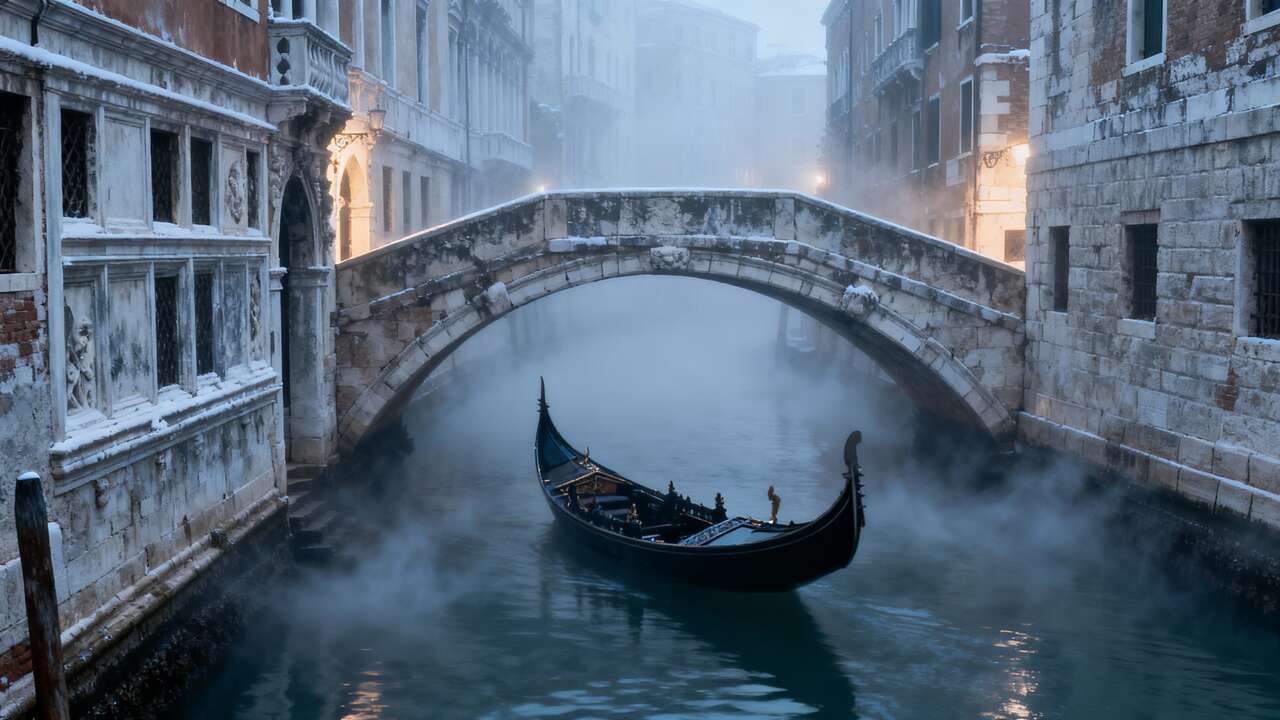

Forget the crowded summer squares and overpriced gondola rides. To truly understand Venice, visit when a quiet melancholy settles over the canals. Embrace the city during its most authentic and atmospheric season: winter. Experience the ethereal beauty of a Venice reclaimed by mist and water, where the city’s true, mysterious soul is revealed to those willing to explore beyond the peak season.
Venice: a mythical and captivating city
The city of a thousand canals
Venice is a city built on water, an engineering marvel that has captivated travelers for centuries. Its lifeblood is not asphalt but a complex network of over 150 canals, serving as streets plied by vaporettos, water taxis, and the iconic, sleek black gondolas. The absence of cars creates a unique soundscape dominated by the lapping of water, the cries of gulls, and the echoes of footsteps on ancient stone. This aquatic foundation dictates the rhythm of daily life, making every journey, whether a simple grocery run or a visit to a friend, a picturesque experience. The Grand Canal, the city’s main artery, snakes through the heart of Venice, lined with magnificent palazzos that stand as a testament to the city’s former wealth and power.
An unparalleled architectural heritage
Walking through Venice is like stepping into a living museum. The city’s architecture is a breathtaking tapestry woven from centuries of history, reflecting its status as a maritime superpower. In the heart of the city, Piazza San Marco, often called “the drawing room of Europe”, is home to some of its most famous landmarks. The opulent Basilica di San Marco, with its shimmering gold mosaics, showcases a strong Byzantine influence, while the adjacent Doge’s Palace is a masterpiece of Venetian Gothic style. From the delicate arches of the Rialto Bridge to the countless smaller churches and palaces hidden in its labyrinthine streets, Venice offers a visual feast of Gothic, Renaissance, and Baroque splendor at every turn.
A historical crossroads of cultures
For over a millennium, the Republic of Venice was a dominant force in trade, connecting the Occident with the Orient. This strategic position made it a melting pot of cultures, and its influence is still visible today. The city’s art, cuisine, and even its language are peppered with influences from the Byzantine Empire, the Middle East, and beyond. This rich history is not confined to museums; it is etched into the very stones of the city. Exploring the old Jewish Ghetto in Cannaregio, the first of its kind in Europe, or admiring the intricate details on buildings in the former merchant districts, provides a profound sense of this layered and cosmopolitan past. Venice is not just a beautiful city; it is a monument to a powerful and sophisticated civilization.
While the city’s grand monuments tell the story of its powerful past, its true character in winter is often found by venturing away from the main thoroughfares and into its quieter, more intimate corners.
Discovering the hidden gems of Venice
The authentic neighborhoods (Sestieri)
Venice is divided into six distinct districts, or sestieri, each with its own unique personality and charm. Exploring them on foot is the best way to uncover the city’s more authentic side, especially during the quiet winter months. Away from the crowds of San Marco, you can find a more tranquil and local version of Venice.
- Cannaregio: Home to the historic Jewish Ghetto, this large and residential sestiere offers a glimpse into everyday Venetian life with its long, wide canals and local shops.
- Castello: The largest sestiere, it stretches from the bustling center to the green public gardens. Its eastern end is quiet, residential, and feels worlds away from the tourist hubs.
- Dorsoduro: Known for its art galleries, including the Peggy Guggenheim Collection and the Gallerie dell’Accademia, this district has a bohemian, university-town feel with charming squares and lively bàcari.
- San Polo: This central district is home to the bustling Rialto Market, a must-visit for food lovers, as well as quiet, picturesque campi hidden just steps away.
These neighborhoods are where you will find Venetians going about their day, offering a more genuine experience of the city.
Secret gardens and courtyards
Behind the imposing facades of Venetian palazzos lies a secret world of lush gardens and peaceful courtyards. In a city so densely built, these hidden green spaces are precious jewels. While many are private, some are accessible to the public or can be glimpsed through an open doorway. Visiting a museum like the Ca’ Rezzonico or the Palazzo Querini Stampalia often grants access to their beautiful and secluded gardens. In winter, these spaces take on a stark, poetic beauty, offering a quiet refuge from the stone and water of the city streets.
Artisan workshops and traditional crafts
Venice has a long and proud tradition of craftsmanship. The off-season is the perfect time to explore the workshops, or laboratori, where artisans keep these traditions alive. While Murano is famous for its intricate glassmaking and Burano for its delicate lacework, you can find workshops within Venice itself dedicated to crafts like mask-making (mascareri), marbled paper, and high-quality leather goods. Visiting these artisans offers a unique insight into the city’s cultural heritage and the opportunity to purchase an authentic, handcrafted souvenir, far from the mass-produced trinkets sold elsewhere.
This quieter, more intimate version of Venice is especially pronounced when the unique weather of the season descends, wrapping the city in an entirely different kind of beauty.
The mysteries of winter in Venice
The magic of the winter mist
One of the most defining characteristics of a Venetian winter is the nebbia, a thick, damp fog that rolls in from the lagoon. Rather than being gloomy, this mist transforms the city into a dreamscape. It softens the edges of buildings, muffles sounds, and creates an atmosphere of profound mystery and romance. Landmarks appear and disappear in the haze, and the glow of streetlights reflects off the wet stones, creating a scene worthy of a painting. Walking through a silent, fog-enshrouded piazza is an unforgettable experience, allowing you to feel as if you have the entire mythical city to yourself.
Acqua alta: a unique phenomenon
Winter, particularly November and December, is the season of acqua alta, or “high water”. This phenomenon occurs when a combination of high tides and seasonal winds causes the water level in the lagoon to rise, flooding the city’s lowest-lying areas, most famously Piazza San Marco. While it can be a minor inconvenience, the city is well-prepared. Raised wooden walkways (passerelle) are quickly set up, and Venetians carry on with their lives in their ubiquitous rubber boots. For a visitor, witnessing acqua alta is a fascinating spectacle, offering a powerful reminder of the city’s fragile and intimate relationship with the sea. The reflections of the historic architecture in the flooded square create surreal and stunning photographic opportunities.
| Month | Average Frequency |
|---|---|
| October | 1-2 events |
| November | 3-4 events |
| December | 2-3 events |
| January | 1-2 events |
The serene silence of the off-season
Perhaps the greatest luxury of visiting Venice in winter is the silence. The hordes of summer tourists are gone, and with them, the constant noise. The city returns to a more natural, peaceful rhythm. You can stand on the Accademia Bridge and admire the view of the Grand Canal without being jostled, or explore the Doge’s Palace without waiting in a long line. The quiet allows you to appreciate the subtle sounds of the city: the splash of an oar in the water, the distant chiming of a church bell, the murmur of Italian from a nearby café. This tranquility is the true gift of a winter visit, offering a more personal and profound connection to the Serenissima.
Experiencing this unique winter atmosphere requires some practical foresight to ensure your comfort and enjoyment throughout your stay.
Properly preparing for a stay in Venice
What to pack for a Venetian winter
Packing smartly is key to enjoying Venice in winter. The weather can be cold, damp, and unpredictable, so layers are essential. Focus on practical and comfortable items that will keep you warm and dry as you explore the city on foot.
- Waterproof footwear: This is non-negotiable. Comfortable, waterproof boots are essential for navigating wet streets and potential acqua alta. High rubber boots are ideal if high tides are forecast.
- Warm layers: Pack thermal undershirts, sweaters made of wool or fleece, and warm socks. This allows you to adjust to changing temperatures between the chilly outdoors and heated indoor spaces.
- A waterproof and windproof coat: A good quality outer layer will protect you from both rain and the biting winds that can sweep across the lagoon.
- Accessories: Do not forget a warm scarf, a hat, and gloves. These small items make a significant difference in comfort during long walks.
Being well-prepared will allow you to embrace whatever weather the Venetian winter has to offer.
Navigating the city
Venice is a city to be explored on foot. Its main transportation system, other than your own two feet, is the vaporetto, or public water bus. Buying a multi-day pass is often the most cost-effective option if you plan to use it frequently or visit the outer islands like Murano and Burano. Be prepared to get lost; it is an integral part of the Venetian experience. The city’s narrow, winding streets can be disorienting, but they often lead to unexpected discoveries. A good map or a reliable GPS app on your phone is helpful, but allowing yourself to wander aimlessly is one of the great joys of visiting.
Booking and planning in advance
While winter is the low season, it is still wise to plan ahead. Book your accommodation in advance to secure the best rates and locations. It is also a good idea to check the opening hours of museums and attractions, as some may operate on a reduced winter schedule. For popular sites like the Doge’s Palace or St. Mark’s Basilica, booking tickets online can save you time, even without the summer crowds. A little planning ensures a smooth and stress-free trip, leaving you more time to simply soak in the city’s enchanting atmosphere.
With your bags packed and your itinerary sketched out, the next step is deciding on the perfect home base for your Venetian adventure.
Where to stay in the city of Doges
Choosing the right neighborhood
Your choice of neighborhood will significantly shape your Venetian experience. For first-time visitors who want to be in the heart of the action, San Marco is the obvious choice, though it remains the busiest and most expensive area. For a more artistic and bohemian vibe, consider Dorsoduro, with its proximity to major museums and a lively evening scene around Campo Santa Margherita. If you crave a truly local and authentic atmosphere, the quieter, residential areas of Castello or Cannaregio are excellent options, offering a peaceful retreat after a day of sightseeing. San Polo and Santa Croce offer a good balance, being central yet retaining a more local feel than San Marco.
Types of accommodation available
Venice offers a wide range of accommodation to suit every budget and style. For a taste of Venetian grandeur, consider staying in a luxury hotel housed in a beautifully restored historic palazzo, many of which offer stunning views of the Grand Canal. For a more intimate and personal experience, the city is filled with charming bed and breakfasts and guesthouses, often family-run, which provide a cozy and welcoming atmosphere. Renting an apartment is another excellent option, especially for longer stays or for those who prefer the flexibility of having their own kitchen. This can also be a more budget-friendly choice and provides an opportunity to live like a local.
Tips for finding the best value
One of the biggest advantages of a winter trip is the significant drop in accommodation prices compared to the high season. You can often find excellent deals on hotels that would be prohibitively expensive in the summer. To get the best value, book several months in advance, especially if your dates are firm. Look for hotels or apartments slightly away from the main tourist hubs; even a ten-minute walk from Piazza San Marco can result in substantial savings. Finally, consider booking directly on the hotel’s website, as they sometimes offer special promotions or perks not available on third-party booking sites.
Once you have found the perfect place to stay, you can turn your attention to one of the city’s greatest pleasures: its unique and delicious cuisine.
Local gastronomy: flavors of the lagoon
The essentials of Venetian cuisine
Venetian cuisine is deeply connected to its unique geography. With its location in the heart of a lagoon, the focus is naturally on fresh seafood. Dishes are often simple, allowing the quality of the ingredients to shine. Polenta is a staple, often served creamy or grilled alongside fish and meat dishes. Rice is also prominent, with risotto being a local specialty. Look for dishes featuring ingredients sourced directly from the lagoon and its surrounding islands, such as the small, tender artichokes from Sant’Erasmo or the delicate schie (tiny gray shrimp).
Winter dishes not to be missed
Winter is a wonderful time to explore the heartier side of Venetian cooking. It is the perfect season for comforting, slow-cooked dishes that warm you from the inside out. Be sure to seek out some of these seasonal specialties:
- Risotto al nero di seppia: A dramatic and flavorful risotto made with cuttlefish ink, which gives it a striking black color and a deep, savory taste of the sea.
- Fegato alla veneziana: A classic Venetian dish of thinly sliced calf’s liver cooked with a generous amount of sweet, caramelized onions.
- Sarde in saor: A sweet and sour dish of fried sardines marinated with onions, pine nuts, and raisins. While enjoyed year-round, its complex flavors are particularly satisfying in cooler weather.
- Bigoli in salsa: A whole wheat pasta, similar to thick spaghetti, served in a simple but delicious sauce of onions and salt-cured fish (sardines or anchovies).
These dishes represent the true soul of Venetian home cooking.
The tradition of the bàcaro
No culinary tour of Venice is complete without experiencing the bàcaro tour. A bàcaro is a traditional Venetian tavern, a small, simple bar where locals gather for a glass of wine (an ombra) and some small snacks called cicchetti. These are Venice’s answer to tapas and can range from simple crostini with various toppings to fried seafood, meatballs, and marinated vegetables. Hopping from one bàcaro to another is a beloved local pastime and the best way to eat affordably while sampling a wide variety of local flavors. In winter, these cozy, bustling bars provide a warm and convivial refuge from the cold.
Embrace the chill and the quiet of the off-season to discover the city’s true character. Explore the misty alleyways, savor the hearty local cuisine, and witness the unique spectacle of acqua alta. Experience Venice not as a crowded theme park, but as the living, breathing, and utterly magical city it truly is.

- The 5 most affordable ski resorts in North America for the 2025 season - 13 November 2025
- Far Less Crowded Than the Grand Canyon, This Utah Park Offers Views Just as Spectacular This Fall - 13 November 2025
- This California Town Has a Unique Danish Village Vibe You Won’t Find Anywhere Else - 12 November 2025
Pubblicazioni simili :
 This Scottish city is the definition of “cozy” on a cold winter day
 This ancient Italian city carved from rock is hauntingly beautiful in winter (Matera, Italy)
 This Pennsylvania Village Is at the Heart of American History and Is Beautiful in the Fall
 This Virginia Town Has Been Called the Most Beautiful Main Street in America by Experts