
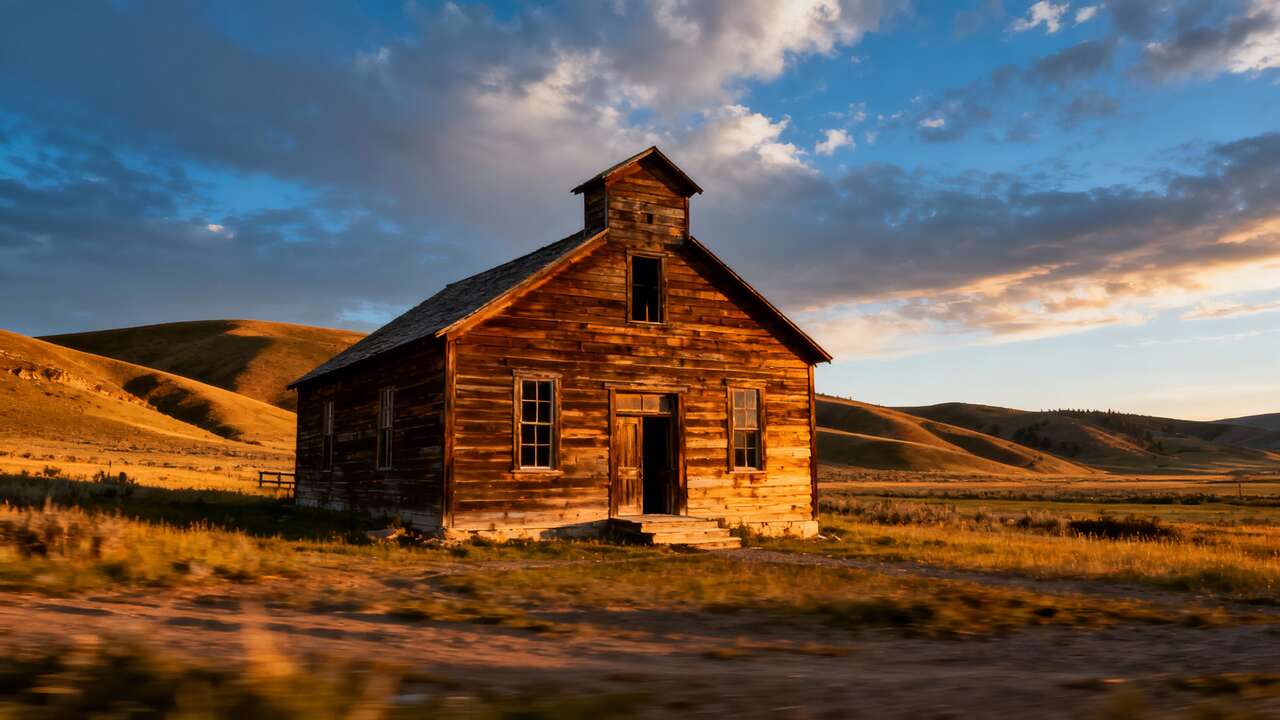

In the high plains of southeastern Wyoming, nestled between Laramie and Cheyenne, lies a place that defies the typical definition of a town. Buford, an unincorporated community in Albany County, holds a unique distinction in the American landscape. It is widely recognized as the nation’s smallest town, a title earned not through its geographical size, but through its official population count: one. This solitary figure, for many years, was not just a resident but also the owner, mayor, and sole proprietor of the entire 9.9-acre settlement, making Buford a fascinating case study in solitude, history, and the shifting identity of the American West.
Presentation of Buford: a town like no other
A unique geographical and demographic profile
Buford’s claim to fame is its minuscule population, but its physical characteristics are just as noteworthy. Perched at an elevation of 8,000 feet, it was once the highest town on the original transcontinental railroad line, a testament to the engineering ambitions of the 19th century. Today, it consists of a single primary building that has served multiple purposes over the years, a few outbuildings, and a iconic sign that proudly, and somewhat surreally, announces its population. The town is more than just a statistical anomaly; it is a fully functioning entity with its own zip code, making it a legitimate, albeit tiny, dot on the map.
The core of the community: the Buford Trading Post
The heart and soul of this one-man town was the Buford Trading Post. This establishment was the town’s entire commercial district rolled into one. It functioned as a gas station, a convenience store, and a souvenir shop, catering primarily to travelers on the busy Interstate 80. For decades, this trading post was the only sign of life for miles, a welcoming beacon for truckers needing fuel or tourists seeking a unique roadside attraction. Its existence was the primary reason Buford remained on the map long after its original purpose had faded away. The table below outlines the key statistics that define this remarkable place.
| Characteristic | Details |
|---|---|
| Location | Albany County, Wyoming, USA |
| Elevation | 8,000 feet (2,400 m) |
| Area | 9.9 acres (4 hectares) |
| Official Population | 1 |
| Key Infrastructure | Buford Trading Post (gas station, store), post office boxes, cell tower |
The story of how a place once bustling with activity shrank to a community of one is deeply intertwined with the history of American expansion and technological change.
The fascinating history of Buford
From railroad boomtown to quiet outpost
The origins of Buford date back to 1866, during the frantic construction of the Union Pacific Railroad’s portion of the first transcontinental line. It was originally a military outpost named Fort Sanders, established to protect railroad workers and settlers from attacks. At its zenith, Buford was a lively community of around 2,000 people, mostly composed of rugged railroad laborers and soldiers. The town served as a vital supply point and a hub of activity in the vast, untamed territory of Wyoming. However, its prosperity was directly tied to the railroad, and as the tracks pushed further west and the line was eventually rerouted, Buford’s reason for being began to evaporate.
The inevitable decline
The 20th century marked a period of steady and irreversible decline for Buford. The factors contributing to its depopulation were common across many small towns in the American West. These included:
- Railroad Rerouting: The primary economic engine of the town moved away, leaving residents with little reason to stay.
- Modernization of Transportation: The rise of the automobile and the construction of highways like Interstate 80 changed travel patterns, making small, isolated stops less necessary.
- Economic Shifts: Younger generations sought opportunities in larger cities, leading to a gradual exodus from rural communities.
By the latter half of the century, the population had dwindled to just a handful of families. The town’s post office, a crucial symbol of community identity, officially closed in 2004, further cementing its status as a remnant of a bygone era. This long, slow fade set the stage for one man to become the final custodian of Buford’s legacy.
Owner and sole resident: don Sammons
The man who bought a town
In 1980, seeking a quieter life far from the hustle of Los Angeles, Don Sammons moved to the area with his wife. A dozen years later, in 1992, he took a step few could imagine: he purchased the entire town of Buford. With this acquisition, he became its de facto mayor, janitor, and chief executive officer. After his wife passed away in the mid-1990s and his son moved away in 2007, Sammons officially became the town’s one and only resident. He embraced his unique role, becoming an ambassador for his tiny domain and a figure of fascination for the media and travelers alike. He wasn’t just living in Buford; he was Buford.
The proprietor of the Buford Trading Post
As the owner and operator of the Buford Trading Post, Sammons was the town’s sole employer and employee. The store was his livelihood and his connection to the outside world. He managed every aspect of the business, from pumping gas and stocking shelves to selling souvenirs emblazoned with the town’s famous population sign. His business served a surprisingly large number of people, with estimates suggesting nearly 1,000 customers a day stopping by, drawn in by curiosity and the need for services on a long stretch of highway. This daily routine gave his solitary existence a unique rhythm and purpose.
A typical day in Buford
The solitary routine
For Don Sammons, a typical day in Buford was a blend of quiet solitude and brief, intense periods of social interaction. His day would begin with the responsibilities of opening the trading post, ensuring the fuel pumps were operational and the coffee was brewing. Throughout the day, a steady stream of customers provided conversation and commerce. He would share the story of Buford countless times, posing for photos with tourists who were delighted to meet the entire population of a town. Between rushes of customers, however, there was profound quiet, with only the sound of the Wyoming wind for company. He was, in essence, a modern-day homesteader, entirely self-reliant in his remote kingdom.
A unique connection to the world
Despite his isolation, Sammons was far from disconnected. The trading post was his window to the world, bringing people from all corners of the globe to his doorstep. He managed the town’s website and corresponded with people intrigued by his story. This constant flow of visitors prevented his solitude from becoming total loneliness. He often spoke of his love for the wide-open spaces and the peace that came with living in such a unique environment. Yet, as he approached retirement, the question of Buford’s future loomed large, eventually leading to one of the most curious chapters in the town’s history.
The curiosities and tourist attractions
The auction of a lifetime
In 2012, Don Sammons decided it was time to retire and move closer to his family. In a move that captured international attention, he put the entire town of Buford up for auction. The sale included the trading post, a three-bedroom home, a 1905 schoolhouse, and the 9.9 acres of land it all sat on. The event was a spectacle, drawing bidders from around the world. The winning bid came from a surprising source: two Vietnamese businessmen. The final sale price highlighted the town’s unique appeal.
| Auction Details | Information |
|---|---|
| Auction Date | April 5, 2012 |
| Starting Bid | $100,000 |
| Winning Bid | $900,000 |
| Winning Bidder | Pham Dinh Nguyen and his business partner |
A new chapter as PhinDeli Town Buford
The new owner, Pham Dinh Nguyen, had a vision for his new acquisition. He rebranded the town as “PhinDeli Town Buford” and began using the iconic trading post to market and sell his brand of Vietnamese coffee. For a time, the small Wyoming outpost became an unlikely hub for promoting an international product. Tourists stopping for gas could also get a taste of Vietnamese coffee culture. This chapter added another layer to Buford’s already quirky story, demonstrating how even the smallest places can be swept up in global commerce. However, this new venture was short-lived, and the trading post eventually closed its doors in 2018, leaving the town’s future once again uncertain and highlighting a much larger American narrative.
Buford: a reflection of the decline of small American towns
A symbol of rural change
The story of Buford is more than just an amusing anecdote; it is a powerful symbol of the broader demographic shifts occurring across rural America. Many small towns, particularly in the Great Plains and the West, were founded for reasons that are no longer relevant, such as supporting railroads, mining, or agriculture. As industries consolidate and younger people migrate to urban centers for education and employment, these communities face a slow, often painful decline. Buford is an extreme example of this phenomenon, a town that has completed the full cycle from a bustling community to a ghost town with a single inhabitant. It serves as a poignant reminder of the communities that have been left behind by economic and social change.
What does the future hold ?
With the Buford Trading Post closed and its famous resident having moved on, the town’s future is shrouded in uncertainty. It remains a point of interest on the map, and its sign continues to draw curious travelers off the interstate. But without a resident or a functioning business, it risks fading completely into history. Can a town exist without people ? Buford’s story forces us to consider what defines a community and what happens when the last person turns out the lights. It stands as a silent monument to the past, its fate a question mark hanging over the vast Wyoming landscape.
Buford, Wyoming, represents a unique convergence of American history, rugged individualism, and the forces of modernity. Its journey from a thriving railroad hub to a one-person town, and later an auctioned commodity, encapsulates the story of countless small communities across the nation. The tale of its sole resident maintaining a connection to the world through a lonely trading post is a testament to human resilience and adaptability. Ultimately, Buford stands as a powerful, tangible symbol of how landscapes and communities evolve, sometimes shrinking to the point of vanishing, leaving behind only memories and a fascinating story.

- The 5 most affordable ski resorts in North America for the 2025 season - 13 November 2025
- Far Less Crowded Than the Grand Canyon, This Utah Park Offers Views Just as Spectacular This Fall - 13 November 2025
- This California Town Has a Unique Danish Village Vibe You Won’t Find Anywhere Else - 12 November 2025
Pubblicazioni simili :
 This Coastal Maine Town Is Where Serious “Storm Watchers” Go for the Ultimate Autumn Show
 Forget Aspen, This Colorado Town Has the Same Breathtaking Autumn Views for Half the Price
 This Remote Desert Town Is the New Marfa, You Need to Visit Before It Becomes Too Mainstream
 This Ohio Museum Houses the World’s Greatest Collection of Rock and Roll Memorabilia