
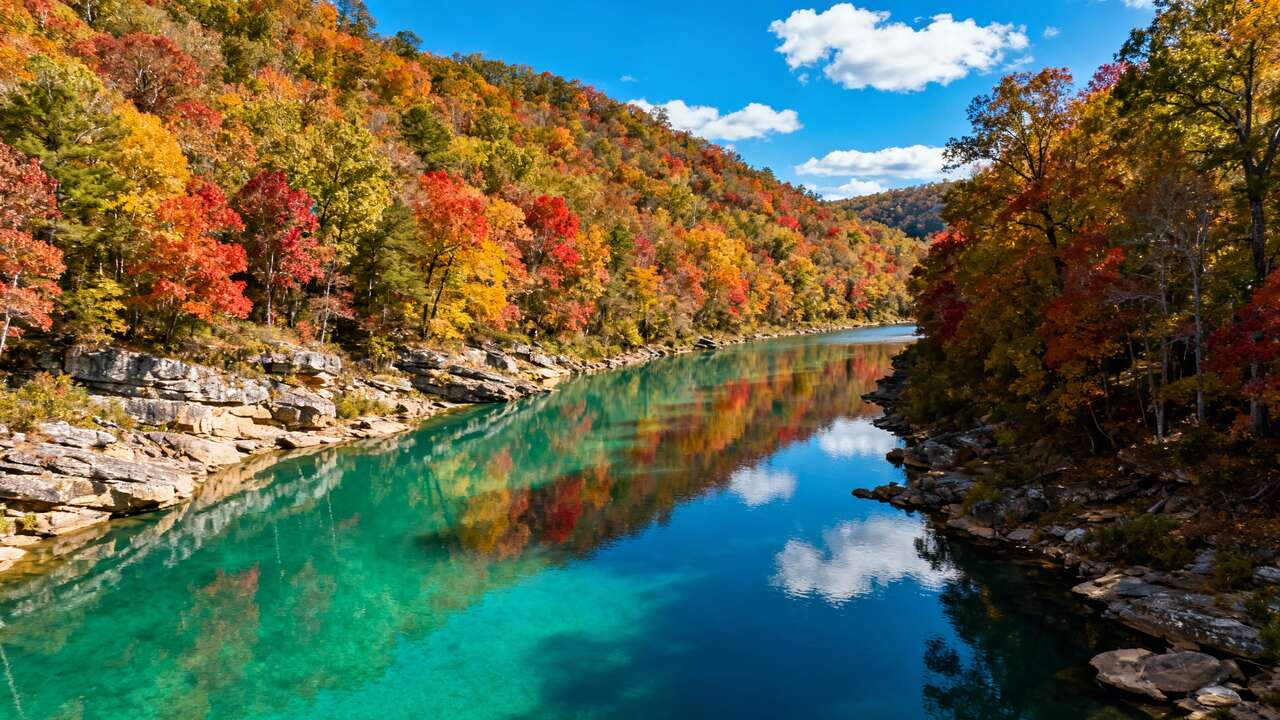

Tucked away in the Ozark Mountains, a ribbon of shockingly clear, turquoise water carves its way through towering limestone bluffs. This is the Buffalo River, a protected waterway that offers a serene escape, particularly as autumn cloaks the landscape in a riot of color. Recognized as the nation’s first national river, it stands as a testament to successful conservation and remains one of the last major undammed rivers in the contiguous United States, offering an unfiltered glimpse into the region’s natural splendor.
Discovering the Buffalo River
A Legacy of Protection
The Buffalo River’s designation as a national river in 1972 was the culmination of a fierce conservation battle. For years, plans were underway to construct a hydroelectric dam that would have submerged its scenic canyons and rapids. A local obstetrician and avid outdoorsman, Neil Compton, spearheaded the opposition. He founded the Ozark Society, a conservation group that rallied public support and lobbied tirelessly to protect the river. Their efforts were successful, preserving the river’s 153-mile course in its free-flowing state for future generations. This history is not just a footnote; it is the very reason visitors today can experience its untamed beauty.
The First National River
Being named the first national river in the United States set a precedent for protecting unique river systems across the country. Unlike a national park, which typically encompasses a large, contiguous land area, a national river designation protects the river itself and its immediate corridor. This ensures the preservation of its ecological integrity, recreational opportunities, and scenic vistas. The Buffalo River watershed is a delicate ecosystem, and its protected status helps safeguard the incredible biodiversity found within its forests and clear waters.
This commitment to preservation has allowed the river’s most defining characteristic to remain pristine and accessible to all who visit.
The Turquoise Waters: a Natural Spectacle
The Science Behind the Scenery
The first thing that strikes many visitors is the water’s vibrant, almost surreal, turquoise hue. This remarkable color is not due to pollution but to the river’s geology. The Buffalo River flows over a bed of limestone and dolomite, sedimentary rocks rich in calcium carbonate. As groundwater and rainfall percolate through this rock, they dissolve these minerals. The fine mineral particles, particularly calcite, remain suspended in the water column. These particles reflect sunlight, especially the blue and green wavelengths, creating the brilliant aquamarine and turquoise colors that make the river so famous. The water is often so clear that one can see the riverbed many feet below the surface.
Best Viewing Conditions
The intensity of the water’s color can vary depending on several factors. It is typically most vibrant during periods of stable weather when the river is running clear and sediment has had time to settle. After a heavy rain, runoff can temporarily cloud the water, muting its famous color. The best viewing is often found in the upper and middle sections of the river, where the interaction with the limestone bluffs is most pronounced. Sunlight plays a crucial role; on bright, sunny days, the colors are exceptionally vivid, offering a spectacular contrast against the white bluffs and deep green foliage.
While the water itself is a year-round attraction, the surrounding landscape transforms dramatically with the seasons, offering unique opportunities for adventure, especially in the fall.
Must-Do Activities for Autumn
Paddling Through an Autumn Palette
Autumn is arguably one of the most magical times to be on the Buffalo River. As the scorching summer heat subsides, the cool, crisp air makes for perfect paddling conditions. From late September through early November, the maples, oaks, and black gums that line the riverbanks erupt in a symphony of red, orange, and yellow. Floating in a canoe or kayak offers a unique perspective, with the vibrant fall colors reflected perfectly on the calm, turquoise surface of the water. Popular floats include the stretch from Ponca to Kyles Landing, which is famous for its towering bluffs and scenic beauty. Outfitters in nearby towns offer rentals and shuttle services, making it easy for both novice and experienced paddlers to enjoy a day on the river.
Witnessing the Annual Elk Rut
The Buffalo River corridor is home to a thriving herd of elk, and autumn marks the peak of their breeding season, known as the rut. From mid-September to late October, the valleys around the Boxley Valley Historic District and the town of Ponca echo with the distinctive bugling of bull elk. These majestic animals can often be seen grazing in the open fields, especially during the early morning and late evening hours. It is a spectacular wildlife display, but visitors are reminded to observe from a safe distance. For the best viewing experience, consider the following:
- Bring binoculars or a telephoto lens to get a closer look without disturbing the animals.
- Remain in or near your vehicle, as it can act as a natural blind.
- Avoid making loud noises or sudden movements that could startle the elk.
- Never feed the wildlife, as it is harmful to them and can be dangerous for you.
Beyond the river and its wildlife, the surrounding hills and bluffs offer their own set of adventures for those who prefer to explore on foot.
Hiking and Stargazing
Trails with Breathtaking Vistas
With over 60 miles of trails winding alongside it, the Buffalo River offers some of the most scenic hiking in the Ozarks. The trails range from easy, family-friendly walks to strenuous, multi-day treks. One of the most popular segments is the Buffalo River Trail (BRT), which provides stunning overlooks and access to remote parts of the park. The section from Boxley to Pruitt is particularly rewarding, offering panoramic views of the river valley. In autumn, the trails are covered in a carpet of fallen leaves, and the cooler temperatures make for comfortable hiking. A must-see destination for many hikers is Hawksbill Crag, a rock outcrop that offers one of the most iconic and photographed views in all of Arkansas.
An International Dark Sky Park
Far from the light pollution of major cities, the Buffalo National River was designated as an International Dark Sky Park in 2019. This recognizes the exceptional quality of its starry nights and the ongoing commitment to preserving the natural darkness. On a clear, moonless night, the sky above the Buffalo River is a breathtaking spectacle. The Milky Way stretches from horizon to horizon, and constellations are visible with incredible clarity. Stargazing can be as simple as laying out a blanket in an open field near a campground or finding a scenic overlook. For visitors, this provides a unique opportunity to reconnect with the night sky, an experience that is becoming increasingly rare in the modern world.
The pristine condition of both the river and the night sky is no accident; it is the result of dedicated efforts to maintain the area’s natural state.
Conservation and Site Preservation
The “Leave No Trace” Ethos
The long-term health of the Buffalo River ecosystem depends heavily on the actions of its visitors. Park authorities and conservation groups strongly promote the principles of “Leave No Trace” to minimize human impact. This philosophy encourages visitors to be responsible stewards of the land and water. Key principles include packing out everything you pack in, disposing of waste properly, respecting wildlife, and leaving natural objects as you find them. By adhering to these guidelines, every visitor plays a role in preserving the river’s beauty and ecological balance for generations to come. It is a shared responsibility that ensures the park remains a pristine sanctuary.
Ongoing Challenges and Efforts
While the river is protected, it is not immune to external threats. Issues such as water quality from upstream sources, the spread of invasive species, and the pressures of increasing tourism require constant monitoring and management. Local organizations, working in tandem with the National Park Service, continue the legacy of Neil Compton by advocating for policies that protect the entire watershed. These ongoing efforts are vital to safeguarding not just the river itself, but the entire web of life that it supports, ensuring that its turquoise waters continue to flow freely and cleanly through the heart of the Ozarks.
Understanding this context of conservation can make a visit even more meaningful, and with a little preparation, your own trip can be both enjoyable and respectful of this natural treasure.
Plan Your Visit
When to Go and What to Expect
While the Buffalo River is a year-round destination, autumn offers a unique combination of pleasant weather, stunning foliage, and active wildlife. The peak fall color generally occurs from mid-October to early November, but this can vary based on elevation and weather patterns. Because the Buffalo River is at a higher elevation than much of Arkansas, its leaves tend to change a few days earlier. Be aware that services are limited within the park itself. The nearest towns for supplies, lodging, and dining are Jasper, Ponca, and Harrison. Cell service is unreliable to non-existent in most of the river corridor, making it an excellent opportunity to disconnect and immerse yourself in nature.
Essential Information for Visitors
A successful trip to the Buffalo River requires some planning. Below is a table summarizing key considerations for an autumn visit.
| Aspect | Details and Recommendations |
|---|---|
| Lodging | Options range from primitive backcountry camping to developed National Park Service campgrounds and private cabins for rent in nearby towns. Book well in advance, especially for autumn weekends. |
| Gear | Bring layers of clothing as temperatures can fluctuate significantly. Sturdy hiking shoes are a must. If paddling, bring or rent dry bags to protect your belongings. A physical map is essential as GPS is unreliable. |
| Safety | River levels can change rapidly after rain. Always check the current conditions before heading out on the water. Be aware of wildlife, particularly during the elk rut, and maintain a safe distance. |
| Activities | Floating, hiking, wildlife viewing, fishing, and stargazing are the primary activities. Plan your itinerary around one or two key activities per day to avoid rushing. |
With its vibrant turquoise waters set against a backdrop of autumn fire, the Buffalo River offers an unforgettable adventure for those willing to seek it out.
This protected waterway is more than just a destination; it is a living monument to conservation. The brilliant turquoise water, the dramatic bluffs, the rich wildlife, and the spectacular fall foliage combine to create a truly special place. Whether you come to paddle its gentle currents, hike its scenic trails, or simply sit by its banks and watch the world go by, the Buffalo River offers a profound connection to the natural world and stands as one of Arkansas’s most precious hidden gems.

- The 5 most affordable ski resorts in North America for the 2025 season - 13 November 2025
- Far Less Crowded Than the Grand Canyon, This Utah Park Offers Views Just as Spectacular This Fall - 13 November 2025
- This California Town Has a Unique Danish Village Vibe You Won’t Find Anywhere Else - 12 November 2025
Pubblicazioni simili :
 Forget the Keys: This Laid-Back Florida Island Is the Real Undiscovered Paradise This Autumn
 This Small New York Town Is Arguably the Spookiest, Most Perfect Autumn Destination in America
 This Wisconsin Peninsula Is the Trendiest Autumn Destination in the Midwest Right Now
 Autumn in This New Mexico City Is Filled With Art, Culture, and Crisp Mountain Air