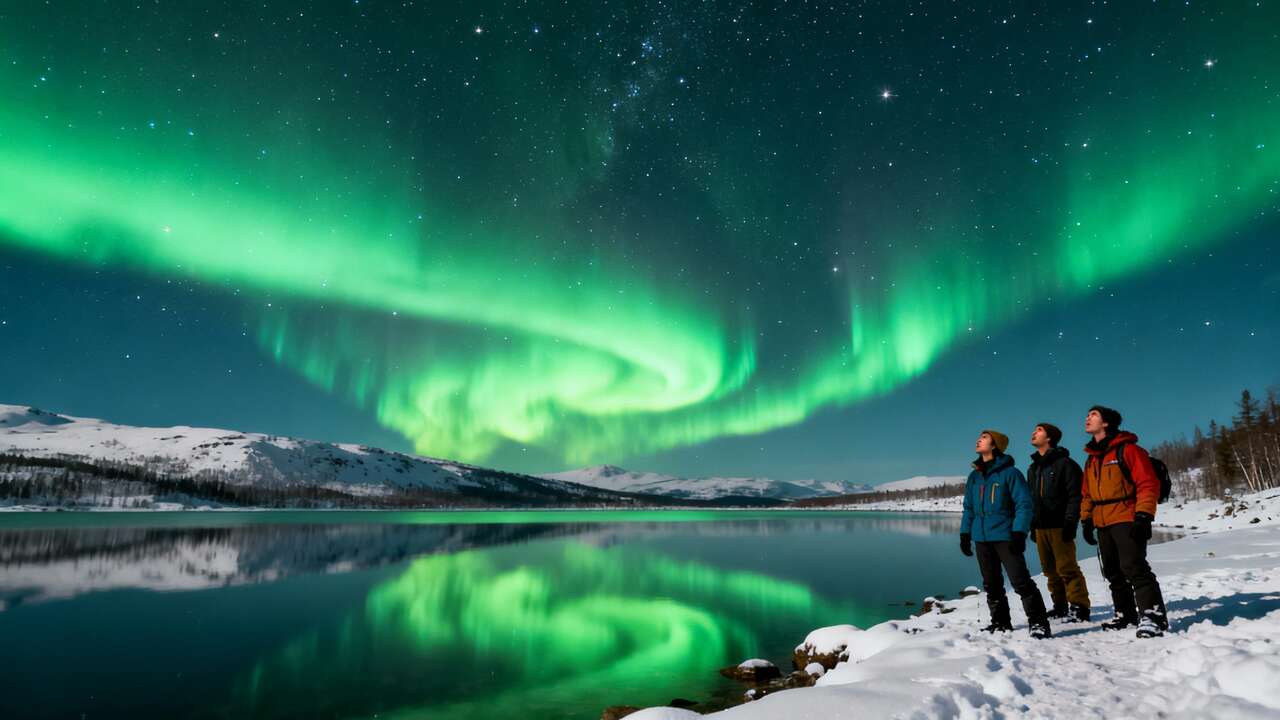

The dance of the Aurora Borealis across the night sky is a spectacle that has captivated humanity for millennia. This celestial ballet, a result of charged particles from the sun colliding with gases in the Earth’s upper atmosphere, paints the polar heavens in ethereal shades of green, pink, and violet. While many locations offer a glimpse of this phenomenon, few can promise the consistency and brilliance found in a remote corner of swedish Lapland. Here, nestled deep within the arctic circle, the small village of Abisko has earned a global reputation as arguably the most reliable place on Earth to witness the northern lights, a claim supported by both atmospheric science and the experiences of countless visitors.
Discover the Northern Lights: why Choose Abisko
A Phenomenal Microclimate
Abisko’s primary advantage lies in its unique weather patterns. The village is situated in the rain shadow of the massive Scandinavian Mountains, which effectively block incoming coastal clouds from the west. This creates a pocket of remarkably clear sky, often referred to as the “blue hole of Abisko.” Even when surrounding areas are blanketed in clouds, Abisko frequently enjoys clear conditions, drastically increasing the odds of a successful aurora viewing. This meteorological anomaly is the single most important factor that sets Abisko apart from other northern lights destinations.
Pristine Darkness
Located nearly 200 kilometers north of the arctic circle and far from any major urban centers, Abisko is virtually free of light pollution. The profound darkness of the long winter nights provides a perfect black canvas for the aurora’s vibrant colors. The lack of artificial light allows even the faintest auroral displays to be seen with stunning clarity, an experience often diminished in more populated regions. This natural darkness is essential for both visual observation and photography.
The Aurora Sky Station
Perched atop Mount Nuolja at an altitude of 900 meters, the Aurora Sky Station offers an unparalleled vantage point. Accessible via a chairlift, it lifts observers above the valley’s treeline and any lingering low-lying haze. This dedicated outpost is equipped with viewing platforms and warm indoor spaces, creating a comfortable and strategic location specifically designed for watching the northern lights. Its elevation and panoramic views make it a world-renowned hub for aurora chasers.
Understanding why Abisko provides such an ideal stage for the northern lights naturally leads to the question of timing your visit for the best possible show.
When to Visit Abisko to Maximize Your Chances
The Prime Aurora Season
The optimal period for viewing the northern lights in Abisko runs from late September to early April. The key ingredient for seeing the aurora is darkness, and during these months, the nights are long and deep. While the lights are technically active year-round, the midnight sun of the arctic summer renders them invisible. The equinox months of September and March are often cited by experts as periods of potentially heightened geomagnetic activity, which can lead to more intense and dynamic auroral displays.
Planning Around the Lunar Cycle
While solar activity is the engine of the aurora, the moon can also play a significant role in your viewing experience. A full moon can be so bright that it washes out fainter auroras. For the most dramatic contrast and the best photographic opportunities, planning your trip around the new moon is a wise strategy. However, a moonlit snowscape under a strong aurora can also be a breathtakingly beautiful sight, so a bright moon shouldn’t be a dealbreaker.
Statistical Probabilities of Sighting
Abisko’s reliable conditions offer some of the highest probabilities of seeing the northern lights in the world. While a sighting is never guaranteed, statistics based on local conditions provide a strong incentive for a multi-night stay. Staying longer significantly mitigates the risk of being thwarted by a rare cloudy night or a period of low solar activity.
| Length of Stay | Approximate Chance of Sighting |
|---|---|
| 1 Night | Fair |
| 2 Nights | Good |
| 3 Nights | Excellent (around 80%) |
| 4+ Nights | Very High (approaching 95%) |
With the ideal time frame established, the practical logistics of reaching this remote arctic destination become the next critical piece of the puzzle.
Getting to Abisko Easily: options and Tips
Traveling by Air and Land
The most common route to Abisko begins with a flight to Kiruna Airport (KRN), the main air hub for swedish Lapland. Direct flights are available from Stockholm and typically take about 90 minutes. From Kiruna, Abisko is approximately 100 kilometers further west. The final leg of the journey can be completed with ease via several ground transportation options. Each offers a different balance of cost, convenience, and experience.
- Train: A direct train line connects Kiruna to Abisko, with the journey taking around one hour. This is often the most reliable option during heavy winter weather.
- Bus: Public buses also service the route, offering a cost-effective alternative.
- Rental Car: Renting a car provides the most flexibility for exploring the region, but drivers should be experienced and comfortable with winter driving conditions, including snow and ice.
- Shuttle Transfer: Many local hotels and tour operators offer pre-booked shuttle services directly from the airport.
The Scenic Overnight Train
For a more immersive and traditional travel experience, an overnight train runs directly from Stockholm to Abisko. The journey is a slow, scenic passage through the heart of Sweden, transitioning from southern forests to the vast, snow-covered landscapes of the arctic. While it takes much longer than flying (around 17 hours), it is an adventure in itself, allowing travelers to wake up in the heart of Lapland. It is a comfortable and environmentally friendly way to travel, with options for private sleeping compartments.
Once you have successfully navigated your way to this arctic outpost, securing the right place to stay is paramount for a comfortable and memorable trip.
Accommodation in Abisko: where to Stay for Northern Lights Viewing
The Abisko Turiststation
The largest and most well-known accommodation is the Abisko Turiststation. It offers a range of options, from a hotel and cabins to a hostel, catering to various budgets. Its prime location at the edge of the national park and at the base of the chairlift to the Aurora Sky Station makes it incredibly convenient. They also offer guided tours, equipment rentals, and educational lectures about the northern lights, making it a full-service hub for visitors.
Village Guesthouses and Lodges
The village of Abisko Östra, located a couple of kilometers from the Turiststation, offers a variety of smaller, often family-run guesthouses and lodges. These provide a cozier and sometimes more intimate experience. Many of these accommodations have their own prime viewing spots away from the main crowds and offer personalized services. It is essential to book any accommodation in Abisko months in advance, as options are limited and fill up quickly, especially during the peak season from December to March.
With your travel and lodging arranged, the focus can shift to capturing the beauty of the aurora, a rewarding challenge for any photographer.
Tips for Capturing the Northern Lights on Camera in Abisko
Essential Photographic Gear
Photographing the aurora requires more than just a smartphone. To do the spectacle justice, specific equipment is necessary to handle the low-light conditions and cold temperatures. Bringing the right gear is the first step toward a successful photo session.
- A camera with manual mode: A DSLR or mirrorless camera is essential for controlling the settings required for astrophotography.
- A wide-angle lens: A lens with a focal length between 14mm and 24mm is ideal for capturing the vastness of the sky.
- A fast aperture: The lens should have a wide maximum aperture (f/2.8 or lower) to let in as much light as possible.
- A sturdy tripod: Long exposures are necessary, making a solid tripod non-negotiable to prevent blurry images.
- Extra batteries: The extreme cold of an arctic night drains batteries at an alarming rate. Keep spares in a warm pocket close to your body.
Fundamental Camera Settings
Finding the perfect settings is a process of trial and error, as the brightness and speed of the aurora are constantly changing. However, a good starting point will help you get sharp, well-exposed images. Remember to set your focus to infinity manually, as autofocus will not work in the dark.
| Setting | Recommended Starting Point | Reason |
|---|---|---|
| Aperture | f/2.8 or widest possible | To gather the maximum amount of light. |
| Shutter Speed | 5-15 seconds | Long enough to capture light, short enough to avoid star trails. |
| ISO | 1600-3200 | To increase sensor sensitivity without introducing too much noise. |
| Focus | Manual (set to infinity) | Autofocus will fail to find a focal point in the dark. |
While the northern lights are the main attraction, the adventure in Abisko doesn’t have to end when the sun rises.
Complementary Activities and Attractions around Abisko
Daylight in the National Park
Abisko National Park is a stunning landscape of frozen waterfalls, arctic birch forests, and vast, open terrain. Daytime hours can be filled with invigorating outdoor activities. Snowshoeing and cross-country skiing are popular ways to explore the marked trails, offering silence and solitude. The walk through the Abisko Canyon, with its ice-covered walls, is a particularly dramatic and accessible excursion for most visitors.
Thrilling Arctic Excursions
For a faster-paced adventure, several local operators offer guided tours that immerse you in the arctic environment. A dogsledding tour is a quintessential Lapland experience, gliding through the silent, snowy landscape powered by a team of eager huskies. Snowmobile tours offer another way to cover more ground and access remote viewpoints and frozen lakes, providing a different perspective on the sheer scale of the wilderness.
Sámi Cultural Experiences
The region is part of Sápmi, the ancestral land of the indigenous Sámi people. Visitors have the opportunity to engage with this ancient culture. Nearby operations offer experiences where you can meet and feed reindeer, the cornerstone of Sámi life, and sit in a traditional lávvu (teepee) to listen to stories and learn about their deep connection to the land and their history of reindeer herding. This provides valuable context and a deeper appreciation for the region you are visiting.
Abisko offers a complete arctic experience, combining the world’s best northern lights viewing with a host of unforgettable daytime activities. The unique microclimate, pristine dark skies, and excellent accessibility make it an unparalleled destination. Whether you are an avid photographer, an adventure seeker, or simply someone looking to witness one of nature’s greatest wonders, the journey to this swedish outpost promises a profound connection to the raw beauty of the polar world.

- The 5 most affordable ski resorts in North America for the 2025 season - 13 November 2025
- Far Less Crowded Than the Grand Canyon, This Utah Park Offers Views Just as Spectacular This Fall - 13 November 2025
- This California Town Has a Unique Danish Village Vibe You Won’t Find Anywhere Else - 12 November 2025