
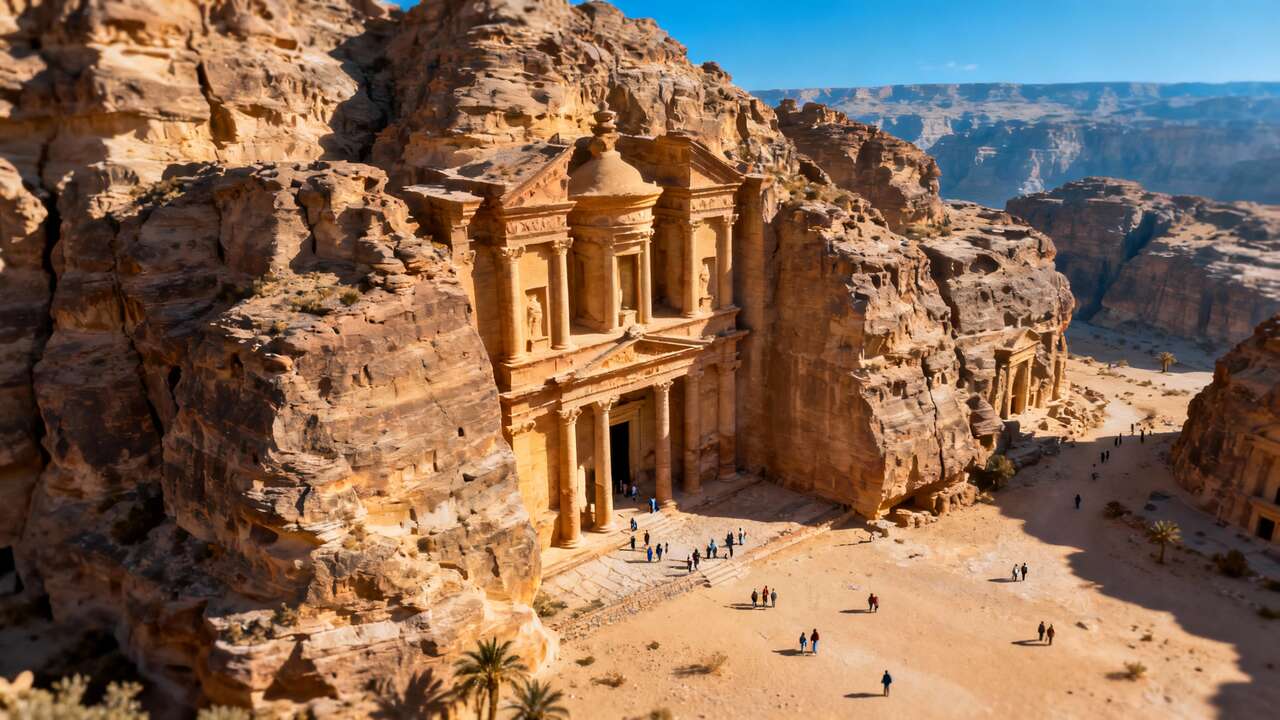

Venture beyond the high-season crowds and the scorching summer sun. Imagine a journey into the heart of an ancient world, where the cool winter air whispers through monumental canyons and the silence is as profound as the history carved into the rose-red stone. This December, discover Petra, the lost city of Jordan, not as a bustling tourist attraction, but as a serene and deeply personal pilgrimage. The cooler temperatures and sparse crowds of the off-season transform this archaeological marvel into a tranquil sanctuary, offering an unparalleled opportunity to connect with its timeless grandeur. Prepare to walk in the footsteps of the Nabateans and experience the raw, unadulterated magic of a world wonder waiting to be explored in peaceful solitude.
Discovering Petra in December: a Unique Experience
The Allure of the Off-Season
Visiting Petra during the peak months of spring and autumn often means navigating shoulder-to-shoulder crowds and contending with intense heat. December, however, presents a starkly different picture. The off-season grants visitors the luxury of space and time. You can stand before the iconic Treasury, Al-Khazneh, without a sea of smartphones obscuring your view. The pathways, normally teeming with activity, become quiet corridors where the sound of your own footsteps echoes against the ancient stones. This tranquility allows for a more immersive and reflective experience, fostering a genuine connection with the monumental scale and intricate history of the site. It is a chance to see Petra not as a spectacle, but as a living museum, unveiled just for you.
A Different Perspective in Winter Light
The quality of light in winter offers a unique aesthetic that photographers and keen observers will cherish. The sun sits lower in the sky, casting long, dramatic shadows that sculpt the rock-cut facades and deepen the textures of the sandstone. This low-angled light enriches the famous rose-red hues of the city, bringing out a spectrum of colors from deep crimson to pale pink and orange that might be washed out by the harsher sun of other seasons. Mornings are crisp and clear, while the “golden hour” before sunset bathes the entire valley in a warm, ethereal glow, providing countless opportunities for breathtaking photographs and unforgettable memories. This soft, dynamic light truly brings the architectural details to life.
The unique advantages of a December visit set the stage for a profound journey, one that is enriched by understanding the very foundations of this magnificent city.
Fascinating History of the Lost City
The Ingenious Nabatean Kingdom
Long before it became a world-renowned archaeological site, Petra was the thriving capital of the Nabatean kingdom, beginning around the 4th century BC. The Nabateans were masterful traders, controlling lucrative caravan routes that transported frankincense, myrrh, and spices between the Arabian Peninsula and the Mediterranean. Their wealth was immense, but their true genius lay in engineering. In a harsh desert environment, they harnessed the power of water, constructing a complex system of dams, cisterns, and channels to capture and store precious rainwater. This hydraulic ingenuity allowed them to sustain a large population and create lush gardens, making their capital an improbable oasis in the desert. Their culture was a unique blend of Arabian traditions and Hellenistic influences, which is vividly reflected in Petra’s distinctive architecture.
From Flourishing Hub to Forgotten Ruin
Petra’s golden age began to wane in AD 106 when the Roman Empire annexed the Nabatean kingdom, creating the province of Arabia Petraea. While the city continued to prosper for a time under Roman rule, shifts in major trade routes to the north began to slowly erode its economic importance. A devastating earthquake in AD 363 caused significant damage to the city’s infrastructure and marked a turning point in its decline. Over the subsequent centuries, Petra was gradually abandoned, its magnificent structures left to the wind and the desert. For nearly a thousand years, it was effectively “lost” to the Western world, its location known only to the local Bedouin tribes who inhabited the area and revered its secrets.
Rediscovery and Enduring Legacy
The city’s reintroduction to the world came in 1812, when a Swiss explorer, disguised as an Arab scholar, persuaded his local guides to lead him to the rumored lost city. His detailed accounts and sketches sparked immense international interest. Since then, extensive archaeological work has uncovered a fraction of the sprawling metropolis, which is believed to be over 80% still buried beneath the sand. In 1985, Petra was designated a UNESCO World Heritage site, and in 2007, it was named one of the New Seven Wonders of the World, cementing its status as a priceless treasure of human heritage. Today, it stands as a powerful testament to the ambition, artistry, and resilience of the Nabatean civilization.
This rich history is etched into every stone, waiting to be discovered as you venture through its most celebrated monuments.
Exploration of Archaeological Wonders
The Siq: a Grand and Dramatic Entrance
The journey into Petra begins with a walk through the Siq, a narrow, winding canyon that stretches for over a kilometer. This natural geological fissure, with its towering sandstone cliffs reaching heights of up to 80 meters, serves as a dramatic prelude to the city itself. The path reveals tantalizing glimpses of Nabatean water channels carved into the rock walls and remnants of ancient paving stones underfoot. The walk is an experience of building anticipation; the canyon twists and turns, obscuring what lies ahead until the final, breathtaking moment when the pink facade of the Treasury is framed perfectly by the dark walls of the gorge. It is an entrance unmatched by any other ancient city in the world.
Al-Khazneh and the Street of Facades
Emerging from the Siq, you are greeted by Petra’s most iconic monument: Al-Khazneh, or The Treasury. Its elaborate, Hellenistic-style facade is carved directly into the sheer rock face with astonishing precision. Despite its name, which stems from a local legend about a pharaoh’s hidden treasure, scholars believe it was most likely a mausoleum for a Nabatean king. Its purpose remains shrouded in mystery, adding to its allure. Beyond the Treasury, the valley opens up to reveal the Street of Facades, a row of towering Nabatean tombs carved into the cliffside, showcasing the incredible skill of the city’s stonecutters. This area provides a glimpse into the grand scale of Petra’s necropolis and its architectural evolution.
Beyond the Main Path: a Sprawling City
While the Treasury is the most famous, it is merely the gateway to a vast archaeological park. To truly appreciate Petra, one must explore its many other wonders. These include:
- The Roman Theater: capable of seating over 8,000 spectators, this massive structure was uniquely carved directly out of the mountainside by the Nabateans and later expanded by the Romans.
- The Royal Tombs: an impressive group of large, ornate mausoleums, including the Urn Tomb and the Palace Tomb, which offer stunning views over the lower part of the city.
- The Colonnaded Street: the heart of Roman-era Petra, this paved street was once lined with shops, temples, and public buildings, showcasing the city’s transition under Roman influence.
- The Monastery (Ad-Deir): located high in the hills, reaching this monumental facade requires a strenuous climb of around 800 steps. However, the reward is immense. Ad-Deir is even larger than the Treasury and offers panoramic views of the surrounding mountains and valleys.
To make the most of exploring these vast wonders, it is crucial to be prepared for the specific environmental conditions of a Jordanian December.
Weather Conditions in December
Daytime Temperatures and Sunshine
December in Petra offers a refreshing escape from the intense heat that defines much of the year in Jordan. Daytime temperatures are typically cool and pleasant, making it ideal for the extensive walking and hiking required to explore the site. You can expect average highs that are comfortable for being active outdoors, without the risk of overheating. While the sun is less intense than in summer, it still provides ample warmth and beautiful light. However, the days are shorter, so it is important to plan your time effectively to see everything you want before dusk. Dressing in layers is the key strategy to adapt to the fluctuating temperatures throughout the day.
Evening Chill and Packing Essentials
Once the sun sets behind the mountains, the desert temperature drops significantly. Evenings and nights can be quite cold, so packing warm clothing is essential. A fleece or down jacket, a hat, gloves, and warm socks will ensure you remain comfortable, especially if you plan to experience “Petra by Night” or stay in a Bedouin camp. The contrast between the mild day and the cold night is a defining characteristic of the desert climate. Being unprepared for the evening chill can put a damper on your experience, so it is vital to pack accordingly for both warmth and comfort.
Precipitation and Weather Data
December is one of the wetter months in Jordan, which means there is a chance of rain during your visit. While prolonged downpours are uncommon, short, sharp showers can occur. A waterproof jacket is a practical addition to your luggage. Rain can make the stone paths slippery and can occasionally lead to the temporary closure of certain low-lying areas, like the Siq, due to the risk of flash floods. It is always wise to check the local forecast before heading out. The table below provides a general overview of what to expect.
| Climate Metric | December Average |
|---|---|
| Average High Temperature | 55°F / 13°C |
| Average Low Temperature | 40°F / 4°C |
| Average Days with Rain | 6-8 days |
| Average Monthly Rainfall | 1.2 inches / 30 mm |
With a clear understanding of the weather, you can now focus on the logistics that will ensure a smooth and memorable trip.
Practical Tips for Visiting Petra
What to Wear and Carry
Your comfort in Petra will largely depend on being properly attired. The number one rule is to wear sturdy, comfortable walking shoes with good grip, as you will be covering several miles on uneven, sandy, and rocky terrain. Given the December weather, layering is essential. Start with a base layer, add a fleece or sweater, and top it off with a windproof and waterproof jacket that you can easily remove as the day warms up. Other essentials to carry in a daypack include:
- A reusable water bottle to stay hydrated.
- Sunscreen and sunglasses, as the winter sun can still be strong.
- A hat and gloves for the cold mornings and evenings.
- Snacks to keep your energy levels up.
- A portable charger for your phone or camera.
Navigating Tickets and Tours
For most international travelers, the most cost-effective way to visit Petra is by purchasing the Jordan Pass online before arriving in the country. This pass not only waives the tourist visa fee but also includes entry to Petra and dozens of other sites across Jordan. You can choose a pass based on the number of consecutive days you wish to spend at Petra. While exploring on your own is straightforward, hiring a licensed guide at the visitor center for the first couple of hours can provide invaluable historical context. Do not miss the magical “Petra by Night” experience, a separate ticketed event where the Siq and the Treasury are illuminated by thousands of candles, creating an unforgettable atmosphere.
Getting There and Around the Site
Petra is located in the town of Wadi Musa. The nearest international airports are Queen Alia International Airport (AMM) in Amman, about a three-hour drive away, and King Hussein International Airport (AQJ) in Aqaba, roughly a two-hour drive. You can travel between cities by bus, private taxi, or rental car. Once at the site, the primary mode of transport is your own two feet. While there are options to hire donkeys, camels, or horse-drawn carriages, it is important to be mindful of animal welfare concerns. Walking allows you to set your own pace and fully absorb the grandeur of the surroundings, especially on the trails leading to the Monastery or the High Place of Sacrifice.
These practical considerations are your toolkit for a successful visit, allowing you to focus on the ultimate reward: finding moments of peace in this ancient landscape.
Avoiding Crowds and Enjoying Serenity
The Unrivaled December Advantage
The single greatest benefit of a December visit is the dramatic reduction in visitor numbers. During the spring and autumn peak seasons, the main path from the visitor center to the Treasury can feel like a crowded highway. In December, this path is blissfully quiet. You can take your time walking through the Siq, stopping to admire the rock formations without being hurried along. This lack of crowds fundamentally changes the nature of the experience, transforming it from a tourist checklist into a personal exploration. It allows for moments of quiet contemplation that are simply impossible when surrounded by thousands of other people. The city feels more ancient and mysterious when you have its vast spaces almost to yourself.
Strategic Timing for Key Monuments
Even in the low season, you can optimize your visit for maximum solitude. The key is strategic timing. To see the Treasury at its most magical, arrive at the park entrance right when it opens. This gives you a high chance of walking through a near-empty Siq and emerging to see the facade illuminated by the morning sun with very few people around. Conversely, most tour groups tend to leave by mid-afternoon. This makes late afternoon the perfect time to visit popular spots like the Monastery. The climb will be quieter, and you will be rewarded with the golden light of sunset on the magnificent structure, often sharing the view with only a handful of other dedicated explorers.
Exploring Off the Beaten Path
Petra is much more than its main trail. The park is crisscrossed with numerous hiking paths that lead to breathtaking viewpoints and lesser-known ruins. Taking one of these trails is the best way to find true solitude. The Al-Khubtha Trail, for example, leads to a spectacular viewpoint directly overlooking the Treasury from above. The trail to the High Place of Sacrifice offers panoramic views of the entire city center. These hikes require a moderate level of fitness, but the reward is immense: a sense of discovery and a perspective on Petra that most visitors never see. In December, you may find you have these incredible vistas all to yourself, a truly priceless experience.
Embrace the quiet of the off-season and let the Rose City reveal its secrets to you. Plan your December journey to Petra and witness its timeless beauty without the crowds. Take advantage of the pleasant, cool weather to explore its hidden trails and stand in awe before its monumental architecture in peaceful solitude. This is not just a trip; it is an opportunity to connect with history on a profound and personal level. Do not just read about the wonders of this lost city; go and experience its serene winter magic for yourself.

- The 5 most affordable ski resorts in North America for the 2025 season - 13 November 2025
- Far Less Crowded Than the Grand Canyon, This Utah Park Offers Views Just as Spectacular This Fall - 13 November 2025
- This California Town Has a Unique Danish Village Vibe You Won’t Find Anywhere Else - 12 November 2025