
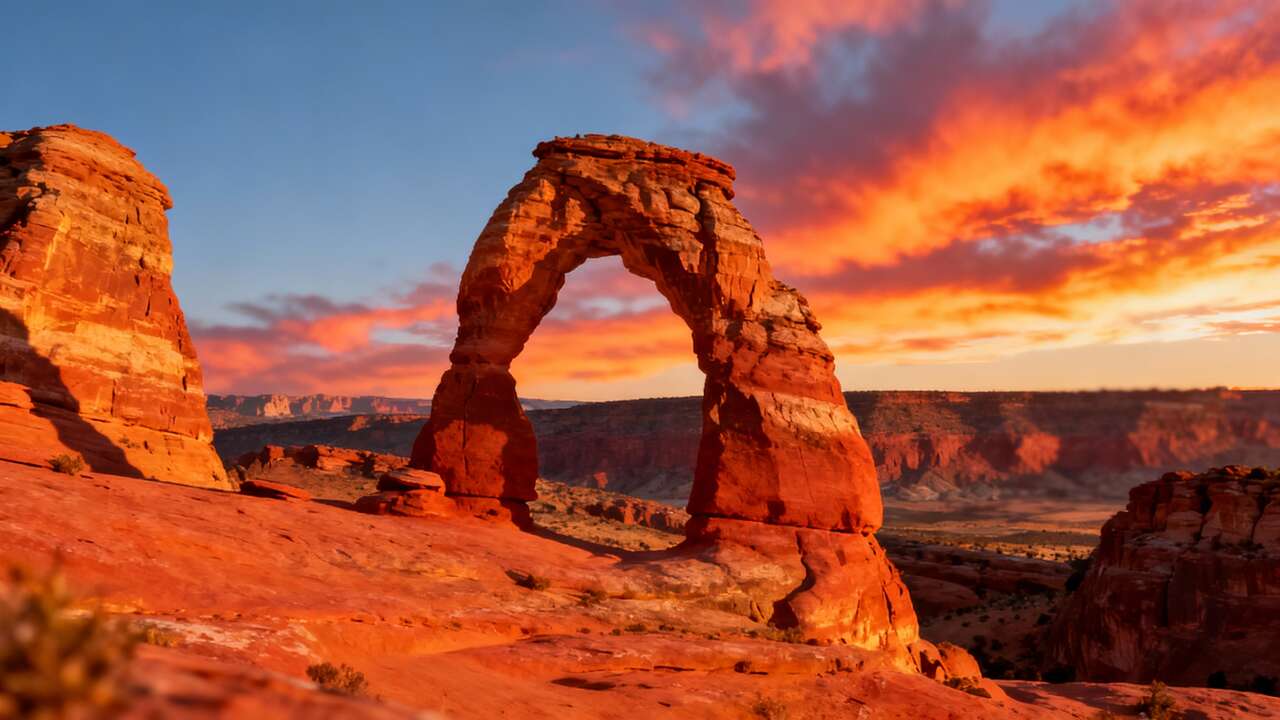

Nestled amid the dramatic red rock landscapes of eastern Utah, the town of Moab carries a history as rugged and formidable as its surrounding canyons. Its origins are deeply entwined with the lore of the American West, a place not settled by pious farmers seeking utopia, but by rugged individualists, prospectors, and, most notoriously, outlaws seeking refuge. The very geography that now draws thrill-seekers and tourists was once the town’s greatest asset for those living outside the law, offering a labyrinth of canyons and desolate expanses perfect for evasion and concealment.
Foundation of Moab: a Town of Outlaws
Geographic Isolation as an Asset
The story of Moab’s settlement cannot be told without acknowledging its landscape. The region is a geological masterpiece of canyons, mesas, and arches carved by the Colorado River. This terrain, particularly areas like the nearby Maze District and Robbers Roost, created a natural fortress for those on the run. These areas were so remote and difficult to navigate that The Maze, for instance, remained largely unmapped until the late 1960s. For outlaws, this was a significant advantage; it provided countless hiding spots and escape routes that were nearly impossible for pursuing lawmen to track, making the region a veritable sanctuary for fugitives.
Early Settlement and a Lawless Reputation
While explorers had passed through the area for decades, permanent settlement began in earnest around 1877, shortly after local Ute tribes were moved to reservations. The nascent community quickly developed into a quintessential Wild West town, but its reputation was far from peaceful. By the end of the 19th century, Moab had become known as one of the toughest towns in Utah. Its isolation and proximity to untamed wilderness attracted not just ranchers and miners, but also a steady stream of rustlers, gunslingers, and notorious gangs, including the infamous Wild Bunch, led by one of the era’s most legendary figures.
A Haven for the Wild Bunch
The town and its surroundings became a frequent stomping ground for Butch Cassidy and his gang. They used the remote hideouts to plan their robberies of trains and banks across the West. The outlaws would retreat to the safety of the canyons to count their loot and lay low until the heat from law enforcement subsided. The local economy, wittingly or not, often benefited from the outlaws’ presence, as stolen cash was spent in local saloons, general stores, and liveries. This created a complex and often tense relationship between the town’s residents and the bandits they harbored.
The establishment of a town that served as both a home for pioneers and a hideout for criminals set the stage for a unique cultural dynamic defined by survival and mutual, if sometimes reluctant, codependence.
The Influence of Pioneers and Bandits
A Duality of Purpose
Moab’s early society was a study in contrasts. On one hand were the pioneers: hardworking ranchers, farmers, and prospectors determined to carve a life from the unforgiving desert landscape. They valued community, stability, and the rule of law. On the other hand were the bandits, who saw the region not as a place to build a home, but as a place to hide from one. This created an environment where the pioneering spirit of resilience coexisted with a deep-seated bandit mentality of opportunism. While pioneers built fences and tilled soil, outlaws scouted ambush points and escape routes, their paths crossing in the dusty streets of the town’s few businesses.
An Unconventional Local Economy
The outlaws, despite their illicit activities, were also consumers. The gold and cash from their heists flowed directly into Moab’s fledgling economy, supporting a range of local enterprises. This injection of capital, however tainted, was a vital lifeline for a remote community struggling to establish itself. Businesses that benefited included:
- Saloons and gambling halls, where outlaws spent lavishly.
- General stores, for supplies ranging from ammunition to canned goods.
- Livery stables, which provided fresh horses essential for quick getaways.
- Blacksmiths, who shod horses and repaired wagons without asking too many questions.
This economic relationship fostered a certain tolerance for the criminal element, as long as they didn’t cause too much trouble within the town limits. It was a pragmatic arrangement born of necessity and isolation.
Shaping a Frontier Culture
The constant presence of both law-abiding settlers and notorious fugitives forged a unique local culture. A strong sense of self-reliance was paramount, as official law enforcement was often distant and ineffective. A deep-seated suspicion of strangers was common, yet paradoxically, so was a code of minding one’s own business. This complex social fabric, woven from threads of both order and chaos, defined Moab’s identity for decades and left an indelible mark on the community’s character.
The physical town itself grew to reflect this duality, with structures built for civic purpose standing alongside those catering to a more transient and lawless clientele.
Architectural Remnants of the Era
Buildings That Tell a Story
Walking through parts of Moab today, one can still find buildings that whisper tales of its Wild West past. While many original wooden structures have been lost to time and fire, several stone and brick buildings from the late 19th and early 20th centuries remain. These structures, often built from local sandstone, exhibit the simple, functional architecture of the frontier. A prime example is the old bank building, which was a tempting target for outlaws and a symbol of the town’s growing permanence. Its thick walls and barred windows stand as a testament to an era when security was a primary concern. Another key structure was the local saloon, a social hub where ranchers, miners, and outlaws might have shared a drink, albeit cautiously.
The Weight of the Law: The Old Jailhouse
Perhaps no building is more symbolic of the struggle for order than Moab’s original jail. Often a simple, grim structure, it represented the thin line between civilization and chaos. These early jails were rarely escape-proof, but their presence was a clear statement that lawlessness would not be tolerated indefinitely. Stories abound of daring escapes and of sheriffs locking up rowdy cowboys to sober up overnight. The jail was less a long-term penitentiary and more of a temporary holding pen, a place where justice was swift and often rudimentary. Its solid construction was meant to hold the toughest of characters, if only for a short while.
Preserving a Tangible Past
Today, there is a concerted effort within the community to preserve these architectural links to the past. Many of these historic buildings have been repurposed as shops, galleries, and museums, allowing their stories to be shared with new generations. These preservation efforts are crucial, as the buildings provide a tangible connection to the pioneers and outlaws who shaped the town. They are not just old structures; they are artifacts of a time when survival depended on grit, and the line between a hero and a villain was often blurred, a conflict frequently played out between local lawmen and the gangs they pursued.
These preserved buildings stand as silent witnesses to the frequent and often violent clashes between those who sought to uphold the law and those who lived to break it.
History of Conflicts with Authorities
The Overmatched Local Sheriff
In the vast and rugged expanse of Grand County, the local sheriff was often the sole representative of the law. This individual faced an almost impossible task. He was typically outmanned, outgunned, and tasked with policing a territory that offered near-limitless hiding places for fugitives. Posses were difficult to form, as many ranchers were reluctant to leave their properties undefended. Furthermore, the outlaws knew the terrain intimately, giving them a decisive strategic advantage. The sheriff’s job was less about proactive law enforcement and more about reacting to the latest crime, often arriving long after the culprits had vanished into the canyons.
Federal Intervention and the Pinkertons
As the outlaw gangs grew bolder, their crimes, particularly train and bank robberies, began to attract the attention of more powerful forces. Railroads and banks hired private detective agencies, most notably the Pinkerton National Detective Agency, to hunt down the culprits. These agents were relentless and well-funded. Eventually, the federal government also stepped in, dispatching U.S. Marshals to restore order. This marked a significant escalation in the conflict, pitting the localized knowledge of the outlaws against the superior resources and organization of national law enforcement.
| Law Enforcement Body | Jurisdiction | Resources | Primary Advantage |
|---|---|---|---|
| County Sheriff | Local (County) | Limited (1-2 deputies, local posse) | Community ties |
| U.S. Marshals | Federal | Extensive (manpower, federal backing) | Legal authority, jurisdiction |
| Pinkerton Agents | Private (Corporate) | Significant (funding, intelligence network) | Relentlessness, infiltration tactics |
The End of an Era
The combined pressure from these various law enforcement bodies slowly but surely began to dismantle the great outlaw gangs. The turn of the 20th century saw increased settlement, the expansion of the telegraph, and better-organized law enforcement, all of which eroded the isolation that had protected the outlaws for so long. Famous standoffs and shootouts became less common as many gang members were captured, killed, or fled the country. The era of the outlaw sanctuary was drawing to a close, but the legends of their daring exploits and the deadly gunfights that defined them were just beginning to form.
The tools of these conflicts, the firearms themselves, became as legendary as the men who wielded them, forever cementing the image of the Wild West duel in popular culture.
Firearms and Legendary Duels
The Gun as a Tool of Survival
In the untamed territory around Moab, a firearm was an essential tool for daily life. For a rancher, it was protection against predators, both animal and human. For a prospector, it was security for his claim. And for an outlaw, it was the instrument of his trade and his primary means of defense. The Colt “Peacemaker” revolver and the Winchester repeating rifle were ubiquitous, representing personal sovereignty and immediate justice in a land where official help was often days away. This pervasive gun culture meant that disputes were frequently settled not by judges, but by the speed and accuracy of a gunslinger’s draw.
The Lore of the Main Street Showdown
While historical records show that Hollywood-style duels were rarer than films suggest, confrontations did occur. Moab’s local lore is filled with tales of tense standoffs in saloons and deadly shootouts on its dusty main street. These events were often the culmination of disputes over land, cattle, gold, or honor. The unwritten “code of the West” dictated the terms of these encounters, where a man’s reputation was on the line. These legendary duels, whether entirely factual or embellished over time, became a core part of the town’s identity, symbolizing the raw, violent nature of frontier life.
The Enduring Myth of the Gunfighter
The stories of these gunfights and the larger-than-life figures who participated in them have had a lasting impact. They have fueled the romanticized image of the American West, an image that Moab continues to embody. The gunfighter, whether a lawman or an outlaw, became a powerful symbol of American individualism and the struggle for dominance in a lawless land. This legacy is a key reason why the Wild West continues to captivate the public imagination, drawing visitors who want to connect with that mythic past.
Today, the town actively leverages this dramatic history, transforming the legends of outlaws and shootouts into compelling experiences for a modern audience.
Tourist Attractions and Living Memory of the Wild West
Bringing History to Life
Moab has successfully transformed its rugged history into a cornerstone of its modern tourism industry. Visitors can immerse themselves in the past through a variety of attractions that celebrate its Wild West heritage. Guided jeep and horseback tours take tourists to the remote hideouts of Butch Cassidy and the Wild Bunch, like Robbers Roost, allowing them to see the formidable landscapes that once protected these fugitives. Local museums, such as the Moab Museum of Film and Western Heritage, display artifacts from the era, from pioneer tools to outlaw weaponry, providing a tangible link to the people who lived and died there.
Moab as a Hollywood Backdrop
The town’s connection to the Wild West was cemented in the 20th century when its stunning scenery became a favorite filming location for Hollywood directors. The dramatic red rock arches and deep canyons provided the perfect, quintessentially American backdrop for countless Western films. This cinematic exposure reinforced Moab’s image as the archetypal frontier landscape in the minds of audiences worldwide. The genres filmed here include:
- Classic Westerns from the golden age of Hollywood.
- Modern neo-Westerns exploring contemporary themes.
- Adventure films that utilize the rugged terrain for dramatic action sequences.
This long history with the film industry has created a feedback loop, where the movies draw tourists, and the tourists come seeking the landscapes they recognize from the movies.
Experiencing the Frontier Today
For visitors, the spirit of the Wild West is not just confined to museums or film locations. It is an experience that can still be felt. Exploring the vast, undeveloped backcountry on horseback, gazing at the same star-filled sky that outlaws once used to navigate, or simply walking the historic main street allows one to connect with the town’s untamed past. Moab offers a unique opportunity to step back in time and experience a sense of the freedom, danger, and boundless possibility that defined the American frontier.
Moab’s identity is a powerful fusion of its stunning natural environment and its storied human history. The legacy of its outlaw founders and rugged pioneers is not a relic of the past but a living, breathing part of what makes the town a compelling destination, a place where the wild spirit of the West is still very much alive.

- The 5 most affordable ski resorts in North America for the 2025 season - 13 November 2025
- Far Less Crowded Than the Grand Canyon, This Utah Park Offers Views Just as Spectacular This Fall - 13 November 2025
- This California Town Has a Unique Danish Village Vibe You Won’t Find Anywhere Else - 12 November 2025
Pubblicazioni simili :
 This New Orleans Neighborhood Is the Birthplace of Jazz and Is Overflowing With History
 This Georgia Island Is Called the “Galapagos of North America” for Its Untouched Wildlife
 Far From the Crowds of Zion, This Utah State Park Is a Secret Hiker’s Paradise This Autumn
 This West Virginia Town Is at the Heart of Civil War History and Is Stunning in the Fall