
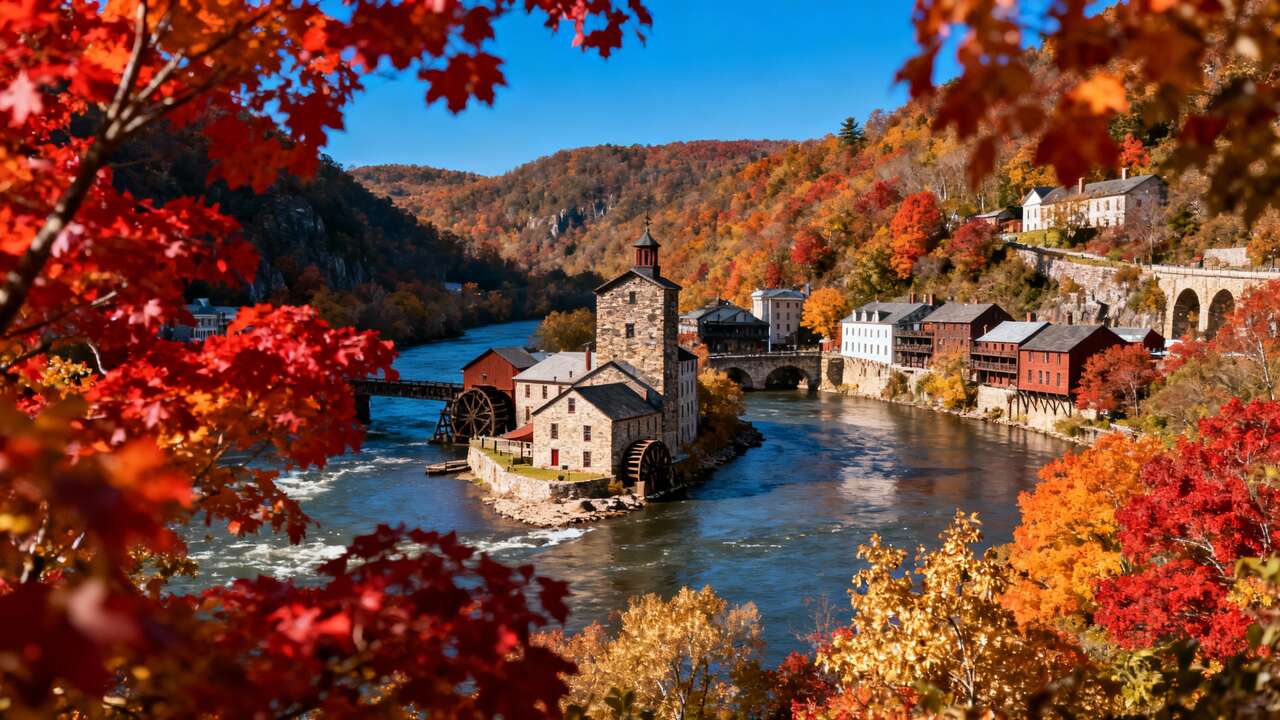

Nestled at the dramatic confluence of the Potomac and Shenandoah Rivers, the small West Virginia town of Harpers Ferry stands as a quiet yet powerful testament to the American narrative. Its cobblestone streets and 19th-century storefronts whisper tales of a nation in flux, a place where pivotal events unfolded against a backdrop of breathtaking natural beauty. This is more than just a historic site; it is a landscape where the echoes of the Civil War resonate through the valleys, especially when autumn sets the surrounding mountains ablaze with color, drawing visitors into a world where history and nature are inextricably linked.
Discovering Harpers Ferry: a Journey Through Time
From Ferry Crossing to Federal Armory
Long before it became a flashpoint in American history, this land was home to Native American tribes, including the Tuscarora and Shawnee. The town’s modern story began in the mid-18th century when an industrious settler established a ferry service across the Potomac River, giving the burgeoning settlement its name. Its strategic position at the meeting of two rivers made it an ideal location for industry and transport. By the end of the century, the U.S. government had recognized its potential, establishing a federal armory and arsenal. This decision cemented Harpers Ferry’s importance, transforming it into a vital center for weapons manufacturing that would later make it a coveted prize in the nation’s greatest conflict.
The Abolitionist’s Fateful Raid
Harpers Ferry was thrust onto the national stage in October 1859. A fervent abolitionist led a small band of men in a daring raid on the federal armory, intending to seize its weapons and spark a widespread slave rebellion across the South. The plan was audacious, but ultimately doomed. The raiders were quickly suppressed by local militia and U.S. Marines. Though the raid itself failed, its impact was monumental. The leader was tried for treason and executed, becoming a martyr for the abolitionist cause in the North and a symbol of terrifying fanaticism in the South. This single event dramatically heightened tensions between the two sides, acting as a powerful catalyst that pushed a divided nation ever closer to the brink of war.
This pivotal moment in the town’s history set the stage for the crucial role it would play once the Civil War officially erupted, making its strategic assets a primary target for both armies.
The Strategic Importance of Harpers Ferry During the Civil War
A Contested Ground
When the Civil War began in 1861, Harpers Ferry’s value was undeniable. It controlled key transportation routes, including the vital Baltimore & Ohio Railroad, a primary east-west artery for the Union. The town also sat at the northern end of the fertile Shenandoah Valley, often called the “breadbasket of the Confederacy.” Consequently, control of Harpers Ferry meant control of supply lines and access to the valley. This made the town a constant target, and it changed hands multiple times throughout the four-year conflict. Its strategic position was both a blessing and a curse, ensuring its relevance while also guaranteeing its suffering.
| Year | Key Event | Controlling Force |
|---|---|---|
| 1861 | Virginia secedes; U.S. troops abandon and burn the armory. | Confederate |
| 1862 | Stonewall Jackson captures the Union garrison of over 12,500 men. | Confederate |
| 1862 | Union forces reoccupy the town following the Battle of Antietam. | Union |
| 1863 | Town is threatened during the Gettysburg Campaign. | Union |
The Scars of War and Preservation
The constant fighting and changing of hands left deep scars on Harpers Ferry. Much of the industrial center was destroyed, and the town’s civilian population dwindled. The 1862 surrender of the Union garrison here remains the largest single surrender of U.S. federal troops in the nation’s history, a significant blow to Union morale at the time. After the war, the town struggled to rebuild. Today, what visitors see is largely the result of extensive preservation efforts by the National Park Service, which has worked meticulously to restore the historic Lower Town to its 19th-century appearance, allowing the stories of its turbulent past to be told.
The preserved buildings and battle-scarred landscapes now serve as the primary attractions for those looking to connect with this chapter of American history.
Iconic Sites for History Enthusiasts to Visit
The Heart of the Historic District
A walk through the Lower Town of Harpers Ferry is like stepping back in time. The National Park Service maintains this area as an open-air museum, with many buildings restored to their wartime appearance. Visitors can explore a variety of sites that bring the town’s rich history to life. These essential stops provide a comprehensive look at the events that shaped not just the town, but the entire country.
- The Engine House: Famously known as the fort where the abolitionist raider and his followers made their last stand in 1859, this small brick building is one of the most iconic structures in Harpers Ferry.
- Master Armorer’s House: Now a museum, this building details the history of gun manufacturing at the U.S. Armory, which was a cornerstone of the town’s economy before the war.
- Industry Museum: This exhibit showcases the diverse industries that once thrived in Harpers Ferry, from mills powered by the rivers to the armory itself.
- Black Voices Museum: This site explores the African American experience in Harpers Ferry, from the era of slavery through the Civil Rights movement, including the history of Storer College.
Monuments and Educational Legacy
Beyond the restored buildings, the landscape is dotted with monuments and tablets that mark significant locations and events from the Civil War. But the town’s historical significance extends beyond the conflict. After the war, Harpers Ferry became the home of Storer College, one of the first institutions in the nation dedicated to providing higher education to formerly enslaved people. Though the college closed in the mid-20th century, its former campus is now part of the national park, serving as a powerful reminder of the struggle for equality that continued long after the cannons fell silent.
While this deep and complex history is the primary draw for many, the town’s stunning natural setting offers an equally compelling reason to visit, particularly when the seasons change.
Harpers Ferry in Autumn: a Breathtaking Natural Spectacle
A Canvas of Fall Colors
From late September through early November, the landscape surrounding Harpers Ferry undergoes a spectacular transformation. The dense forests blanketing the mountainsides erupt into a vibrant tapestry of reds, oranges, and yellows. The crisp autumn air and the brilliant foliage reflected in the shimmering waters of the Potomac and Shenandoah create a scene of almost surreal beauty. This annual display of color turns the historic town into a premier destination for leaf-peeping, offering a visual feast that perfectly complements its historical weight.
Prime Viewing Locations
To fully appreciate the autumn spectacle, visitors should head to one of the area’s famed overlooks. Each spot offers a unique perspective on the town and the surrounding rivers and mountains. The most renowned viewpoint is Jefferson Rock, a shale formation that offers a panoramic vista of the confluence. It was named for a founding father who, upon visiting in 1783, declared the view was “worth a voyage across the Atlantic.” The unique geography of Harpers Ferry also allows visitors to stand in West Virginia and look out over Maryland and Virginia simultaneously, a truly remarkable experience.
| Viewing Spot | Access Difficulty | Best For |
|---|---|---|
| Jefferson Rock | Easy (short, uphill walk from Lower Town) | Classic panoramic view of the river confluence. |
| Loudoun Heights Overlook | Difficult (steep, lengthy hike) | Expansive views of the Shenandoah Valley. |
| Maryland Heights Overlook | Moderate to Difficult (steep hike) | The iconic, postcard-perfect view of Lower Town. |
This stunning scenery naturally beckons visitors to immerse themselves in the environment, and the park offers numerous trails and activities to do just that.
Outdoor Activities and Must-try Hikes
Trails for Every Skill Level
Harpers Ferry National Historical Park is laced with trails that cater to all types of outdoor enthusiasts, from casual walkers to seasoned hikers. These paths not only offer exercise and incredible views but also lead past historical markers, Civil War earthworks, and ruins, blending recreation with education. Whether you want a gentle riverside stroll or a challenging mountain climb, there is a trail waiting for you.
- Lower Town Trail: An easy, accessible path that winds through the historic district, perfect for families and history buffs.
- Maryland Heights Trail: The park’s most popular hike. This strenuous trail climbs steeply to a stunning cliff overlook, rewarding hikers with the definitive view of Harpers Ferry. Along the way, you pass remnants of Civil War-era forts and batteries.
- Loudoun Heights Trail: A longer and more rugged hike on the Virginia side of the river, this trail leads to several overlooks offering a different perspective of the landscape.
- C&O Canal Towpath: A flat, easy trail that follows the Potomac River, ideal for walking and biking.
Beyond the Hiking Paths
The adventure in Harpers Ferry doesn’t end with hiking. The two rivers that define the town are a playground for watersports. Local outfitters offer kayaking, canoeing, whitewater rafting, and tubing excursions for a thrilling way to experience the area’s natural beauty. For those seeking a more relaxed pace, the town also features a Toy Train Museum, a charming attraction for visitors of all ages. This diverse range of activities ensures that a trip to Harpers Ferry can be as action-packed or as leisurely as one desires.
After a full day spent exploring the area’s rich history and engaging in outdoor adventures, visitors will find a welcoming selection of places to rest and dine.
Where to Stay and Eat in Harpers Ferry
Accommodations with Historic Charm
Staying in Harpers Ferry allows visitors to fully immerse themselves in its unique atmosphere. While the town itself is small, it boasts a wonderful selection of accommodations that reflect its historic character. Many visitors opt for one of the charming bed & breakfasts or historic inns located in restored 19th-century buildings. Waking up in a room that overlooks the same streets patrolled by soldiers over 150 years ago is an unforgettable experience. For those preferring more modern amenities, a wider range of hotels and motels can be found in the nearby towns, just a short drive away.
Local Flavors and Eateries
The dining scene in Harpers Ferry is cozy and inviting, with a focus on classic American comfort food. After a long hike, there is nothing better than settling into a historic tavern for a craft beer and a hearty meal. The town features a variety of options, from quaint coffee shops and bakeries perfect for a morning start to pubs and restaurants offering casual lunches and dinners. Many establishments have outdoor patios or porches, allowing diners to soak in the historic ambiance and enjoy the scenic views while they eat. It is the perfect way to cap off a day of exploration.
Harpers Ferry offers a rare and powerful combination of profound American history and breathtaking natural beauty. It is a place where the past is not just remembered but felt in the cobblestone streets and the silent cannons overlooking the valley. The vibrant spectacle of its autumn foliage provides a stunning backdrop to this historical stage, creating a destination that engages the mind, challenges the body, and inspires the soul. This small town serves as a vivid reminder of the nation’s turbulent journey and the enduring beauty of the landscape upon which it was built.

- The 5 most affordable ski resorts in North America for the 2025 season - 13 November 2025
- Far Less Crowded Than the Grand Canyon, This Utah Park Offers Views Just as Spectacular This Fall - 13 November 2025
- This California Town Has a Unique Danish Village Vibe You Won’t Find Anywhere Else - 12 November 2025
Pubblicazioni simili :
 This Alaskan City Is the “Gateway to the Arctic” and It’s Fascinating to Visit Before Winter
 Autumn in This New Mexico City Is Filled With Art, Culture, and Crisp Mountain Air
 This Is the One US Town That Takes Halloween More Seriously Than Anywhere Else in the World
 This North Carolina Resort Is a Gilded Age Castle Turned Into a Luxury Hotel