
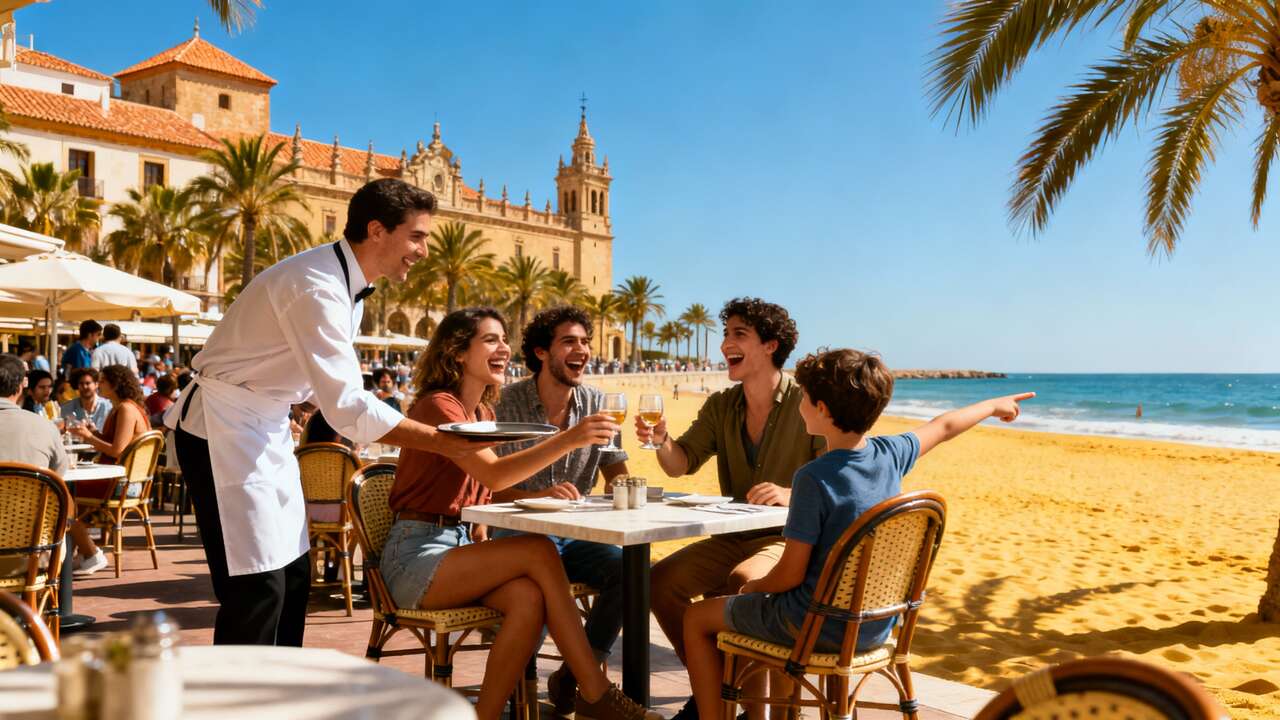

Nestled on Spain’s southern coast, one city stands out not just for its ancient history but for a remarkable meteorological claim. Imagine a place where the sun graces the sky for approximately 320 days each year, bathing its streets, monuments, and beaches in a warm, golden light. This is Malaga, a city that has rightfully earned its reputation as the sun capital of Europe. It offers a unique combination of a thriving modern metropolis and a laid-back Mediterranean lifestyle, all under a consistently brilliant blue sky. For travelers seeking warmth, culture, and coastal beauty, Malaga presents a compelling and luminous destination.
Discovering Malaga, the sun capital
A jewel on the Costa del Sol
Malaga’s prime location on the Costa del Sol, or “Coast of the Sun,” is fundamental to its identity. Positioned in the heart of Andalusia, it serves as a gateway to the Mediterranean Sea. This strategic coastal setting has shaped its history and continues to define its character. The city is flanked by mountains to the north and the sea to the south, creating a unique microclimate that protects it from extreme weather. Its port, one of the oldest continuously operated in the world, remains a bustling hub, connecting the city to the wider Mediterranean and beyond. This geography is not just scenic; it is the very reason for the city’s existence and its enduring appeal as a sun-drenched haven.
A city steeped in history
With a history stretching back nearly 3,000 years, Malaga is one of Europe’s most ancient cities. Founded by the Phoenicians around 770 BC, it has been shaped by a succession of civilizations, including the Romans, Visigoths, and Moors. This rich tapestry is woven into the city’s very fabric. The most prominent reminder of its Moorish past is the Alcazaba, a stunning fortified palace from the 11th century that overlooks the city. Just below it lies a Roman theater, a testament to an even earlier era. Wandering through the historic center, visitors can trace these layers of history in the architecture, the narrow winding streets, and the enduring landmarks that tell the story of a city that has been a cultural crossroads for millennia.
Modern economic dynamism
While proud of its past, Malaga is a city with its eyes firmly on the future. Over the past two decades, it has undergone a significant transformation, emerging as a major economic and technological center in southern Spain. The city has cultivated a thriving ecosystem for startups and established tech companies, earning it the nickname “the Silicon Valley of southern Europe.” This economic growth is visible in the modernized port area, the proliferation of co-working spaces, and the influx of international talent. This dynamism ensures that Malaga is more than just a tourist destination; it is a vibrant, evolving city where history and innovation coexist under the same sunny sky.
The city’s unique blend of history and modernity is made all the more appealing by its most famous asset: its extraordinary weather. This exceptional climate is the foundation upon which Malaga’s reputation is built.
Malaga’s exceptional climate
The numbers behind the sun
The title of “Sun Capital” is not merely a marketing slogan; it is backed by impressive meteorological data. The city enjoys a subtropical-mediterranean climate, characterized by extremely mild winters and long, warm summers. The statistics speak for themselves, illustrating why Malaga is a year-round destination for those chasing the sun. The consistent warmth and low precipitation are key factors in its appeal.
| Climatic Feature | Average Figure |
|---|---|
| Annual Sunny Days | Approximately 320 |
| Average Annual Temperature | 66°F (19°C) |
| Average Winter Temperature (Day) | 63°F (17°C) |
| Average Summer Temperature (Day) | 86°F (30°C) |
| Annual Rainfall | Around 20 inches (500 mm) |
A magnet for sun-seekers
This enviable climate makes Malaga a powerful draw for tourists, particularly during the autumn and winter months when much of Europe is cold and gray. Visitors from northern countries flock to the Costa del Sol to escape the winter blues, finding a welcoming environment where they can dine outdoors in December and stroll along the beach in January. This year-round tourism season is a major driver of the local economy. The psychological benefit of near-constant daylight and sunshine is a significant, if unquantifiable, part of the city’s attraction. It fosters an outdoor lifestyle and a generally positive, relaxed atmosphere that permeates the entire city.
Such a favorable climate naturally encourages a wide array of pursuits, allowing visitors and residents alike to take full advantage of the city’s beautiful setting.
Must-do activities under Malaga’s sun
Exploring the historic center
The best way to experience Malaga is on foot, and the pleasant weather makes this a joy at any time of year. The city’s historic center is a largely pedestrianized labyrinth of marble-paved streets, charming squares, and historic buildings. You can spend hours wandering, discovering hidden courtyards and lively tapas bars. The centerpiece is the Malaga Cathedral, affectionately known as ‘La Manquita’ (The One-Armed Lady) because one of its towers was never completed. The sun filtering through the stained-glass windows or illuminating the intricate facade is a sight to behold. Enjoying a coffee at an outdoor table in the Plaza de la Merced is a simple but essential Malaga experience.
Outdoor adventures and nautical pleasures
The city’s location offers more than just urban exploration. The surrounding Montes de Malaga Natural Park provides numerous trails for hiking and biking, offering stunning views of the coastline. The sunny, calm waters of the Mediterranean are perfect for a variety of activities. The options are plentiful for those wanting to get out on the water:
- Sailing trips along the coast to watch the sunset.
- Kayaking and stand-up paddleboarding from the city’s beaches.
- Joining a boat tour for dolphin watching in the Alboran Sea.
- Renting a small boat to explore hidden coves and beaches.
These activities are accessible for most of the year, a direct result of the region’s stable and forgiving climate.
Beyond the simple pleasures of the outdoors, the city’s constant sunshine has also nurtured a profoundly rich and accessible cultural scene.
The city’s cultural richness
A legacy of art
Malaga is the birthplace of one of the 20th century’s greatest artists, Pablo Picasso, and the city proudly celebrates this connection. The Museo Picasso Malaga is housed in a beautifully restored palace and holds an extensive collection of his works, offering insight into his life and artistic evolution. Beyond Picasso, Malaga has cultivated a formidable arts scene, earning a reputation as a “city of museums.” The Centre Pompidou Malaga, a colorful, cuboid offshoot of the Parisian original, features modern and contemporary art, while the Carmen Thyssen Museum focuses on 19th-century Spanish painting. This artistic wealth provides a perfect complement to sunny days, offering cool, inspiring spaces for cultural immersion.
Vibrant festivals and events
The city’s cultural calendar is packed with events that take advantage of its outdoor-friendly climate. The most important is the Feria de Agosto, a week-long street party in August that celebrates the city’s heritage with flamenco, fireworks, and festivities that run day and night. Another key event is the Malaga Film Festival, which focuses on Spanish-language cinema and turns the city into a hub for filmmakers and cinephiles each spring. These events, along with numerous smaller music and food festivals, showcase the city’s vibrant, sociable character and its passion for celebration.
After immersing oneself in the city’s dynamic culture, the call of the sea and sand provides the perfect opportunity for rest and rejuvenation.
Relaxation and sunlit beaches
The urban beach: La Malagueta
Just a short walk from the city center lies La Malagueta, Malaga’s main urban beach. This wide, sandy expanse is a hub of activity, where locals and tourists alike come to sunbathe, swim, and play. The promenade is lined with palm trees and ‘chiringuitos’ (beach bars), making it an ideal spot to spend a lazy afternoon. Its proximity to the city means you can easily combine a morning of sightseeing with an afternoon of relaxation by the sea, a luxury that defines the Malaga lifestyle. The convenience and vibrant atmosphere of La Malagueta make it a must-visit.
Beachfront lifestyle and chiringuitos
The ‘chiringuitos’ are an indispensable part of the beach experience in Malaga. These establishments range from simple shacks to more upscale restaurants, but all share a common purpose: to serve fresh seafood and cold drinks with your feet practically in the sand. This is where you can sample one of the region’s most famous dishes, espetos de sardinas, which are sardines skewered on a cane and slow-cooked over an open fire pit on the beach. Enjoying an ‘espeto’ with a view of the Mediterranean is to experience the authentic taste and feel of the Costa del Sol.
This focus on fresh, local ingredients is not confined to the beaches; it is the cornerstone of the entire region’s celebrated culinary scene.
Local gastronomy: mediterranean flavors under the sun
The essence of Andalusian cuisine
Malaga’s gastronomy is a direct reflection of its climate and geography. Based on the Mediterranean diet, it emphasizes fresh, seasonal ingredients. Key components include:
- Olive oil: The liquid gold of Andalusia, used generously in almost every dish.
- Seafood: Freshly caught fish and shellfish, from anchovies (‘boquerones’) to prawns and clams.
- Produce: Sun-ripened tomatoes, peppers, almonds, and grapes form the basis of many local specialties.
This commitment to quality ingredients results in a cuisine that is both simple and incredibly flavorful, perfectly suited to the warm climate.
Tapas culture and local markets
To truly eat like a local in Malaga is to embrace the culture of tapas. This involves moving from bar to bar, sampling small plates of different dishes. It is a social and culinary adventure. For a glimpse of where this incredible food comes from, a visit to the Mercado Central de Atarazanas is essential. Housed in a stunning 19th-century iron building with a magnificent stained-glass window, this bustling market is a feast for the senses. Here, you can see the incredible variety of fresh fish, cured meats, cheeses, and produce that fuels the city’s kitchens. It is a vibrant testament to Malaga’s rich culinary heritage.
Malaga offers a compelling package, effortlessly blending its abundant sunshine with a deep historical legacy, a vibrant cultural landscape, and a relaxed coastal lifestyle. From its sun-drenched beaches and world-class museums to its lively tapas bars and ancient fortresses, the city provides a rich and varied experience. Its status as Europe’s sun capital is more than a weather report; it is an invitation to embrace a way of life defined by light, warmth, and the timeless allure of the Mediterranean.

- The 5 most affordable ski resorts in North America for the 2025 season - 13 November 2025
- Far Less Crowded Than the Grand Canyon, This Utah Park Offers Views Just as Spectacular This Fall - 13 November 2025
- This California Town Has a Unique Danish Village Vibe You Won’t Find Anywhere Else - 12 November 2025