
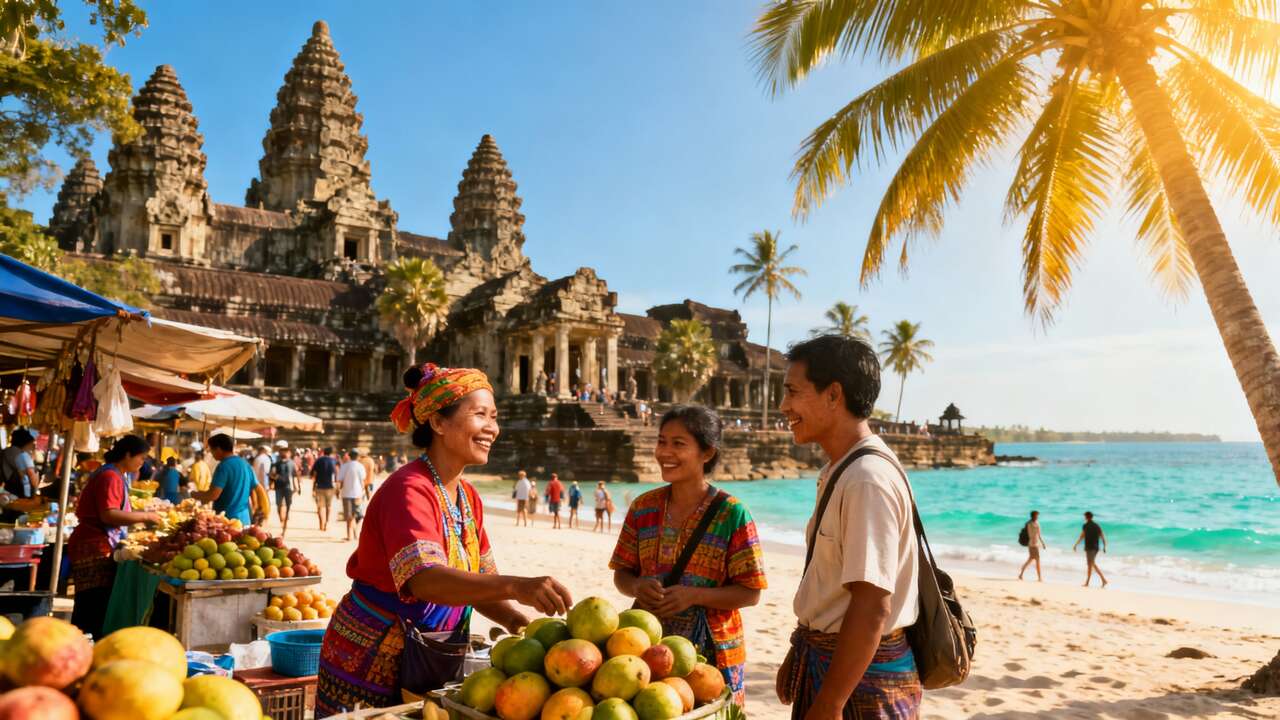

For decades, Thailand has been the undisputed king of Southeast Asian travel, drawing millions with its idyllic beaches, ornate temples, and vibrant street life. Yet, as popular destinations become more crowded and commercialized, seasoned travelers and newcomers alike are seeking fresh alternatives. A compelling contender has emerged just next door: Vietnam. This S-shaped country, once overlooked by many, is rapidly gaining a reputation as a destination that offers a similar allure of sun, culture, and affordability, but with a distinct character and a sense of discovery that is increasingly rare.
Discovering Vietnam, the hidden gem of Southeast Asia
A country on the rise
Vietnam is a nation of staggering natural beauty and profound historical depth. Bordered by the South China Sea, its long coastline provides a dramatic counterpoint to the lush mountains and sprawling rice paddies of the interior. The country’s history is a complex tapestry of dynastic rule, colonial occupation, and resilient spirit, all of which have left an indelible mark on its culture and architecture. In recent years, particularly in the post-pandemic era, Vietnam has invested heavily in its tourism infrastructure, making it more accessible than ever while striving to promote sustainable travel. This surge in popularity is transforming it from a backpacker’s secret into a mainstream destination, yet it still retains an authentic edge that many find captivating.
Why choose Vietnam ?
While sharing a border and some regional characteristics, Vietnam and Thailand offer markedly different experiences. Vietnam often presents a more raw and unfiltered adventure. Its cities, like Hanoi and Ho Chi Minh City, are a chaotic yet charming blend of ancient traditions and modern energy. For travelers looking for a destination that feels less saturated by tourism, Vietnam can be a refreshing choice. The table below offers a brief comparison of key aspects for travelers considering both nations.
| Feature | Vietnam | Thailand |
|---|---|---|
| Tourist Crowds | Generally less crowded, especially outside major hubs. | Very popular, with high tourist density in key areas. |
| Overall Cost | Highly affordable, often cheaper for accommodation and food. | Affordable, but prices have risen in popular tourist spots. |
| Landscape | Dramatic karst landscapes (Ha Long Bay), vast cave systems, extensive rice terraces. | World-famous beaches and islands, lush jungles in the north. |
| Primary Vibe | Historical, adventurous, with a focus on culture and natural scenery. | Relaxed, party-oriented in some areas, with a focus on beaches and wellness. |
The country’s unique geography and history provide a different rhythm and a distinct set of adventures, particularly appealing to those who have already explored Thailand’s famous islands and cities. This natural beauty is perhaps one of Vietnam’s strongest draws, extending from its northern highlands to its southern shores.
Idyllic beaches and lush nature to explore
From sandy shores to emerald waters
While Thailand’s islands are legendary, Vietnam’s coastline is a formidable rival, boasting some of Southeast Asia’s most stunning and less-developed beaches. The central coast is home to Da Nang, a modern city with a long, pristine beach famed for its clean sand and clear water. Nearby, the smaller city of Nha Trang is a hub for diving and water sports, set against a backdrop of mountains. For a more secluded escape, the island of Phu Quoc in the south offers white-sand beaches, dense tropical jungle, and a tranquil atmosphere perfect for relaxation. These coastal areas are not just for sunbathing; they are gateways to vibrant marine ecosystems and quiet fishing villages that offer a glimpse into local life.
Beyond the coast: mountains and rice paddies
Vietnam’s inland scenery is just as spectacular as its coastline. In the far north, the region around Sapa is famous for its breathtaking, terraced rice fields that cascade down the mountainsides. This area is home to several ethnic minority groups, and trekking through these landscapes offers a profound cultural and visual experience. For the truly adventurous, the Ha Giang Loop presents one of the world’s most scenic motorbike journeys, winding through mountain passes and remote villages. Further south, the Phong Nha-Ke Bang National Park, a UNESCO World Heritage site, contains a network of colossal caves, including the world’s largest, Son Doong Cave, showcasing a subterranean world of unparalleled scale and beauty.
This rich natural tapestry serves as the backdrop for a history that is equally deep and complex, with ancient temples and imperial cities dotting the landscape from north to south.
Cultural wealth and fascinating temples
A journey through history
Vietnam’s history is palpable in its cities and ancient sites. A visit to the country is a step back in time. The former imperial capital of Hue, located on the banks of the Perfume River, is home to the Citadel, a vast complex of palaces, temples, and forbidden gates that echo the grandeur of the Nguyen Dynasty. Further south, the ancient town of Hoi An is a perfectly preserved example of a Southeast Asian trading port, with its lantern-lit streets, Japanese covered bridge, and charming shophouses now filled with cafes, tailors, and art galleries. These sites are not just relics; they are living parts of Vietnam’s cultural identity.
Spiritual sanctuaries and architectural wonders
The spiritual landscape of Vietnam is dotted with countless temples and pagodas. In Hanoi, the Temple of Literature stands as a tribute to Confucius and the nation’s finest scholars, while the One Pillar Pagoda is an iconic example of Buddhist architecture. However, no natural or cultural site is more famous than Ha Long Bay. This UNESCO World Heritage site is a mystical seascape of limestone karsts and isles rising from emerald waters. While technically a natural wonder, its spiritual significance and the legends surrounding its creation make it a cornerstone of Vietnamese culture. Exploring the bay by boat, visitors can discover hidden grottoes and floating fishing villages, experiencing a place where nature and myth intertwine.
Of course, no cultural exploration of Vietnam would be complete without indulging in its world-renowned cuisine, where every dish tells a story of its own.
Vietnamese cuisine: authentic flavors
More than just phở and bánh mì
Vietnamese food has gained global acclaim for its fresh ingredients, complex flavors, and healthy balance. While phở, the nation’s iconic noodle soup, and bánh mì, a delicious fusion sandwich, are must-tries, they are just the beginning of a vast culinary journey. In Hanoi, be sure to try bún chả, a dish of grilled pork and noodles famously enjoyed by a former U.S. president. Other essential dishes include:
- Gỏi cuốn: Fresh spring rolls packed with herbs, shrimp, and pork, served with a rich peanut dipping sauce.
- Cao lầu: A regional noodle dish from Hoi An with a unique texture, made with water from a specific local well.
- Cà phê trứng: Vietnamese egg coffee, a rich and creamy concoction that tastes more like a dessert than a beverage.
The emphasis is always on a harmony of five flavors: sweet, sour, salty, bitter, and hot.
The street food culture
To truly experience Vietnamese cuisine, one must embrace its vibrant street food culture. From the bustling sidewalks of Ho Chi Minh City to the ancient alleys of Hanoi’s Old Quarter, the best meals are often served from humble carts and storefronts on small plastic stools. Eating on the street is not just about the food; it is an immersive cultural experience. It is a chance to watch cooks at work, share a table with locals, and soak in the energetic atmosphere of urban life in Vietnam. This approach to dining is also incredibly budget-friendly, making it a key reason why the country is so affordable.
This affordability extends well beyond food, making it possible to have a rich and fulfilling travel experience without breaking the bank.
An attractive cost of living: traveling on a budget
Breaking down the costs
One of Vietnam’s most significant advantages for travelers is its low cost of living. Compared to Thailand and many other destinations in the region, your money simply goes further here. It is a country where you can travel comfortably on a modest budget or indulge in luxury for a fraction of the price you would pay elsewhere. A typical daily budget can be surprisingly low:
- Accommodation: A bed in a clean hostel can cost as little as $5-8 per night, while private rooms in guesthouses are often available for $15-25.
- Food: A delicious meal from a street vendor, such as a bowl of phở or a bánh mì, can cost $1-2. A full meal in a local restaurant might be $3-5.
- Transportation: Long-distance bus or train journeys between major cities can cost between $10-30, offering an affordable way to see the country.
- Activities: Entrance fees to temples and museums are typically very low, often just a few dollars.
This low-cost environment allows for longer stays and more immersive experiences.
Getting the most value for your money
To maximize your budget, embrace the local way of life. Eat at street food stalls and in local markets where the food is both authentic and cheap. Use the extensive network of sleeper buses and trains for overnight travel, which saves on a night’s accommodation. In markets, gentle and respectful bargaining is part of the culture. By adopting these practices, travelers can enjoy all that Vietnam has to offer while keeping expenses to a minimum, ensuring a trip that is both memorable and economical.
With an understanding of the costs, a few practical tips on when to go and how to get around will ensure your journey is as smooth as possible.
Practical tips for a successful stay in Vietnam
Best time to visit
Due to its length, Vietnam experiences different climate patterns from north to south, making it a year-round destination. The north, including Hanoi and Ha Long Bay, has a distinct winter and summer, with the best weather from September to November and March to May. The central coast, around Da Nang and Hoi An, is warm year-round but experiences a typhoon season from August to November. The south, including Ho Chi Minh City and the Mekong Delta, is tropical, with a dry season from December to April, which is the ideal time to visit. Planning your itinerary according to these regional seasons is key to a comfortable trip.
Navigating the country
Getting around Vietnam is relatively straightforward. For long distances, domestic flights are fast and increasingly affordable. The Reunification Express train line runs the length of the country from Hanoi to Ho Chi Minh City, offering a scenic, albeit slower, alternative. For shorter trips and budget travel, a vast network of buses connects nearly every town and city. Within cities, ride-hailing apps like Grab are ubiquitous and cheap. For the more adventurous, renting a motorbike provides the ultimate freedom to explore at your own pace, though it requires confidence and an international driving permit.
Visa and currency essentials
Most visitors to Vietnam will need a visa. Fortunately, the country has implemented an e-visa system for citizens of many countries, including the United States, which simplifies the application process. It is crucial to apply through the official government portal well in advance of your trip. The official currency is the Vietnamese Đồng (VND). While credit cards are accepted in hotels and upscale restaurants in major cities, Vietnam is largely a cash-based economy. It is essential to carry enough cash, especially when traveling in more rural areas. ATMs are widely available, but it is wise to inform your bank of your travel plans beforehand.
Vietnam stands as a powerful alternative for travelers seeking the quintessential Southeast Asian experience. With its dramatic landscapes ranging from the karst peaks of Ha Long Bay to the terraced fields of Sapa, a profound cultural and historical depth, a culinary scene that delights at every turn, and an affordability that makes it accessible to all, the country offers a journey of discovery. It delivers on the promise of sun, temples, and low prices, all wrapped in a uniquely resilient and vibrant culture that leaves a lasting impression.

- The 5 most affordable ski resorts in North America for the 2025 season - 13 November 2025
- Far Less Crowded Than the Grand Canyon, This Utah Park Offers Views Just as Spectacular This Fall - 13 November 2025
- This California Town Has a Unique Danish Village Vibe You Won’t Find Anywhere Else - 12 November 2025