
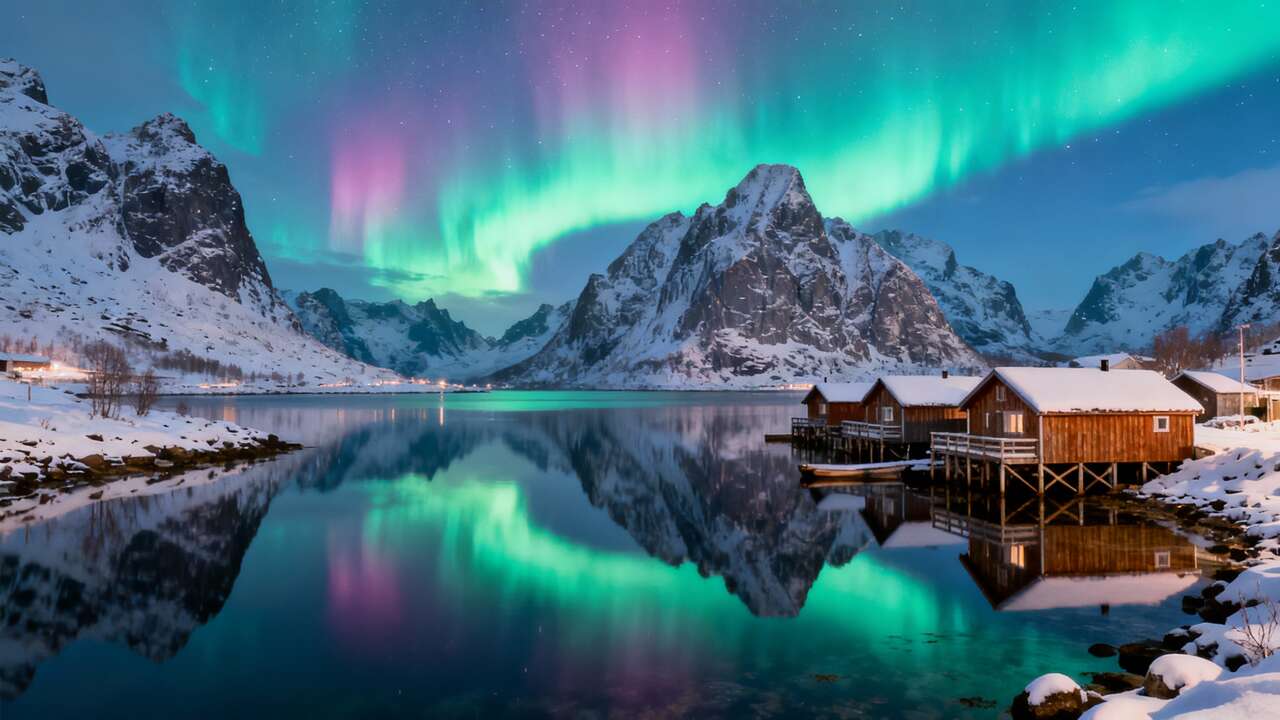

Picture a landscape where jagged, snow-dusted peaks plunge directly into the icy waters of the Arctic. Imagine quaint fishing villages with vibrant red cabins standing out against a backdrop of pristine white. This is not a fantasy; this is the reality of the Lofoten Islands in winter. Forget crowded destinations and predictable vacations. Instead, embrace the raw, untamed beauty of this Norwegian archipelago, a place that offers an unparalleled winter journey far above the Arctic Circle.
Discover the Lofoten Islands in winter
The Lofoten archipelago is a chain of islands known for its exceptional natural scenery, where dramatic mountains meet sheltered bays and vast, open seas. This unique geography creates a microclimate that, despite its Arctic location, is surprisingly mild compared to other areas at the same latitude. This makes it an accessible yet truly wild destination for winter exploration.
A landscape sculpted by ice
The visual identity of Lofoten is defined by its sharp, alpine peaks that seem to rise straight from the ocean. These mountains, shaped by glaciers over millennia, provide a stunning backdrop for every activity. In winter, a blanket of snow transforms the scenery into a serene, monochromatic world, punctuated only by the colorful fishing cabins, known locally as rorbuer. The low-lying winter sun casts long shadows and bathes the landscape in a soft, ethereal light, creating a photographer’s paradise from dawn until dusk.
Why choose winter ?
While Lofoten is beautiful year-round, winter offers a unique and profound experience. The crowds of summer are gone, replaced by a deep sense of tranquility. This season is defined by the polar night, a period when the sun does not rise above the horizon. Far from being completely dark, this time is characterized by a beautiful twilight blue that lasts for several hours a day. More importantly, the long, dark nights provide the perfect canvas for the Northern Lights. The combination of snow-covered landscapes, dramatic coastlines, and the aurora borealis makes a winter trip truly unforgettable.
Reaching the archipelago
Getting to this remote paradise requires some planning, but the journey is part of the adventure. The main access points offer different experiences, each with its own advantages. Driving is highly recommended to explore the islands at your own pace, connected by a network of bridges and tunnels along the E10 road, also known as King Olav V’s road.
| Route | Mode of Transport | Pros | Cons |
|---|---|---|---|
| Via Bodø | Flight + Ferry | Extremely scenic ferry journey; arrives centrally in Moskenes. | Ferry can be subject to weather cancellations; fewer winter departures. |
| Via Harstad/Narvik (Evenes Airport) | Flight + Car | Often cheaper flights; allows for a north-to-south road trip. | Longer drive to the main southern islands (approx. 3-4 hours). |
| Direct to Leknes or Svolvær | Flight | Most direct and time-saving option; lands you in the heart of Lofoten. | Can be more expensive; smaller planes mean fewer flights. |
This dramatic landscape, with its unique winter light, serves as the perfect stage for one of nature’s most spectacular phenomena.
The magical lights of the Northern Lights
For many visitors, the primary reason to travel to Lofoten in winter is the chance to witness the aurora borealis. The islands’ location, directly under the auroral oval, makes them one of the best places on Earth to see this celestial display. The dance of green, pink, and violet lights across the night sky is a humbling and awe-inspiring experience.
The science behind the spectacle
The Northern Lights are the result of collisions between gaseous particles in the Earth’s atmosphere with charged particles released from the sun’s atmosphere. Variations in color are due to the type of gas particles that are colliding. The most common aurora color, a pale yellowish-green, is produced by oxygen molecules located about 60 miles above the earth. The energy from these solar winds is guided by the Earth’s magnetic field to the polar regions, creating the light show we see in the sky. This phenomenon is both a scientific marvel and a source of ancient myths and legends.
Best conditions for observation
Maximizing your chances of seeing the aurora requires a combination of factors. Success is never guaranteed, but you can significantly improve your odds by following a few key principles.
- Darkness: You need a sky free from light pollution. Move away from the lights of villages and find a dark beach or an isolated spot.
- Clear skies: Clouds are the aurora hunter’s biggest enemy. Check the weather forecast frequently and be prepared to drive to a location with a clearer sky.
- Solar activity: The strength of the aurora is measured by the Kp-index. Several apps and websites provide real-time forecasts, allowing you to know when activity is likely to be high.
Patience is crucial; the lights can appear at any moment, so it’s important to be prepared to wait, often for several hours in the cold.
Photography tips for capturing the aurora
Photographing the Northern Lights requires more than just a smartphone. To capture their beauty, you will need a camera with manual settings, a sturdy tripod, and a wide-angle lens with a fast aperture (e.g., f/2.8 or lower). Start with these settings and adjust as needed: set your ISO between 1600 and 3200, your aperture as wide as it will go, and your shutter speed between 10 and 25 seconds. Use a remote shutter or a timer to avoid camera shake. Remember to dress warmly, as you will be standing still in the cold for long periods.
Beyond the celestial ballet in the sky, the islands offer a wealth of terrestrial adventures that allow for a deep connection with the Arctic environment.
Must-do activities in Lofoten
Lofoten in winter is an outdoor playground. The stunning scenery invites exploration, whether on foot, by sea, or even on a surfboard. The key is to embrace the elements and immerse yourself in the raw beauty of the archipelago. A well-planned itinerary can help you experience the best of what the islands have to offer.
Hiking and snowshoeing
While many high-altitude summer trails are inaccessible due to snow and avalanche risk, numerous coastal and lower-level hikes offer breathtaking views. Trails like the one to Kvalvika Beach or the trek up Nonstinden (459 meters) provide panoramic vistas of the fjords and surrounding peaks. Snowshoes are essential for many routes, allowing you to navigate the deep snow safely. Always check local conditions and avalanche warnings before heading out.
Exploring the fishing villages
The soul of Lofoten resides in its picturesque fishing villages. Places like Reine, Hamnøy, and Nusfjord are famous for their red rorbuer set against dramatic mountain backdrops. Winter is a fantastic time to explore them, as the fishing season for Arctic cod, or skrei, is in full swing. You can wander through the harbors, see the fishing boats come and go, and witness the racks of stockfish (tørrfisk) being prepared for drying in the cold air, a tradition that dates back centuries.
Kayaking in the fjords
Paddling through the calm, icy waters of a fjord in winter is a uniquely serene experience. Guided sea kayaking tours offer a different perspective of the landscape, allowing you to get up close to the coastline and see the mountains from sea level. With the proper gear, including a dry suit provided by the tour operator, it is a safe and magical way to connect with the Arctic marine environment. You might even spot sea eagles soaring overhead or seals sunning themselves on the rocks.
This deep connection to the sea is not just reflected in the activities but is also the cornerstone of the local culinary traditions.
Local gastronomy: a unique experience
The culinary scene in Lofoten is a direct reflection of its environment: fresh, authentic, and deeply connected to the sea. For centuries, fishing has been the lifeblood of these islands, and this heritage is proudly displayed on every plate. A trip here is incomplete without indulging in the local flavors, particularly the world-renowned seafood.
The kingdom of cod
Lofoten is synonymous with cod. Every winter, a migratory Arctic cod known as skrei travels from the Barents Sea to the coast of Lofoten to spawn. This annual event has shaped the culture and economy of the islands for over a thousand years. The skrei is prized for its firm, lean meat and delicate flavor. During the season, from January to April, you can find it served fresh in every restaurant. Another local delicacy is tørrfisk, or stockfish, which is unsalted cod dried on large wooden racks by the cold sea air. This preservation method is one of the oldest in the world.
Traditional dishes to try
Beyond skrei, there are other dishes that offer a taste of Lofoten’s culinary heritage. Be sure to try:
- Fiskesuppe: A creamy and hearty fish soup, often filled with cod, salmon, and local root vegetables. It is the perfect comfort food after a day out in the cold.
- Mølje: A traditional dish consisting of poached skrei, liver, and roe, served with boiled potatoes. It is a true taste of the islands’ history.
- Lamb from Lofoten: The local lamb grazes on seaweed and salt-sprayed grasses, giving the meat a distinct, savory flavor.
These dishes are simple yet flavorful, highlighting the quality of the local ingredients.
To fully enjoy these culinary delights and the adventures that await, some practical preparation is essential for a smooth and comfortable journey.
Practical tips for your stay
A winter trip to the Arctic requires careful planning. The weather can be unpredictable, and conditions can change rapidly. Being well-prepared will ensure your comfort and safety, allowing you to focus on the incredible beauty surrounding you.
What to pack
Layering is the key to staying warm and comfortable in the Arctic. Your packing list should prioritize warmth and protection from the elements.
- Base layer: Thermal underwear made of merino wool or a high-quality synthetic material. Avoid cotton, as it retains moisture.
- Mid layer: A fleece or down jacket to provide insulation.
- Outer layer: A waterproof and windproof jacket and pants are absolutely essential.
- Accessories: Warm woolen socks, insulated and waterproof boots, a warm hat, gloves or mittens, and a scarf or neck gaiter.
- Safety: Headlamps are crucial for the long hours of darkness, and ice grips or crampons for your boots can be a lifesaver on icy paths.
Renting a car
Public transportation in Lofoten is limited, especially in winter. Renting a car is the best way to explore the archipelago freely. It gives you the flexibility to chase the Northern Lights, stop at scenic viewpoints, and visit remote villages at your own pace. Ensure your rental car is equipped with studded winter tires, which are standard for winter rentals in the region and necessary for handling the icy roads.
Accommodation options
Lofoten offers a range of unique places to stay. The most iconic option is to stay in a rorbu, a converted fisherman’s cabin built on stilts over the water. Many of these have been modernized to offer comfortable and cozy lodging with stunning views. For a more luxurious experience, establishments like the Hattvika Lodge in Ballstad offer refurbished cabins with high-end amenities, traditional local dining, and authentic saunas, providing a perfect blend of comfort and tradition.
Choosing the right accommodation and being well-prepared allows you to fully appreciate this unique environment, a place that requires both admiration and respect.
Lofoten: a preserved paradise
The stunning beauty of the Lofoten Islands is both a gift and a responsibility. The archipelago’s fragile Arctic ecosystem is facing increasing pressure from climate change and growing tourism. As a visitor, you play a crucial role in helping to protect this pristine wilderness for future generations. Traveling consciously and respectfully is not just an option; it is a necessity.
Respecting nature
The principle of “leave no trace” is paramount in Lofoten. This means packing out everything you pack in, staying on marked trails to prevent erosion, and never disturbing wildlife. The right to roam, or allemannsretten, is a cherished part of Norwegian culture, but it comes with the profound responsibility to care for the land. Be mindful of where you park your car, especially when pulling over for photos, to avoid damaging the delicate vegetation.
Sustainable tourism
Supporting the local community is one of the best ways to contribute to the sustainability of the islands. Choose to stay in locally-owned accommodations, eat at restaurants that source their ingredients from local producers, and hire local guides for your activities. This not only provides you with a more authentic experience but also ensures that the economic benefits of tourism stay within the community. Many tour operators are now certified with eco-labels, indicating their commitment to environmentally friendly practices.
The future of the archipelago
Discussions are ongoing about how to best manage the flow of tourism to protect Lofoten’s unique natural and cultural heritage. Some proposals include designating certain areas as a national park. As a visitor, your responsible behavior contributes positively to this effort, demonstrating that tourism can coexist with conservation. By choosing to travel thoughtfully, you help ensure that Lofoten remains the unspoiled paradise that captivates all who visit.
Embrace the Arctic’s raw beauty and the profound tranquility of the polar night. Explore the dramatic landscapes, chase the ethereal Northern Lights, and immerse yourself in the rich local culture. Plan your journey to this preserved paradise and discover why the Lofoten Islands offer the ultimate winter escape.

- The 5 most affordable ski resorts in North America for the 2025 season - 13 November 2025
- Far Less Crowded Than the Grand Canyon, This Utah Park Offers Views Just as Spectacular This Fall - 13 November 2025
- This California Town Has a Unique Danish Village Vibe You Won’t Find Anywhere Else - 12 November 2025
Pubblicazioni simili :
 This “Floating City” is mysterious and beautiful in winter
 This South American desert is the best place on Earth for winter stargazing
 This ancient Italian city carved from rock is hauntingly beautiful in winter (Matera, Italy)
 This Pennsylvania Village Is at the Heart of American History and Is Beautiful in the Fall