
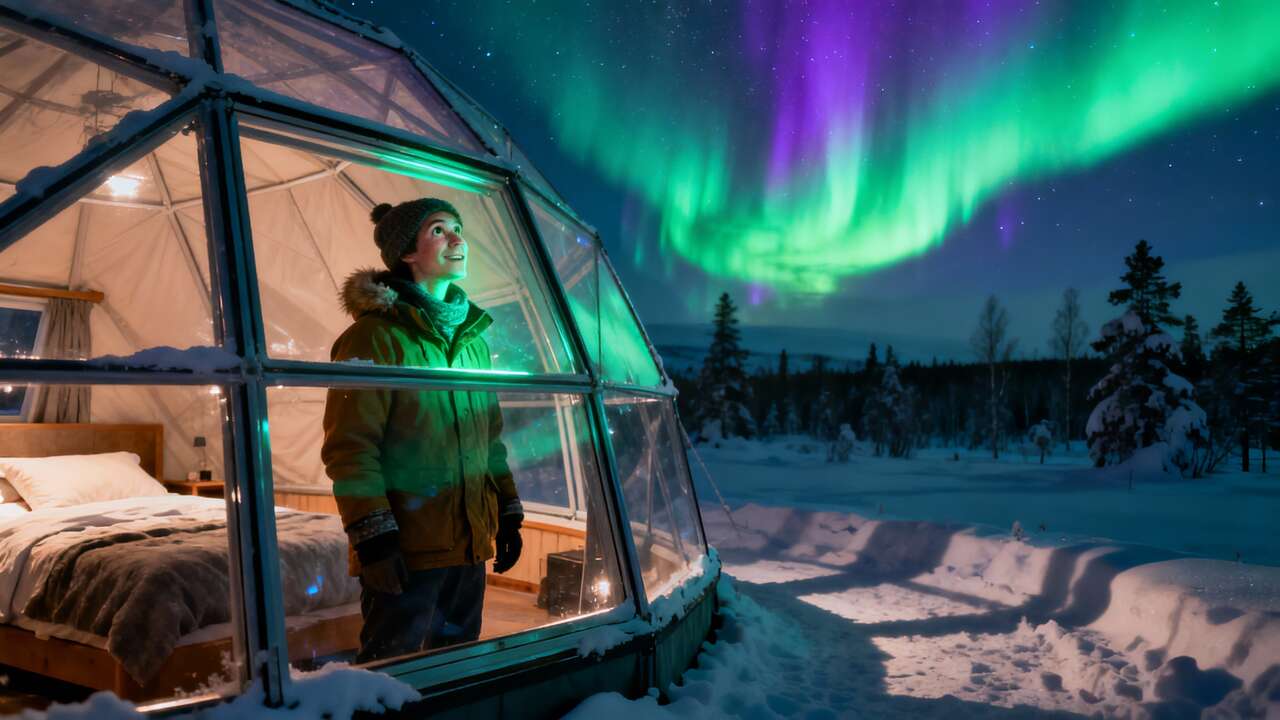

Imagine a landscape blanketed in pristine snow, where the silence is broken only by the crunch of your boots and the whisper of the arctic wind. High above the Arctic Circle, in the small village of Saariselkä, Finland, a unique form of accommodation offers a front-row seat to one of nature’s most spectacular displays. Here, nestled in the wilderness far from the glare of city lights, glass igloos provide an unparalleled opportunity to witness the aurora borealis from the warmth and comfort of your own bed. This experience merges the raw beauty of the Lappish wilderness with ingenious design, creating a getaway that is less a simple hotel stay and more an immersion into the celestial theater of the north.
Discover the comfort of a glass igloo
The original concept and modern amenities
The idea of sleeping under the stars in the freezing arctic might seem daunting, but the glass igloo was conceived to eliminate the discomfort while maximizing the view. Pioneered by the Kakslauttanen Arctic Resort, these structures are marvels of engineering. Each igloo is built with special thermal glass, which not only insulates the interior to keep it toasty warm but also contains a heating element to prevent frost and snow from accumulating and obscuring the view. Inside, you will not find a rustic camping setup but rather a cozy, well-appointed room. Most feature comfortable beds, often motorized to adjust for the best viewing angle, and a private toilet. Larger, more luxurious versions may include a full bathroom with a shower and even a small kitchenette, blending the immersive experience of camping with the comforts of a luxury hotel room.
A private theater for the cosmos
The true purpose of a glass igloo is to serve as your personal observatory. The domed glass ceiling provides an unobstructed panoramic view of the sky above. As darkness falls over Lapland, a profound sense of connection with the vastness of the universe sets in. Lying in bed, you can gaze at the brilliant constellations of the northern hemisphere, track passing satellites, and wait for the main event. When the northern lights begin their ethereal dance, the igloo transforms into a private theater. There is no need to bundle up in layers of clothing and stand in the freezing cold; the spectacle unfolds directly above you, a silent, colorful ballet of light that feels both intimate and immense.
Varieties of glass accommodations
While the classic two-person glass igloo is the most iconic, resorts in the Saariselkä area have expanded on the concept to cater to different needs. For families or small groups, there are larger igloos or hybrid cabins that combine the warmth of a traditional log chalet with the viewing opportunities of a glass dome. These “Kelo-Glass Igloos,” for example, feature a private log cabin with a fireplace, sauna, and kitchenette, attached to a glass-domed bedroom. This allows for a more spacious and traditional holiday experience while still offering that magical night under the auroras. Other options include the Aurora Cabins, which feature a large north-facing window or a partial glass roof specifically oriented for aurora viewing.
This unique blend of comfort and cosmic observation is designed specifically to enhance the primary reason many travel to the arctic circle: to witness the northern lights in all their glory.
Watching the northern lights from your bed
The science behind the spectacle
The aurora borealis is a natural light display in the Earth’s sky, predominantly seen in high-latitude regions. This phenomenon occurs when charged particles from the sun, carried on the solar wind, collide with gaseous particles in the Earth’s atmosphere. These collisions energize the atoms and molecules, causing them to emit light of different colors. The color depends on the type of gas particle and the altitude of the collision. Oxygen typically produces the most common green and yellow hues, while nitrogen can result in blues and reds. The result is a dynamic, shimmering curtain of light that appears to dance across the night sky, a truly unforgettable sight.
Maximizing your viewing chances
While staying in a glass igloo provides the perfect venue, seeing the northern lights still depends on three key factors: solar activity, clear skies, and darkness. Saariselkä’s location deep inside the Arctic Circle places it directly within the “auroral zone,” where sightings are most frequent. The lack of light pollution in this remote area ensures the sky is as dark as possible. The chances of a successful sighting increase significantly with the length of your stay.
| Length of Stay | Approximate Chance of Sighting (with clear skies) |
|---|---|
| 1 Night | 25-35% |
| 3 Nights | 75-95% |
| 5 Nights | Over 98% |
The aurora alarm service
To ensure guests do not miss a potential sighting, many resorts offer an “aurora alarm.” This ingenious service removes the need to stay awake all night staring at the sky. You can simply go to sleep, and if and when the northern lights appear, a notification will sound in your igloo. This allows you to rest comfortably, secure in the knowledge that you will be alerted the moment the celestial show begins. It is a simple but brilliant feature that significantly enhances the experience, combining restful sleep with the thrilling possibility of a midnight wake-up call from nature itself.
Knowing that the technology and location are optimized for viewing, the next logical step for any traveler is to determine the best time to plan their journey.
When to visit Lapland for an optimal experience
The aurora season decoded
The prime season for viewing the northern lights in Finnish Lapland runs from late August to early April. During this period, the nights are long and dark enough for the auroras to be visible. The summer months, from May to July, are characterized by the “midnight sun,” where the sun does not set below the horizon, making it impossible to see the stars, let alone the fainter light of the aurora. The peak of the viewing season is generally considered to be from September to March, when the balance of darkness, weather patterns, and solar activity is most favorable.
Comparing the seasons
Choosing when to visit within the long aurora season can shape your entire experience, as each period offers a different version of the arctic landscape.
- Autumn (September – November): This early season offers a unique landscape. Temperatures are milder, and the ground is not yet covered in deep snow. This is the time of “ruska,” when the autumn foliage turns brilliant shades of red, orange, and yellow. A major advantage is that lakes and rivers have not frozen yet, offering the chance to see the northern lights reflected on the water’s surface, a breathtaking double spectacle.
- Mid-Winter (December – February): This is the classic arctic experience. The landscape is draped in a thick blanket of snow, creating a magical winter wonderland. The nights are at their longest, maximizing the hours of darkness for potential aurora sightings. However, this period is also the coldest, with temperatures often dropping far below freezing.
- Late Winter (March – April): As spring approaches, the days become longer and sunnier, which is ideal for daytime activities like skiing and snowmobiling. The snow cover is still excellent, but temperatures are generally more moderate than in mid-winter. The nights are still dark enough for excellent aurora viewing, and weather patterns are often more stable, with a higher frequency of clear skies.
Booking and availability considerations
Given the popularity of glass igloos, it is highly recommended to book your stay well in advance, especially if you plan to travel during peak periods like the Christmas holidays or New Year’s. Prices fluctuate based on the season, with the highest rates typically found from December through February. Booking for the shoulder seasons, such as September-October or March, can sometimes offer better value and fewer crowds while still providing excellent chances to see the northern lights.
Once you have decided on the perfect time for your visit, you can begin to explore the wide array of activities that will make your arctic adventure complete.
Activities not to miss around Saariselkä
Thrilling winter adventures
While the northern lights may be the main draw, Finnish Lapland is an adventure playground offering a host of exhilarating activities. These experiences allow you to immerse yourself in the stunning arctic wilderness and make the most of the daylight hours. Some of the most popular excursions include:
- Husky Sledding: Feel the thrill of gliding across the snow-covered landscape, pulled by a team of eager and energetic huskies. You can learn to mush your own sled for a truly hands-on adventure.
- Reindeer Safari: For a more tranquil pace, take a sleigh ride with the region’s most iconic animal. It is a peaceful way to travel through the silent, snow-laden forests and connect with traditional Sámi culture.
- Snowmobile Safari: For adrenaline seekers, a snowmobile tour offers a fast-paced way to explore the vast fells and frozen forests of the region, covering more ground and reaching remote viewpoints.
- Snowshoeing and Cross-Country Skiing: Explore the pristine nature at your own pace. Saariselkä has an extensive network of well-maintained trails that cater to all skill levels.
Exploring Urho Kekkonen National Park
Saariselkä is the gateway to Urho Kekkonen National Park, one of Finland’s largest protected areas. This vast expanse of arctic wilderness is characterized by its rolling fells, sparse pine forests, and winding rivers. In winter, the park is a paradise for cross-country skiers and snowshoers. Marked trails lead you through breathtaking scenery, offering a sense of solitude and profound peace. The park’s remote location also makes it an exceptional place for aurora hunting, far from any residual light pollution.
Unique local experiences
No trip to Finland is complete without experiencing a traditional Finnish sauna. It is an integral part of the national culture, a place for relaxation, rejuvenation, and even socializing. Most resorts and cabins feature a private or shared sauna. For the brave, the experience is often combined with a roll in the snow or a dip in an icy lake, a practice said to have numerous health benefits. Another authentic local activity is ice fishing on one of the region’s thousands of frozen lakes, a patient and meditative pastime that offers a true taste of the local way of life.
With a packed itinerary of daytime adventures and nighttime sky-gazing, proper preparation becomes essential to ensure your comfort and enjoyment.
Preparing for your stay in a glass igloo
What to pack for the arctic
The key to staying warm and comfortable in the arctic is layering. Even though your igloo will be warm, any time spent outdoors requires proper attire. Your packing list should be built around a three-layer system: a moisture-wicking base layer, an insulating mid-layer, and a waterproof/windproof outer layer.
- Base Layer: Thermal underwear made from merino wool or synthetic fabrics (avoid cotton, as it retains moisture).
- Mid-Layer: Fleece jackets, wool sweaters, or a light down vest to trap body heat.
- Outer Layer: An insulated, windproof, and waterproof jacket and trousers are absolutely essential.
- Accessories: Do not forget a warm hat that covers your ears, insulated gloves or mittens, a scarf or neck gaiter, and thick wool socks.
- Footwear: A pair of sturdy, insulated, and waterproof winter boots with good grip is crucial for walking on snow and ice.
Many tour operators and resorts offer rental services for heavy-duty outerwear, which can be a convenient option if you do not want to invest in specialized arctic gear.
Photography tips for the northern lights
Capturing the beauty of the aurora borealis can be challenging but incredibly rewarding. A smartphone can sometimes capture the lights, but for the best results, a camera with manual settings is recommended.
| Equipment/Setting | Recommendation |
|---|---|
| Camera | DSLR or mirrorless with manual mode |
| Lens | A wide-angle lens with a fast aperture (e.g., f/2.8 or lower) |
| Tripod | Essential to keep the camera steady during long exposures |
| ISO | Start around 1600-3200 and adjust as needed |
| Shutter Speed | Between 5 and 20 seconds, depending on the brightness of the aurora |
| Focus | Set to manual and focus on a distant star or object (infinity focus) |
Remember to bring extra batteries, as the cold drains them quickly.
Managing expectations
A journalistic approach requires acknowledging reality: the northern lights are a natural event and sightings are never guaranteed. The weather in the arctic is unpredictable, and a cloudy or snowy night will obscure the sky, regardless of the level of solar activity. It is important to view the aurora as a potential, magnificent bonus to your trip, not its sole purpose. The beauty of the Lappish landscape, the thrill of the winter activities, and the unique experience of staying in a glass igloo are memorable in their own right. Approach your journey with a sense of adventure, and you will have an incredible time, whether the lights decide to dance for you or not.
Beyond the natural wonders, a trip to this region also offers a chance to connect with a rich and ancient local culture.
Exploring Lappish culture during your stay
The Sámi people
Lapland, or Sápmi as it is known in the local language, is the ancestral home of the Sámi, the only indigenous people of the European Union. Their culture is deeply intertwined with the arctic environment, particularly with reindeer herding, which has been a cornerstone of their livelihood for centuries. During your stay, you have the opportunity to learn about their rich traditions, unique language, and vibrant handicrafts (duodji). Many local operators, often Sámi-owned, offer authentic experiences like visits to a reindeer farm where you can learn about herding and its cultural significance. It is crucial to engage with these experiences respectfully, choosing responsible tour providers who support the local community and share their culture in an authentic manner.
Lappish cuisine
The food of Lapland is a direct reflection of its pristine nature. The local cuisine is built around pure, natural ingredients sourced from the forests, lakes, and fells. It is a hearty, comforting fare designed to sustain you in the cold climate. Some of the staple ingredients and dishes you should try include:
- Reindeer: A lean and flavorful meat, often served as a sautéed stew (poronkäristys) with mashed potatoes and lingonberry jam.
- Fish: Salmon, arctic char, and whitefish are commonly found on menus, often smoked, grilled, or made into a creamy soup (lohikeitto).
- Berries: The forests are rich with wild berries like cloudberries, lingonberries, and bilberries, which are used in sauces, desserts, and liqueurs. The golden cloudberry, in particular, is a prized local delicacy.
- Mushrooms: Foraging for wild mushrooms is a popular autumn activity, and they feature prominently in many local dishes.
Handicrafts and souvenirs
A wonderful way to remember your trip is by bringing home a piece of local craftsmanship. Sámi handicrafts are known for their beauty and functionality, often made from natural materials like wood, reindeer antler, and leather. Look for items like a traditional wooden cup (kuksa), intricately decorated knives, or beautiful jewelry made from silver and antler. Purchasing these items from local artisans not only provides you with an authentic souvenir but also helps support the preservation of traditional skills and the local economy. These crafts are more than just objects; they are a tangible link to the culture and spirit of Lapland.
A journey to Saariselkä is a multi-faceted experience, weaving together natural spectacle, thrilling adventure, and deep-rooted culture. It offers a rare opportunity to disconnect from the modern world and reconnect with the primal beauty of the arctic. The glass igloo is the perfect centerpiece for this adventure, a cozy sanctuary from which to witness the magic of the north. By planning your visit during the optimal aurora season, embracing the full range of winter activities, and engaging with the local Sámi culture, your trip to Finnish Lapland will be an unforgettable expedition into a true winter wonderland.

- The 5 most affordable ski resorts in North America for the 2025 season - 13 November 2025
- Far Less Crowded Than the Grand Canyon, This Utah Park Offers Views Just as Spectacular This Fall - 13 November 2025
- This California Town Has a Unique Danish Village Vibe You Won’t Find Anywhere Else - 12 November 2025
Pubblicazioni simili :
 The Northern Lights are stronger here than anywhere else
 This Remote Desert Town Is the New Marfa, You Need to Visit Before It Becomes Too Mainstream
 This Utah Town Was Founded by Outlaws and Its Wild West History Is Still Alive
 Autumn in This New Mexico City Is Filled With Art, Culture, and Crisp Mountain Air