
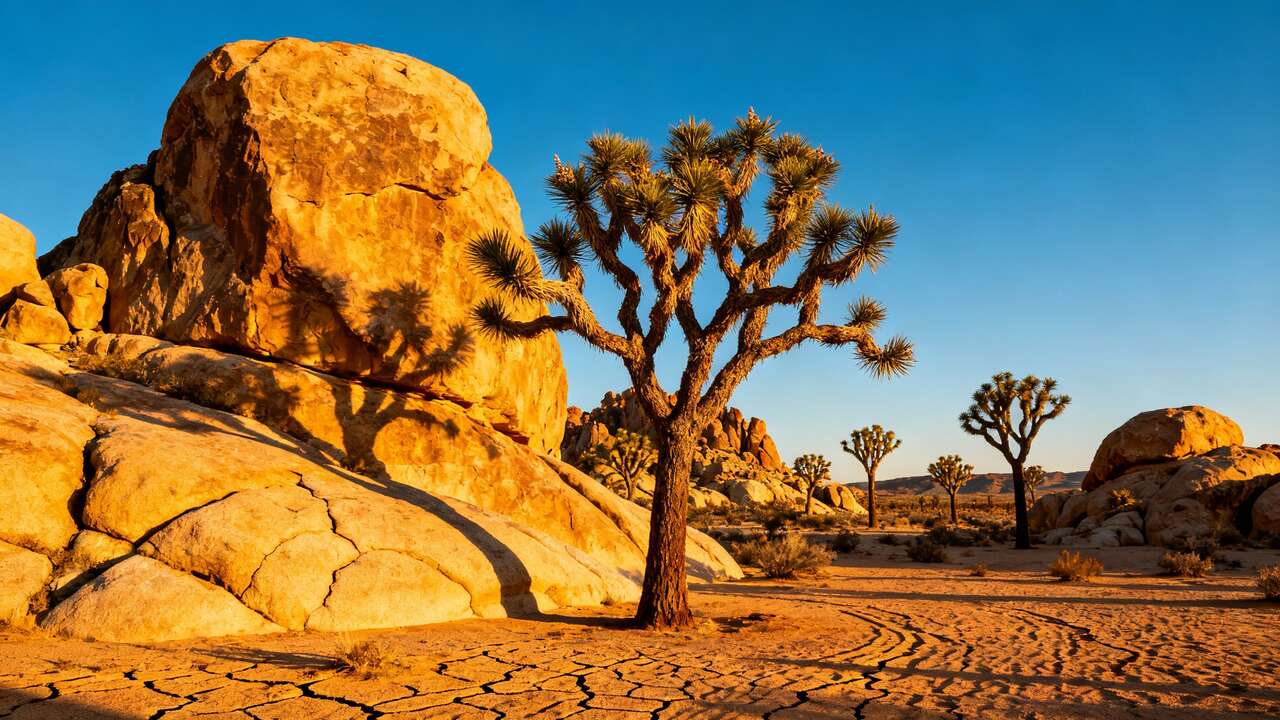

Stepping into Joshua Tree National Park is like crossing a threshold into another dimension. Here, where the Mojave and Colorado deserts converge, the landscape shatters earthly expectations. Spindly, Seussian trees stretch their arms toward a vast, cerulean sky, while colossal granite boulders lie scattered across the arid plains as if tossed by giants. This is not just a desert; it is a geological and biological masterpiece, a place that challenges perceptions and invites exploration into a world that feels both ancient and alien. The park’s stark beauty and profound silence offer a rare opportunity to disconnect from the familiar and connect with something wild and wonderfully strange.
Discovering Joshua Tree National Park
A Sanctuary Born from Two Deserts
Joshua Tree National Park owes its incredible biodiversity to its unique position at the confluence of two distinct desert ecosystems. The western half of the park lies within the Mojave Desert, a higher, cooler, and wetter environment that provides the ideal conditions for the park’s namesake, the Joshua tree (Yucca brevifolia). This region is characterized by its iconic rock formations and dense stands of these unique yuccas. In contrast, the eastern portion of the park is part of the lower, hotter, and drier Colorado Desert. Here, the landscape transforms, featuring natural gardens of cholla cactus, ocotillo, and creosote bush. This convergence creates a fascinating ecological transition zone, offering visitors a chance to witness a remarkable variety of life in a relatively small area.
From Sacred Lands to National Treasure
Long before it became a destination for tourists and rock climbers, this land was home to Native American peoples, including the Serrano, Cahuilla, and Chemehuevi, who skillfully adapted to the harsh desert environment. They utilized the region’s plants for food, medicine, and tools, leaving behind a rich cultural history that includes rock art and pottery. In the 19th century, cattle ranchers and miners arrived, leaving their own marks on the landscape. Recognizing the area’s unique character, advocates pushed for its protection, leading to its designation as a national monument in 1936 and finally as a national park in 1994. This status ensures the preservation of its delicate ecosystems and geological wonders for future generations.
The park’s dramatic geology is a direct result of millions of years of natural forces at work, shaping a terrain that is as captivating as it is rugged.
The Unique Landscapes of the California Desert
Islands of Stone in a Sea of Sand
The most striking geological features of Joshua Tree are the massive rock piles, or inselbergs, that dominate the landscape. These formations are composed of monzogranite, which formed millions of years ago from magma that cooled slowly beneath the earth’s surface. Over time, tectonic forces pushed this rock upward, and groundwater seeped into rectangular cracks, weathering the hard rock into rounded boulders. As the surrounding land eroded away, these resilient rock clusters were left exposed, creating the surreal playgrounds for climbers and hikers seen today. Areas like Jumbo Rocks and Wonderland of Rocks are prime examples of this incredible geological process, offering labyrinths of stone to explore.
Vistas That Stretch to the Horizon
For a breathtaking perspective on the park’s vastness, a trip to Keys View is essential. At an elevation of over 5,000 feet, this viewpoint offers a spectacular panoramic vista that encompasses the entire Coachella Valley. On a clear day, you can see the shimmering Salton Sea, the towering peaks of Mount San Jacinto and Mount Gorgonio, and even Signal Mountain in Mexico. Most notably, Keys View provides a direct look at the infamous San Andreas Fault, the tectonic boundary that carves a visible line through the valley below. This sweeping view not only provides a stunning photo opportunity but also a powerful lesson in the immense geological forces that have shaped Southern California.
This incredible geological canvas provides the perfect habitat for a surprising variety of plants and animals, each uniquely adapted to survive in this challenging environment.
The Exceptional Flora and Fauna of the Park
The Story of the Joshua Tree
The Joshua tree is more than just a plant; it is the symbol of the Mojave Desert and the heart of the park. Despite its name, it is not a tree but a species of yucca. Its survival is intricately linked to a single, tiny insect: the yucca moth. The moth is the tree’s sole pollinator, and in return, the tree’s flowers provide a safe place for the moth to lay its eggs. This symbiotic relationship is a perfect example of coevolution. These yuccas can live for hundreds of years, with some specimens estimated to be nearly a thousand years old. Their gnarled, bristly branches and spiky leaves create a silhouette that is unmistakably iconic, especially against the backdrop of a desert sunrise or sunset.
A World of Survivors
Beyond the park’s namesake, a diverse array of life has adapted to thrive here. The desert floor is dotted with resilient plants and hardy creatures.
- Flora: The Cholla Cactus Garden is a must-see, especially in the golden light of late afternoon when the “teddy bear” cholla seems to glow. Other notable plants include the towering ocotillo, the fragrant creosote bush, and a surprising variety of wildflowers that bloom after winter rains.
- Fauna: The park is home to a wide range of animals, though many are nocturnal to avoid the daytime heat. Visitors might spot coyotes, jackrabbits, kangaroo rats, and numerous species of lizards and birds. More elusive residents include the desert bighorn sheep, often seen navigating steep, rocky terrain, and the threatened desert tortoise, a key species for the desert ecosystem.
The abundance of life and the dramatic scenery make the park an ideal destination for outdoor enthusiasts seeking adventure and connection with nature.
Must-Do Hikes and Activities
Exploring on Foot: Trails for All Levels
Hiking is the best way to immerse yourself in the otherworldly landscapes of Joshua Tree. The park offers a vast network of trails catering to every fitness level and interest. For an easy, family-friendly introduction, the one-mile loop through Hidden Valley is perfect, taking you through a rock-enclosed valley rumored to have been used by cattle rustlers. The Barker Dam Nature Trail offers a chance to see a historic water source and, if you’re lucky, bighorn sheep. For those seeking a challenge, the strenuous climb up Ryan Mountain rewards hikers with 360-degree views of the park. Each trail offers a unique perspective on the park’s geology, flora, and history.
Adventures Beyond Hiking
Joshua Tree’s appeal extends far beyond its hiking trails. The park is a world-renowned destination for rock climbing and bouldering, with thousands of established routes on its grippy monzogranite rock. Even if you’re not a climber, watching others scale the sheer rock faces is a spectacle in itself. When the sun sets, another world emerges. As an official International Dark Sky Park, Joshua Tree offers some of the best stargazing opportunities in Southern California. The lack of light pollution reveals a breathtaking celestial display, with the Milky Way often visible to the naked eye. Camping under this starry canopy is an unforgettable experience, allowing you to fully appreciate the park’s profound tranquility.
To make the most of these incredible experiences, a bit of planning and preparation is essential for a safe and enjoyable visit.
Tips for Visiting Joshua Tree
Timing and Logistics
Planning your trip to Joshua Tree is crucial for a positive experience. The best time to visit is during the spring and fall when daytime temperatures are pleasant. Winter can be cold, especially at night, while summer brings extreme heat that can be dangerous. The park has several visitor centers where you can pay entrance fees, pick up maps, and get up-to-date information on trail conditions. Lodging options range from camping inside the park—which often fills up months in advance—to hotels and vacation rentals in nearby towns like Twentynine Palms, Joshua Tree, and Yucca Valley. Always book accommodations well in advance, especially during peak season.
Staying Safe in a Demanding Environment
The desert is an environment of extremes, and safety should be your top priority. There is very little water available in the park, so you must bring your own. The standard recommendation is at least one gallon of water per person per day. Sun protection, including a wide-brimmed hat, sunscreen, and sunglasses, is non-negotiable. Cell service is unreliable or nonexistent in most of the park, so download maps beforehand and let someone know your itinerary. Be mindful of wildlife, and never feed or approach animals. A well-prepared visitor is a safe visitor.
Average Monthly Temperatures in Joshua Tree (°F)
| Month | High | Low |
|---|---|---|
| January | 62 | 37 |
| April | 79 | 51 |
| July | 101 | 75 |
| October | 81 | 53 |
Being prepared not only ensures your safety but also helps protect the park itself, allowing its unique magic to endure for years to come.
Preserving the Magic of Joshua Tree
A Delicate Balance Under Threat
Despite its rugged appearance, the desert ecosystem is incredibly fragile. Joshua Tree National Park faces significant threats, including climate change, which endangers the Joshua trees themselves as they struggle to reproduce in a warming, drying climate. Increased visitor traffic also puts a strain on the park’s resources and can lead to soil erosion, vegetation damage, and wildlife disruption. Light pollution from growing nearby communities threatens the park’s pristine night skies. Conservation efforts are underway to study and mitigate these impacts, but the long-term health of the park depends on a collective commitment to its protection.
The Role of the Responsible Visitor
Every person who visits Joshua Tree has a part to play in its preservation. Adhering to the principles of Leave No Trace is paramount. This means packing out everything you pack in, staying on designated trails to protect fragile soil and plant life, respecting wildlife from a distance, and refraining from building unauthorized campfires. By minimizing your impact, you help ensure that the stark beauty and profound silence of Joshua Tree remain for future generations to experience. Being a steward of the land is perhaps the most meaningful activity you can undertake during your visit, a way of giving back to the place that offers so much wonder.
Joshua Tree offers a journey into a landscape that is both stark and full of life. It’s a place of geological wonders, unique ecosystems, and boundless skies. A visit here is an opportunity to explore a world that feels entirely its own, to hike among ancient rock formations, and to stand in awe of the resilient life that flourishes in the desert. The park’s otherworldly character leaves a lasting impression, reminding us of the wild, strange beauty that exists on our own planet.

- The 5 most affordable ski resorts in North America for the 2025 season - 13 November 2025
- Far Less Crowded Than the Grand Canyon, This Utah Park Offers Views Just as Spectacular This Fall - 13 November 2025
- This California Town Has a Unique Danish Village Vibe You Won’t Find Anywhere Else - 12 November 2025
Pubblicazioni simili :
 This Isn’t the Sahara, It’s North America’s Tallest Sand Dunes in a Colorado National Park
 This California City’s “Second Summer” Makes It the Absolute Best Beach Getaway This Autumn
 Forget California, This State Has the Most Affordable Beach Towns for an Autumn Trip
 Forget the Beach, This California Desert Is the Trendiest Road Trip Destination for Autumn 2025